Physical Address
304 North Cardinal St.
Dorchester Center, MA 02124
Physical Address
304 North Cardinal St.
Dorchester Center, MA 02124

You need Lubegard Red when you want to maintain OEM ATF integrity and stick to manufacturer recommendations without altering fluid chemistry.
Choose Lubegard Platinum if you’re addressing torque-converter clutch shudder, hard shifting, or slippage.
Platinum is also ideal if you’re converting fluids with broader compatibility needs.
It offers enhanced wear protection, friction stability, and temperature reduction that Red can’t match.
To understand how each fits your transmission needs and compatibility, keep exploring the differences and benefits.
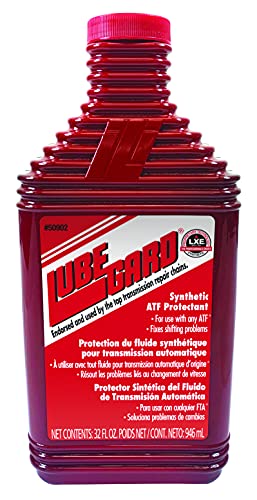
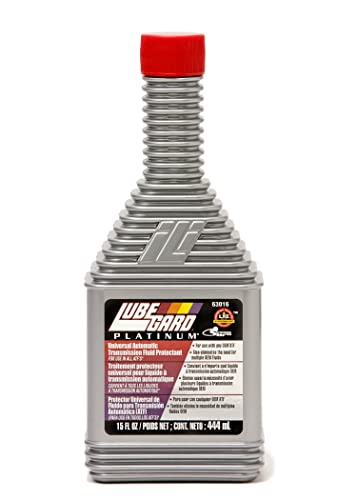
| Feature | Lubegard Red | Lubegard Platinum |
|---|---|---|
| Primary purpose | Routine ATF protection | High-performance ATF conditioning |
| Best for | Vehicles using OEM-recommended ATF | Shudder, hard shifting, slippage, and demanding applications |
| Fluid compatibility | OEM-recommended ATF and Ford Type F fluids ≤1986 | Most ATFs, excluding CVT and older Ford Type F applications |
| ATF conversion | Not recommended | Recommended for broader ATF conversion needs |
| Friction stability | Standard protection | Enhanced frictional stability |
| Wear protection | Routine wear protection | Up to 65% more metal protection than Red, according to the article |
| Temperature control | Standard | Up to 40°F reduction in transmission operating temperature |
| Shudder and shifting issues | Limited use | Ideal for shudder, hard shifts, and slippage |
| Technology | Straightforward protectant | Synergol Technology for enhanced performance |
| Best overall use | Routine maintenance | Advanced protection and performance enhancement |

Selecting the right Lubegard product hinges on understanding your vehicle’s transmission needs and fluid compatibility.
If your transmission operates smoothly on the manufacturer-recommended automatic transmission fluid (ATF), Lubegard Red is your straightforward choice. It supplements the OEM fluid, providing essential protectant qualities without altering fluid characteristics.
However, if you experience torque-converter clutch shudder, hard shifting, or slippage, Lubegard Platinum offers advanced Synergol Technology to restore additive levels, enhance frictional stability, and reduce operating temperatures.
Lubegard Platinum combats clutch shudder, hard shifts, and slippage with advanced Synergol Technology for smoother performance.
Platinum also serves as a universal supplement during ATF conversions, compatible with most fluids except CVTs and older Ford Type F applications.
Your selection depends on whether you prioritize OEM fluid maintenance (Red) or require all-encompassing performance enhancements and broader fluid compatibility (Platinum).
Both options are designed to be added directly to existing fluid, providing quick transmission shudder relief without the need for fluid changes.
Lubegard Red is all about routine use. It pairs well with manufacturer-recommended ATF and focuses on providing straightforward protection for your transmission.
If you’re looking for something reliable and simple, this is a solid choice.
On the other hand, we’ve Lubegard Platinum. This one’s a bit more versatile—it tackles broader applications like shudder resolution and ATF conversion.
So, not only does it serve as a premium supplement, but it also acts as an economical alternative.
Understanding these differences is key to picking the right product for your transmission’s needs. Whether you need basic protection or something more comprehensive, there’s a Lubegard option for you! Additionally, selecting additives that provide wear protection and friction reduction can significantly enhance transmission longevity and performance.
Although both Lubegard Red and Platinum serve as ATF protectants, they target distinct use cases based on your vehicle’s needs and fluid requirements.
Lubegard Red suits you if you’re using the OEM-recommended ATF and want straightforward protection without altering fluid chemistry. It’s ideal for routine maintenance where OEM specifications must be strictly followed.
Lubegard Platinum, however, is designed for broader applications. Use Platinum if you’re dealing with torque converter clutch shudder, hard shifting, or slippage.
It acts as both a high-performance conditioner and a universal ATF supplement, improving frictional stability and metal protection. You can also rely on it to convert or boost ATF performance when fluid compatibility and enhanced wear resistance are priorities.
Avoid Platinum in CVT or older Ford Type F applications.
Both products emphasize maintaining seal compatibility to prevent leaks and preserve transmission hydraulic pressure.
Understanding the distinct purposes of Lubegard Red and Platinum helps clarify their roles in ATF maintenance.
Lubegard Red serves as a straightforward protectant designed for use with manufacturer-recommended ATF. This makes it ideal for routine maintenance with OEM fluids.
In contrast, Platinum positions itself as a high-performance, 2-in-1 product, functioning both as a premium conditioner and an economical ATF alternative.
You’ll find Platinum better suited for addressing specific issues like torque-converter clutch shudder, hard shifting, and slippage while also supporting ATF conversions.
Its broader compatibility, excluding CVT and certain Ford Type F fluids, enables you to use it as a universal supplement or booster.
Fundamentally, Red targets standard protection, while Platinum offers advanced performance and versatility tailored to more demanding applications.
For optimal vehicle performance and longevity, it is always recommended to use fluids that meet OEM standards & certifications.
If you’re considering Lubegard Red, it’s really important to stick with the manufacturer-recommended ATF. This way, you can ensure compatibility and keep your transmission components safe.
On the other hand, Lubegard Platinum is a bit more versatile. It acts as a universal supplement and works with most ATFs, though you’ll want to steer clear of CVT fluids and Ford Type F in older models. However, mixing incompatible fluids can lead to shift harshness and accelerated wear, so proper selection is crucial.
When selecting between Lubegard Red and Platinum, you need to take into account the automatic transmission fluid (ATF) compatibility specified by your vehicle’s manufacturer.
Lubegard Red is designed strictly for use with the OEM-recommended ATF, ensuring seamless compatibility without altering fluid specifications.
If your vehicle’s manufacturer specifies a particular ATF, Red is the straightforward protectant choice to maintain correct fluid performance.
In contrast, Lubegard Platinum offers broader compatibility, functioning as both a high-performance conditioner and an economical OEM ATF alternative.
It works with nearly all automatic transmission fluids except CVT fluids and Ford Type F (pre-1986).
However, Platinum isn’t a direct replacement for all manufacturer-specified fluids but rather a versatile supplement.
It’s especially useful when addressing transmission issues or converting between fluid types while respecting manufacturer guidelines.
For vehicles requiring strict adherence to OEM-approved ATF+4 fluids,
using Lubegard Red ensures optimal transmission performance without risking coverage issues.
Frequently, drivers and technicians seek a universal supplement to enhance or convert automatic transmission fluids (ATFs) without compromising compatibility. Lubegard Platinum serves this role better than Red.
It works with most ATFs, excluding CVT fluids and Ford Type F pre-1987 models. This makes it ideal for universal supplementation and conversion. Red, by contrast, is designed strictly for use with the manufacturer-recommended ATF.
Key points for universal ATF supplementation:
If you need broad compatibility and conversion support, choose Platinum. For routine OEM fluid use, Red suffices. Additionally, understanding the oil viscosity differences between additives and fluids is crucial for optimal transmission performance.
Although both Lubegard Red and Platinum enhance automatic transmission fluid performance, their compatibility varies markedly based on fluid type.
Red is designed strictly for use with manufacturer-recommended ATFs, ensuring OEM fluid integrity. Platinum, however, offers broader compatibility, working with nearly all ATFs except CVT fluids and Ford Type F from 1986 and earlier.
This makes Platinum ideal when you need a universal supplement or conversion aid. Knowing these restrictions helps you avoid damaging your transmission or voiding coverage terms.
| Fluid Type | Lubegard Red | Lubegard Platinum |
|---|---|---|
| OEM Recommended ATF | Fully Compatible | Fully Compatible |
| CVT Fluid | Not Compatible | Not Compatible |
| Ford Type F (≤1986) | Compatible | Not Compatible |
| Universal ATF Conversion | Not Recommended | Recommended |
| Shudder-Prone Systems | Limited Use | Ideal Use |
Understanding the performance benefits of Lubegard Red and Platinum helps you choose the right ATF protectant for your vehicle’s needs.
Knowing Lubegard Red and Platinum benefits guides your choice for optimal ATF protection.
Lubegard Red suits standard OEM ATF use, offering reliable protection and shudder reduction. Platinum, enhanced with Synergol Technology, delivers superior wear protection, frictional stability, and temperature control.
Key performance benefits include:
Choosing advanced protectants like Platinum can contribute to maintaining stable transmission temperatures, which is critical for extending transmission life and performance.
Choose Red for routine OEM ATF maintenance. Select Platinum when you need advanced protection and performance enhancement.
When your transmission experiences shudder, slippage, or hard shifting, Lubegard Platinum targets these issues by optimizing frictional properties and restoring additive balance within the ATF.
It employs Synergol Technology to enhance frictional stability, reducing torque-converter clutch shudder and preventing slippage by delivering consistent friction coefficients.
Platinum replenishes depleted anti-wear and friction modifiers, improving clutch engagement and shift quality.
This additive also lowers transmission operating temperatures by up to 40°F, protecting metal surfaces and extending fluid life.
By stabilizing friction and boosting additive content, Platinum smooths out hard shifting events, promoting quicker, more precise gear changes.
Its universal compatibility with most ATFs (excluding CVT and older Ford Type F) makes it an effective solution for addressing transmission performance issues caused by wear or fluid degradation.
Additionally, its formulation includes anti-shudder and metal-to-metal protection to reduce wear and vibrations, further enhancing transmission durability.
Choosing between Lubegard Red and Platinum depends largely on your transmission’s maintenance needs and fluid compatibility.
If you’re maintaining your transmission with the manufacturer-recommended ATF, Lubegard Red offers straightforward, reliable protection.
However, if you need to support fluid conversions or tackle broader transmission issues, Platinum provides enhanced versatility and performance.
Key distinctions include:
Choosing the right additive also depends on compatibility with specific systems to ensure maximum effectiveness and longevity.
Choose Red for standard maintenance. Choose Platinum when you require conversion support or elevated protection.
Deciding whether to invest in Lubegard Platinum depends on the specific demands of your transmission and budget priorities.
Investment in Lubegard Platinum hinges on your transmission needs and budget considerations.
If your vehicle experiences torque-converter clutch shudder, hard shifting, or slippage, Platinum’s advanced Synergol Technology offers superior frictional stability, metal protection, and additive restoration that justify the higher price.
It also acts as a universal supplement, enhancing or converting various ATFs except CVT and older Ford Type F fluids.
Conversely, if you use OEM-recommended ATF without issues, Lubegard Red provides adequate protection more economically.
Platinum’s claimed benefits, such as up to 40°F temperature reduction and doubling ATF life, make it worthwhile for demanding conditions or performance needs.
You should weigh these technical advantages against cost and compatibility before deciding.
You shouldn’t use Lubegard Red or Platinum in manual transmissions, as both are formulated specifically for automatic transmission fluids (ATF).
Their additives target torque converter clutch issues and automatic transmission components, which don’t apply to manual gearboxes.
Using them in manuals might cause improper lubrication or damage. For manual transmissions, stick to products explicitly designed for manual gear oils to guarantee proper protection and performance.
Yes, using Lubegard Platinum can offer environmental benefits by extending the life of your automatic transmission fluid (ATF).
It enhances additive content and frictional stability, reducing fluid degradation and the need for frequent changes.
This means less waste and fewer discarded fluids.
Additionally, its ability to lower transmission temperatures helps reduce energy loss, promoting more efficient vehicle operation and potentially lowering emissions.
You should reapply Lubegard Red or Platinum every 30,000 to 50,000 miles, aligning with your automatic transmission fluid change interval or as recommended by your vehicle manufacturer.
If you notice transmission shudder, slipping, or rough shifts, consider earlier application for Platinum.
Regular reapplication guarantees consistent protection, friction stability, and wear reduction.
Always monitor your transmission’s condition and follow Lubegard’s guidelines for peak performance and longevity.
You can expect a slight improvement in fuel efficiency when using Lubegard Platinum, thanks to its frictional stability and reduced transmission temperatures.
This lowers drivetrain losses.
Lubegard Red offers minimal impact on fuel economy, focusing more on routine protection.
While neither product drastically changes mileage, Platinum’s advanced formulation helps your transmission operate more smoothly and efficiently.
This potentially translates to better fuel use under certain driving conditions.
You might worry that using Lubegard additives voids your vehicle warranty, but they typically don’t if you follow manufacturer guidelines.
These additives are designed to supplement OEM fluids without replacing them, maintaining compliance.
Still, always check your vehicle’s warranty terms carefully, as some manufacturers may have strict rules about aftermarket products.
Using Lubegard as directed usually keeps your warranty intact and can even protect your transmission better over time.
Choosing between Lubegard Red and Platinum is like picking the right tool from a mechanic’s chest. Each serves a distinct purpose.
Lubegard Red offers reliable, routine protection, while Platinum acts as a precision instrument. It tackles shudder, slippage, and hard shifting with surgical accuracy.
If your transmission demands more than maintenance, think conversion support. Platinum’s worth the extra investment.
Ultimately, your choice drives performance, so gear up wisely.
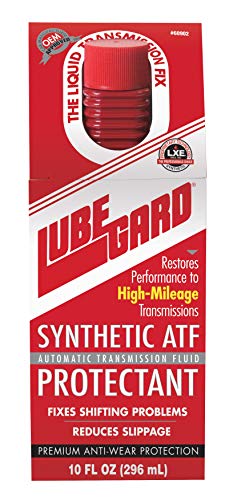

Last update on 2026-10-10 / Affiliate links / Images from Amazon Product Advertising API