Physical Address
304 North Cardinal St.
Dorchester Center, MA 02124
Physical Address
304 North Cardinal St.
Dorchester Center, MA 02124
If your engine faces sustained high temperatures and you want long-lasting protection, Cera Tec’s advanced ceramic coating chemically bonds to metal surfaces. This reduces wear for up to 50,000 km per application.
For older or high-mileage engines needing quick friction reduction and cold-start benefits, MoS2 creates a sliding film but requires frequent reapplication.
Both work well with common oils, but their use depends on your engine’s condition, driving style, and maintenance needs. There’s more to take into account for peak performance and cost efficiency.


| Comparison Factors | Cera Tec | MoS2 |
|---|---|---|
| Additive Type | Ceramic-based anti-friction oil treatment | Molybdenum disulfide-based oil additive |
| Primary Lubricating Material | Microscopic ceramic particles | MoS2 solid lubricant particles |
| Main Purpose | Reduce friction and wear over an extended treatment period | Supplement engine lubrication and reduce friction |
| Lubrication Mechanism | Ceramic-based surface protection and friction reduction | Low-friction sliding action of molybdenum disulfide |
| Engine Wear Protection | Designed for sustained anti-wear performance | Designed to reduce friction at contacting metal surfaces |
| High-Temperature Performance | Marketed for durable protection under demanding conditions | Solid lubricant properties can support boundary lubrication |
| Cold-Start Performance | May help reduce friction during startup | May help reduce boundary friction during startup |
| Typical Target Users | Drivers seeking longer-duration treatment | Drivers preferring additive use with routine oil changes |
| Older Engines | May be suitable where approved | Often considered for older or high-mileage engines |
| Modern Engines | Suitable only where product and vehicle requirements permit | Suitable only where product and vehicle requirements permit |
| Advertised Treatment Duration | Up to approximately 50,000 km | Typically reapplied at oil changes |
| Reapplication Frequency | Less frequent, according to product guidance | Generally repeated with fresh engine oil |
| Oil Compatibility | Designed for use with many common engine oils | Designed for use with many common engine oils |
| Initial Purchase Cost | Generally higher | Generally lower |
| Long-Term Cost | May cost less per distance treated | Depends on oil-change frequency and product price |
| Overall Recommendation | Consider for longer-duration additive treatment | Consider for oil-change-based friction treatment |
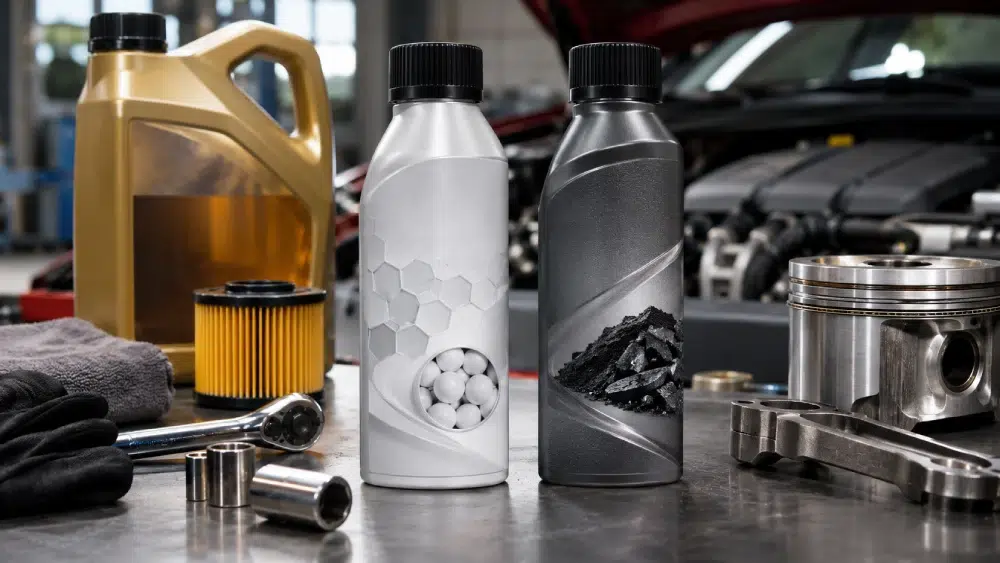
When choosing between Cera Tec and MoS2 additives, consider your engine’s specific demands and maintenance habits.
Cera Tec employs advanced ceramic particles delivering both physical and chemical wear protection. It’s ideal for modern engines operating under sustained load and elevated temperatures.
Engineered for long service intervals, it typically lasts up to 50,000 km, making it suitable if you prefer fewer treatments and high-performance conditions.
In contrast, MoS2 utilizes molybdenum disulfide, a proven solid lubricant that quickly reduces friction by forming a pressure-resistant sliding film.
It is better suited for older or high-mileage engines needing immediate friction reduction and cold-start benefits, but requires reapplication at every oil change.
Your selection should consider engine age, operating conditions, and how frequently you perform maintenance.
For optimal results, matching the additive to your engine’s specific needs and compatibility is essential to ensure reliable and effective performance.
By integrating distinct materials and mechanisms, Cera Tec and MoS2 additives protect your engine through fundamentally different approaches.
Cera Tec employs ceramic particles that chemically bond to metal surfaces, forming a durable ceramic coating. This coating reduces wear under sustained load and high temperatures, delivering long-term protection.
Cera Tec forms a tough ceramic layer on metal surfaces, ensuring lasting wear protection under heavy loads and heat.
In contrast, MoS2 uses molybdenum disulfide to create a pressure-resistant sliding film that immediately lowers friction and wear, especially during cold starts.
MoS2’s boundary-layer lubrication provides rapid friction reduction but requires frequent reapplication.
You’ll find Cera Tec ideal for modern, high-performance engines needing extended wear protection. MoS2 suits older or high-mileage engines requiring quick noise reduction.
Understanding these mechanisms helps you optimize engine longevity based on your vehicle’s demands and operating conditions.
Additionally, both additives are compatible with petrol and diesel engines, making them versatile choices for various engine types and driving needs, as highlighted in the Engine Treatment features.
Selecting the right engine additive hinges not only on its protective qualities but also on how well it interacts with your engine oil. Both Cera Tec and MoS2 exhibit excellent miscibility with common motor oils, ensuring they don’t alter viscosity or destabilize the oil film. However, you must consider your oil’s formulation and operating conditions.
Think about these factors:
Choose the additive that aligns precisely with your engine oil’s chemistry and your operational demands for optimal performance. Regular use of compatible additives can also help reduce oil consumption and extend engine life when used as part of a maintenance routine.
Although both Cera Tec and MoS2 improve engine protection, you’ll find significant differences in their longevity and overall cost-effectiveness.
Cera Tec lasts much longer, often protecting up to 50,000 km per application. MoS2 requires reapplication at every oil change. This extended service interval means Cera Tec usually saves you more money over time despite its higher upfront cost. Additionally, Cera Tec’s thermal stability allows it to maintain effective protection under high heat and dynamic loads, enhancing engine durability.
| Feature | Cera Tec | MoS2 |
|---|---|---|
| Service Life | ~50,000 km per bottle | Each oil change (~10,000-15,000 km) |
| Cost per Treatment | Higher upfront | Lower upfront |
| Reapplication Frequency | Infrequent | Frequent |
| Long-term Cost Efficiency | Better due to extended protection | Lower initial cost, higher overall |
Choosing Cera Tec benefits those seeking durable, cost-effective protection.
Because driving style and engine stress vary widely, choosing between Cera Tec and MoS2 depends on the specific demands you place on your engine.
If you drive aggressively or subject your engine to sustained high temperatures, Cera Tec’s ceramic-based protection excels by forming a durable coating that withstands long-term stress.
Conversely, if your driving involves frequent cold starts or you operate an older engine, MoS2’s rapid friction reduction through its pressure-resistant sliding film suits your needs better.
Consider these factors:
Additionally, for engines facing persistent deposits and friction issues, using additives with carbon nano lubricants like Hot Shot’s Secret Stiction Eliminator can enhance cleaning and reduce wear effectively.
Match the additive to your engine’s stress profile for peak protection.
You generally shouldn’t mix Cera Tec and MoS2 in the same engine oil.
Both additives work differently. Cera Tec forms a ceramic protective layer, while MoS2 creates a solid lubricant film.
Combining them can cause unpredictable chemical interactions, potentially reducing their effectiveness or destabilizing the oil.
To guarantee peak wear protection and maintain oil stability, it’s best to choose one additive based on your engine’s needs. Follow the manufacturer’s dosing guidelines carefully.
Certain sensitive setups should steer clear of solid lubricants. You shouldn’t use these additives in engines with specialized coatings or very tight tolerances, as ceramic or MoS2 particles might interfere with precision surfaces or seals.
Older engines with delicate components might also react unpredictably. Always analyze your engine’s material compatibility and manufacturer guidelines before adding. Avoidance guarantees you don’t accidentally accelerate wear or cause lubricant breakdown in critical engine types.
You shouldn’t extend oil change intervals based solely on these additives, as manufacturers set them for peak engine protection.
However, Cera Tec’s long-lasting ceramic protection can support longer intervals if your oil quality remains intact.
MoS2, requiring frequent reapplication, doesn’t justify interval extension.
Always monitor oil condition and follow manufacturer guidelines.
Using additives supplements wear protection but doesn’t replace scheduled oil changes or oil quality maintenance.
You should know that using Cera Tec or MoS2 additives can potentially affect your engine warranty.
Manufacturers often caution against additives not explicitly approved, as they might alter oil properties or engine behavior.
Even though both additives improve wear protection, you risk voiding warranty coverage if your automaker disallows aftermarket additives.
It’s best to consult your warranty terms or dealer before adding them to avoid unintended warranty complications.
You won’t face significant environmental concerns when using ceramic or MoS2 additives if you follow recommended dosages.
Both materials are stable and non-toxic at typical concentrations, minimizing ecological impact.
However, improper disposal of used oil containing these additives can harm ecosystems due to metal and particle residues.
Always guarantee responsible disposal and recycling of engine oil to mitigate any environmental risks associated with these additives’ use.
Choosing between Cera Tec and MoS2 isn’t just about additives; it’s about safeguarding your engine’s future.
While Cera Tec forms a ceramic shield that reduces friction at a microscopic level, MoS2 creates a solid lubricating film under extreme pressure.
Your choice hinges on driving habits and engine demands. Remember, the right additive isn’t just an expense; it’s an investment that whispers longevity and efficiency to your engine every mile you drive.
Last update on 2026-11-17 / Affiliate links / Images from Amazon Product Advertising API