Physical Address
304 North Cardinal St.
Dorchester Center, MA 02124
Physical Address
304 North Cardinal St.
Dorchester Center, MA 02124

When choosing between 75W-90 and 75W-85 gear oils, consider that both share the same 75W cold-start rating, offering similar low-temperature flow.
However, 75W-90 provides higher viscosity at operating temperatures, delivering thicker film strength and better protection under heavy loads.
In contrast, 75W-85’s lower viscosity reduces drag and improves shift feel, benefiting fuel economy and manual transmissions.
Your final choice depends on load demands, application, and OEM specs.
Explore further to fine-tune the most suitable gear oil for your drivetrain.
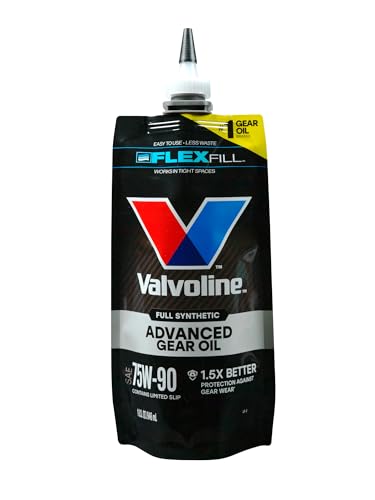
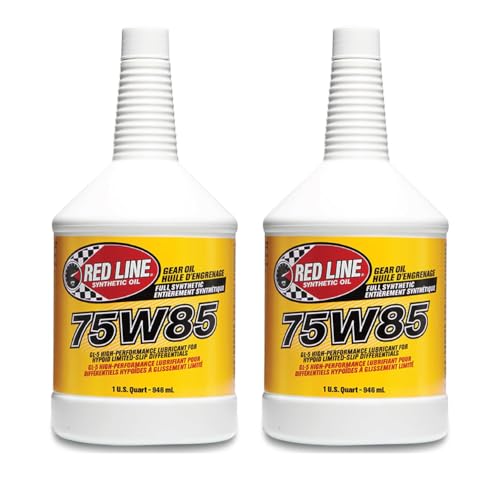
| Comparison Factors | 75W-90 Gear Oil | 75W-85 Gear Oil |
|---|---|---|
| SAE Viscosity Grade | 75W-90 | 75W-85 |
| Winter Viscosity Classification | 75W | 75W |
| High-Temperature Classification | SAE 90 | SAE 85 |
| Viscosity at 100°C | Generally higher | Generally lower |
| Cold-Weather Performance | Meets SAE 75W low-temperature requirements | Meets SAE 75W low-temperature requirements |
| Operating-Temperature Flow | Thicker fluid under comparable conditions | Thinner fluid under comparable conditions |
| Lubricating Film Thickness | Potentially thicker oil film | Potentially thinner oil film |
| Gear Wear Protection | Depends on viscosity and additive formulation | Depends on viscosity and additive formulation |
| Heavy-Load Applications | Used in specified heavy-load drivetrain systems | Suitable where the manufacturer specifies this grade |
| Internal Fluid Resistance | May produce greater viscous resistance | May reduce viscous resistance |
| Fuel Efficiency | May create slightly higher churning losses | May improve efficiency in compatible systems |
| Manual Transmission Performance | Suitable where viscosity and friction requirements match | Suitable where viscosity and friction requirements match |
| Differential Applications | Commonly specified for certain axles and differentials | Specified for certain modern differentials and drivetrains |
| API GL-4 Compatibility | Available in suitable formulations | Available where specified |
| API GL-5 Compatibility | Available in suitable formulations | Available in suitable formulations |
| Off-Road and Towing Use | Appropriate when specified for operating conditions | Appropriate when specified for operating conditions |
| Overall Recommendation | Choose when OEM requires 75W-90 | Choose when OEM requires 75W-85 |

Although the “75W” designation in gear oil grades might seem straightforward, it specifically refers to the oil’s low-temperature viscosity performance as defined by the SAE J306 standard.
When you see 75W, it indicates the oil’s ability to flow and circulate at cold temperatures, ensuring adequate lubrication during winter starts or in cold climates.
This winter rating means the oil meets maximum viscosity limits at low temperatures, allowing for proper pumpability and minimizing drag during startup.
Both 75W-85 and 75W-90 share this winter rating, so their cold-flow behavior under SAE J306 criteria is comparable.
Understanding 75W helps you assess how the oil will perform when cold, but it doesn’t reveal anything about viscosity or film strength at normal operating temperatures, which is determined by the second number.
It is important to note that the second number, such as 85 or 90, reflects the oil’s high-temperature viscosity and wear protection capabilities, which directly impact drivetrain performance under operating conditions.
While both 75W-85 and 75W-90 oils share the same winter viscosity rating, the second number in their designation defines their viscosity at operating temperature.
In this case, the “85” and “90” represent the oil’s SAE viscosity grade measured at 100°C. This indicates 75W-85 oils typically range between 11.5 to 13.0 cSt, whereas 75W-90 oils fall around 15.5 to 16.1 cSt.
This difference means 75W-90 maintains a thicker lubricating film under operating conditions, enhancing load-carrying capacity and protection, especially in heavily loaded gears.
Conversely, 75W-85 offers lower operating viscosity, which can contribute to reduced drag and improved mechanical efficiency in certain transmissions.
Understanding this distinction helps you select the appropriate gear oil based on thermal stability and the mechanical demands of your drivetrain system.
It is also important to consider manufacturer recommendations to ensure optimal performance and longevity of your gearbox components.
Comparing cold-start and low-temperature performance involves analyzing how 75W-85 and 75W-90 oils behave during initial engine startup and cold-weather operation.
Both share the 75W winter rating, ensuring similar low-temperature viscosity limits per SAE J306 standards, so cold-flow characteristics closely align.
However, 75W-85 oils typically exhibit lower viscosity at 40°C, often ranging from the low 60s to low 80s cSt.
In contrast, 75W-90 oils can reach the high 70s to over 100 cSt.
This lower intermediate-temperature viscosity in 75W-85 oils generally facilitates easier circulation during cold starts, potentially reducing drag and improving shift feel.
Still, cold-start performance also depends on additive chemistry and full formulation, not just viscosity grade.
Practical differences may vary between products despite shared winter ratings.
It is also important to consider the API ratings of these oils to ensure compatibility with the specific automotive system they are intended for.
After examining cold-start behavior, attention shifts to how these oils perform at operating temperatures.
Turning focus from cold starts to oil performance during normal operating temperatures.
You’ll find that 75W-90 oils consistently exhibit higher viscosity at 100°C, typically around 15.5–16.1 cSt, compared to 75W-85 oils, which range roughly from 11.5 to 13.0 cSt.
This difference means 75W-90 maintains a thicker lubricating film under normal operating heat, enhancing load-carrying capacity and protection in high-stress gear environments.
Conversely, the lower viscosity of 75W-85 oils offers reduced fluid friction, potentially improving mechanical efficiency and shift feel in manual transmissions.
Your choice between these grades should consider the operating temperature demands of your drivetrain components, balancing the need for film thickness against efficiency.
Neither grade is universally superior; each serves distinct operational roles depending on application requirements.
Many premium 75W-90 formulations also provide advanced thermal stability and oxidative resistance, ensuring consistent viscosity and protection under extreme temperature fluctuations.
Because lubricating film thickness directly influences gear protection and durability, understanding its role in 75W-85 versus 75W-90 oils is critical.
You’ll find that 75W-90 oils maintain a consistently thicker film at operating temperatures, typically around 15.5–16.1 cSt at 100°C, compared to 75W-85 oils, which usually measure 11.5–13.0 cSt.
This thicker film delivers enhanced separation between gear surfaces, reducing metal-to-metal contact under high load and shock conditions.
Conversely, 75W-85’s thinner film can lower drag and improve efficiency but may offer less robust boundary protection.
When selecting between these oils, you must balance film thickness against load demands. Insufficient film thickness risks accelerated wear, while excessive thickness may increase drag and reduce efficiency.
Hence, film thickness critically impacts both protection and performance in gear oil applications.
Additionally, the presence of extreme pressure additives in these oils can further influence their protective capabilities under demanding conditions.
Understanding the differences in film thickness between 75W-85 and 75W-90 oils helps clarify why each grade suits specific applications.
You’ll find 75W-90 commonly used in axles, final drives, transfer cases, and heavy-duty drivetrains where higher operating temperature viscosity and thicker oil films provide enhanced load-carrying capacity and extreme pressure protection.
Conversely, 75W-85 often fits transmissions, transaxles, and some differentials requiring lower viscosity to optimize internal friction and shift feel.
Manufacturers frequently specify 75W-85 to improve efficiency in manual transmissions or transaxles, while 75W-90 is preferred for severe-duty or shock-loaded gear sets.
Ultimately, you should align your choice with OEM fill requirements and application demands.
Neither grade universally outperforms the other; their suitability depends on duty cycle and the mechanical stresses involved.
Fuel economy often hinges on the viscosity of the gear oil you choose.
75W-85 typically offers lower internal resistance than 75W-90. Since 75W-85 has a lower viscosity at operating temperature, about 11.5–13.0 cSt at 100°C compared to 15.5–16.1 cSt for 75W-90, it reduces churning and pumping losses inside gearboxes.
This can translate into improved efficiency and slightly better fuel economy, especially when the OEM permits its use. However, 75W-90’s thicker film strength supports higher load capacity but may increase drag, marginally affecting fuel consumption.
To optimize fuel economy, you should always follow the manufacturer’s viscosity recommendation. Using a thicker oil than specified can cause unnecessary energy loss and impact shift quality, negating any potential efficiency gains from a heavier lubricant.
Additionally, the additive packages in gear oils are tailored to handle wear and temperature conditions, influencing overall performance and efficiency.
When selecting gear oil for manual transmissions or differentials, you need to take into account the specific load, friction requirements, and OEM specifications.
Consider load, friction needs, and OEM specs when choosing gear oil for transmissions or differentials
For manual transmissions, 75W-85 often provides lower viscosity, reducing drag and improving shift feel, especially where a GL-4 rating or specific friction characteristics are required.
Conversely, 75W-90 oils excel in differentials that experience higher loads or shock loading due to their thicker film strength at operating temperature and robust extreme pressure (EP) protection, typically GL-5.
Using 75W-90 in manual transmissions not designed for its friction profile may impair synchro performance.
Consequently, the better oil hinges on application demands: choose 75W-85 for efficiency and smooth shifting in manual gearboxes, and 75W-90 for durability and load capacity in heavy-duty differentials.
Always align your choice with the vehicle’s technical requirements.
It is also important to ensure that the oils have matching viscosity and specifications to maintain optimal performance and avoid compatibility issues.
When you’re choosing between 75W-85 and 75W-90 gear oils, it’s super important to stick closely to your vehicle manufacturer’s specifications. This way, you can ensure the best compatibility and performance for your ride.
You see, OEM requirements cover more than just viscosity; they also specify important details like API service categories and friction modifiers. These factors are crucial, especially for synchronized transmissions.
If you overlook these specs, you could end up dealing with increased wear, poor shift quality, or even inadequate protection when your vehicle is under load.
Additionally, considering the thermal stability of the gear oil helps maintain consistent film strength and prevents gear degradation under high temperatures.
Although selecting between 75W-85 and 75W-90 gear oils might seem straightforward, adhering to the vehicle manufacturer’s specifications is essential for peak performance and longevity.
The OEM specifies viscosity grades based on gear design, load conditions, and required friction characteristics. This ensures optimal film thickness and wear protection.
Deviating from these specs risks inadequate lubrication, increased drag, or gear damage. For example, choosing 75W-90 over a mandated 75W-85 may cause excessive drag or shift issues, while the reverse might reduce film strength under heavy loads.
You must also consider OEM-required API or SAE performance categories (GL-4, GL-5) to match additives and friction modifiers.
Using fluids that do not meet manufacturer guidelines can lead to premature component wear and system failures.
Manufacturers typically define strict compatibility rules to guarantee gear oils meet specific performance and chemical requirements for their drivetrains.
You must follow OEM specifications closely, as using the wrong grade or spec can cause premature wear or shift issues. Here are key compatibility rules you should keep in mind:
Adhering to these guarantees peak lubrication, durability, and performance. Regular inspections help monitor the condition of gear oil to ensure timely maintenance and prevent damage to drivetrain components, which is essential for gear oil longevity.
How do you decide between 75W-85 and 75W-90 gear oils for your vehicle?
Start by checking your manufacturer’s specifications, as they dictate viscosity and performance requirements.
Always refer to your vehicle manufacturer’s guidelines to determine the correct viscosity and performance standards.
Both grades share the 75W cold rating, so low-temperature flow is comparable.
The key difference lies in operating viscosity: 75W-90 offers a thicker film, enhancing protection under high loads and shock conditions.
This makes it ideal for heavy-duty axles and final drives.
Conversely, 75W-85’s lower viscosity reduces drag and supports smoother shifting in transmissions designed for lighter loads.
Choosing 75W-90 when 75W-85 is specified can increase internal friction and reduce fuel efficiency.
Match the oil’s API service and friction characteristics to your drivetrain’s demands.
This ensures compatibility and peak performance without compromising durability or efficiency.
You shouldn’t mix 75W-85 and 75W-90 gear oils because their viscosity and additive packages differ. This affects performance and protection.
Mixing can compromise film strength, shift quality, and wear protection, especially under heavy load. Always follow your vehicle manufacturer’s specs, as they dictate the correct viscosity and friction modifiers for your transmission or differential.
Sticking to one approved grade guarantees consistent lubrication and peak component longevity.
You shouldn’t wait an eternity to change your gear oil. Typically, changing it every 30,000 to 60,000 miles keeps your drivetrain healthy.
Check your vehicle’s manual for exact intervals. Severe-duty use or heavy loads might require more frequent changes.
Monitor oil condition and contamination signs. Always use the specified oil grade.
Regular changes guarantee peak lubrication, reduce wear, and maintain efficient operation under varying load and temperature conditions.
Synthetic 75W-90 oils generally outperform conventional 75W-85 oils in thermal stability, oxidation resistance, and shear retention.
You’ll benefit from better high-temperature film strength and longer drain intervals with synthetic 75W-90, especially under heavy loads or severe conditions.
However, “better” depends on your application and OEM requirements.
Using synthetic 75W-90 where a lower viscosity or specific frictional properties are needed could negatively impact performance or shift feel.
Always follow your manufacturer’s spec.
Using 75W-90 oil can affect your vehicle’s warranty like a key fitting the wrong lock—it depends on precise specifications.
If your manufacturer requires 75W-85 and you use 75W-90 instead, you risk voiding warranty coverage due to non-compliance.
Always consult your owner’s manual or dealer. Sticking to OEM-recommended viscosity and performance grades guarantees you maintain warranty validity and peak mechanical protection without unintended consequences.
Yes, you can use gear oils rated 75W-85 or 75W-90 in extreme off-road conditions.
However, 75W-90 generally handles high loads and shock better due to its thicker film strength at operating temperature.
If your drivetrain endures severe stress, 75W-90 offers superior protection.
Always follow your vehicle’s OEM specs, since running a lower viscosity like 75W-85 might improve efficiency but could compromise durability under harsh off-road loads.
So, you’ve learned that 75W means your gear oil handles the cold like a champ.
But the second number—85 or 90—is where the real drama unfolds.
Thicker film or better fuel economy?
Guess it’s a thrilling choice between protection and efficiency.
Who knew picking gear oil could feel like a high-stakes decision?
Just remember, the “better” oil depends entirely on your transmission’s needs.
In lubrication, one size definitely doesn’t fit all.
Last update on 2026-11-19 / Affiliate links / Images from Amazon Product Advertising API