Physical Address
304 North Cardinal St.
Dorchester Center, MA 02124
Physical Address
304 North Cardinal St.
Dorchester Center, MA 02124
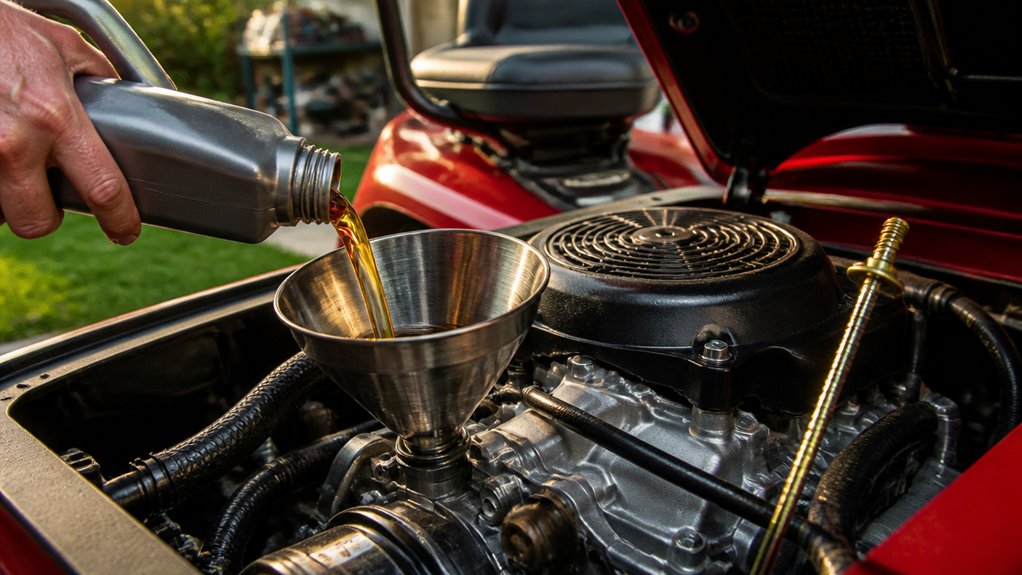
You can use synthetic oil in your lawn mower if your engine manufacturer approves it and you follow the specified oil type and viscosity in the manual.
Synthetic oil offers better thermal stability, improved cold starts, and reduced wear, especially in demanding conditions.
However, you must adhere to proper break-in guidelines and maintenance schedules to preserve engine health and warranty.
For insights into the best grades and how synthetic oil affects mower upkeep, there’s more you’ll want to understand.

Although not all mower engines explicitly specify synthetic oil, you can generally employ it safely if your owner’s manual approves. Many modern engines, including those from Briggs & Stratton, accept synthetic oils like 5W-30 and 15W-50 across a wide temperature range without compromising engine performance or protection.
Synthetic oils maintain viscosity stability under temperature fluctuations, reducing wear and improving lubrication in air-cooled mower engines. Using synthetic oil designed for small engines ensures compatibility with seals and additives, preventing degradation.
However, engine design and manufacturer recommendations remain critical. Some older engines may not be compatible due to material sensitivities. You should strictly adhere to approved oil types and viscosities, as synthetic oil’s enhanced thermal and oxidative stability can cause issues if mismatched.
Additionally, selecting the correct oil viscosity is essential to reduce engine strain and wear during cold starts and varying temperatures.
Absolutely! The first step is to check your mower’s manual. It’s crucial to see if synthetic oil is approved for your engine. The manufacturer has specific recommendations about oil type, viscosity, and maintenance intervals.
Following these guidelines is key to keeping your mower running smoothly and efficiently.
Ignoring those specs? That could lead to some serious issues down the line—like reduced engine life and potential warranty problems. So, give that manual a good look before making any oil changes! Using oils that meet Kawasaki’s specifications ensures optimal engine protection and performance.
Before switching to synthetic oil, confirm whether your mower’s manual explicitly approves its use. This step guarantees compatibility with engine materials and maintains warranty coverage.
Manuals specify oil type, viscosity, and operational limits, reflecting manufacturer testing.
| Specification | Synthetic Oil Allowed? | Recommended Viscosity |
|---|---|---|
| Modern Engines | Yes | 5W-30, 15W-50 |
| Older Engines | Sometimes | Check manual |
| Temperature Range | All temperatures | Based on climate |
If your manual omits synthetic oil, proceed cautiously or consult the manufacturer. Incorrect oil choice can impair lubrication and increase wear.
Adhering strictly to manual specifications guarantees peak engine performance and longevity when considering synthetic oil use. Additionally, using oils with the proper viscosity stability helps prevent thinning on hot days and thickening during cold starts, ensuring reliable engine protection.
When selecting synthetic oil for your lawn mower, confirming explicit approval from the manufacturer is essential to guarantee compatibility and maintain warranty coverage.
Your mower’s manual is the definitive source for oil specifications, including approved oil type, viscosity, and change intervals.
Ignoring these guidelines may void warranties or impair engine performance.
To follow manufacturer recommendations effectively:
Additionally, choosing oils and additives that are compatible with rubber seals helps prevent leaks and maintains engine integrity when using synthetic oils.
When choosing synthetic oil grades for your lawn mower, it’s important to consider a couple of key factors. First, think about the operating temperatures your mower will face, and don’t forget to check the manufacturer’s guidelines.
For general use, a popular choice is 5W-30, which works well in all seasons. If you’re in a hotter climate and your mower is likely to experience sustained high temperatures, you might want to go with 15W-50 instead. Choosing an oil with the right viscosity grade ensures reliable cold starts and protects your engine from wear in varying temperatures.
Although synthetic oil offers superior protection for lawn mower engines, selecting the correct viscosity grade is essential to maximize performance and longevity.
You need to match the oil’s thickness to your engine’s design and operating conditions to guarantee peak lubrication.
Consider these recommended synthetic viscosity grades:
Choosing the right grade reduces wear, improves efficiency, and prolongs engine life under your mowing conditions.
For best results, also ensure the oil formulation meets or exceeds API service classifications relevant to your engine’s requirements.
Selecting the correct synthetic oil grade hinges on the ambient temperature conditions your lawn mower operates in.
For cold climates, synthetic 5W-30 offers excellent low-temperature fluidity, ensuring reliable starts and immediate lubrication.
When temperatures rise, 10W-30 synthetic oil suits moderate conditions, balancing flow and protection.
In persistently hot environments or during extended use, synthetic 15W-50 provides superior high-temperature stability and wear resistance.
This is essential for air-cooled mower engines under thermal stress.
Always cross-reference your mower’s manual to confirm manufacturer-approved viscosities.
Using a synthetic oil grade mismatched to temperature can impair engine performance, increase wear, or complicate starting.
Therefore, tailoring your synthetic oil viscosity to the operating temperature optimizes engine longevity and efficiency, aligning with the precise demands of small-engine lubrication.
For optimal performance and protection, consider oils with advanced additive formulations that reduce wear and deposits under varying conditions.
Frequently favored by lawn mower owners and manufacturers alike, synthetic 5W-30 oil delivers peak performance across a wide range of temperatures. You’ll find it popular because it balances fluidity and protection, supporting engine efficiency in varied climates.
Here’s why 5W-30 stands out:
Additionally, synthetic blends often contain zinc additives (ZDDP) that help prevent excessive wear on engine components, making them especially suitable for air-cooled small engines like lawn mowers.
If you’re using your lawn mower in really hot weather, you might want to think about switching to synthetic 15W-50. This oil is great because it holds up well even when things heat up.
When temperatures soar, keeping your engine properly lubricated is super important. Synthetic 15W-50 does just that! It protects your mower’s engine parts, especially during those long mowing sessions or heavy use.
Plus, you can count on it to keep everything running smoothly without worrying about the oil thinning out or breaking down.
For optimal maintenance, using tools made from high carbon steel can ensure durability and effective handling when servicing your mower’s engine components.
When operating a lawn mower in consistently high temperatures, synthetic 15W-50 oil provides superior thermal stability and protection compared to lighter viscosities.
This thicker oil maintains viscosity under extreme heat, reducing wear and engine stress.
You’ll notice benefits such as:
Its shear stability ensures the oil retains protective qualities even under intense operating conditions.
Although synthetic 15W-50 excels in high-temperature stability, its ideal use is specifically in consistently hot weather conditions where engine temperatures remain elevated for extended periods.
When ambient temperatures frequently exceed 85°F (29°C) and mowing sessions are prolonged, this viscosity provides superior film strength and thermal protection.
It minimizes oil breakdown and maintains lubrication under severe heat stress, vital for air-cooled engines that run hotter than liquid-cooled counterparts.
Using 15W-50 in these conditions reduces wear by preserving viscosity, preventing metal-to-metal contact, and limiting deposit formation.
However, always verify that your mower’s manufacturer approves this grade.
If approved, synthetic 15W-50 optimizes engine durability and performance during sustained hot weather operation.
This makes it a strategic choice for heavy-duty mowing in summer heat.
Since proper engine break-in is critical for ensuring longevity and performance, selecting the right oil during this period demands careful attention to manufacturer guidelines.
You should verify whether synthetic oil is approved for break-in in your mower’s manual before use. Here’s what to consider:
Following these steps ensures you don’t compromise engine wear protection or break-in effectiveness while considering synthetic oil use.
Once you’ve made certain the correct oil type and break-in procedures, choosing synthetic oil can markedly enhance your mower’s performance.
Synthetic oil’s superior molecular uniformity reduces friction, enabling smoother engine operation and improved fuel efficiency.
Its enhanced thermal stability maintains consistent viscosity under high temperatures, preventing oil breakdown and protecting essential components during extended use.
You’ll also benefit from better cold-start performance, as synthetic oil flows more readily at low temperatures, reducing engine wear.
Moreover, synthetic formulations resist oxidation and sludge buildup, ensuring cleaner internal engine surfaces and sustained power output.
By minimizing oil consumption and maintaining lubrication integrity, synthetic oil helps your mower run with greater reliability and longevity, especially in demanding conditions where conventional oils might falter.
This technical advantage translates into optimized engine efficiency and reduced mechanical stress.
When you switch to synthetic oil, you shouldn’t expect a drastic change in your mower’s maintenance routine, but certain practices do require closer attention.
Synthetic oil improves performance but doesn’t eliminate core upkeep. You’ll still need to:
Synthetic oil enhances engine protection and temperature stability, but it’s a maintenance upgrade, not a substitute.
Sticking to these focused practices guarantees your mower runs efficiently without unexpected wear or damage.
Regularly monitoring the condition of synthetic oil in your mower guarantees peak engine performance and longevity.
Begin by checking the oil level with the dipstick before each use, making certain it remains within the recommended range without contamination.
Inspect oil color and clarity; synthetic oil typically appears clear amber. Darkening or sludge formation signals degradation.
Pay attention to changes in oil viscosity, which may indicate thermal breakdown or contamination.
After extended or heavy mowing sessions, test the oil’s viscosity and smell for fuel or coolant intrusion, which compromises lubrication.
Adhere strictly to the manufacturer’s oil change intervals, even when using synthetic oil, since degradation still occurs under high heat and dust exposure.
Employing these analytical checks confirms your synthetic oil maintains peak protective properties throughout its service life.
Although synthetic oil has proven benefits for lawn mower engines, several misconceptions still discourage some users from adopting it. Let’s debunk common myths with clear facts:
Understanding these points helps you make informed choices for peak mower performance.
Yes, synthetic oil can improve your mower’s fuel efficiency. It reduces internal engine friction better than conventional oils, allowing the engine to run more smoothly and efficiently.
This enhanced lubrication decreases energy loss, which can lead to modest fuel savings. However, the actual impact depends on your mower’s design and operating conditions.
Always match the oil’s viscosity and specifications to your engine requirements to optimize performance and efficiency.
Yes, synthetic oil is compatible with mower oil filters. You don’t need a special filter for synthetic oil because it flows similarly to conventional oil and maintains proper filtration.
Just make certain you use the oil filter specified by your mower’s manufacturer. Synthetic oil’s detergent and additive packages won’t harm the filter media.
Always follow your mower’s manual for oil and filter recommendations to maintain peak engine protection and performance.
Imagine your mower’s engine as a well-tuned orchestra. The synthetic oil acts like a skilled conductor, reducing friction and smoothing metal contact.
Yes, synthetic oil can lower engine noise levels by improving lubrication and minimizing wear. This leads to quieter operation, especially under load or at high temperatures.
However, the degree of noise reduction depends on engine design and condition. While you’ll likely notice less noise, it’s not a guaranteed silence.
Yes, synthetic oil can help prevent mower engine corrosion by forming a stable, protective film on metal surfaces. This film reduces metal-to-metal contact and inhibits oxidation caused by moisture and contaminants.
Its advanced additives enhance corrosion resistance better than conventional oils. However, for peak protection, you should use the viscosity and specifications recommended by your mower’s manufacturer.
Maintaining regular oil changes will keep the protective properties effective.
Synthetic oil can reduce mower engine emissions by improving combustion efficiency and minimizing oil breakdown.
Its superior thermal stability lowers deposit formation, which helps maintain cleaner exhaust gases.
You’ll notice fewer unburned hydrocarbons and particulate emissions, as synthetic oil resists oxidation better than conventional oils.
However, the overall emission impact depends on your engine design and maintenance.
Regular oil changes and using the correct viscosity remain essential for peak emission control.
You absolutely can use synthetic oil in your lawn mower, provided your manual approves it. Synthetic oils like 5W-30 optimize engine performance and longevity, especially under varied temperatures.
Meanwhile, 15W-50 excels in hot conditions. Synthetic oil won’t overhaul your maintenance routine but demands regular condition checks for peak efficiency.
Don’t buy into myths. Synthetic oil is like rocket fuel for your mower’s engine, delivering superior protection and smoother operation with precision you can trust.