Physical Address
304 North Cardinal St.
Dorchester Center, MA 02124
Physical Address
304 North Cardinal St.
Dorchester Center, MA 02124
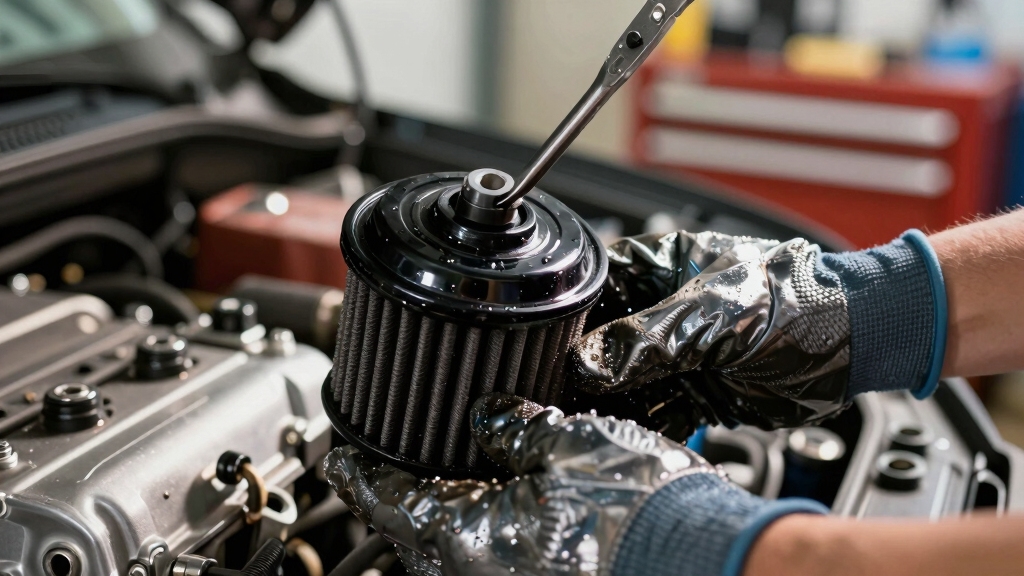
You can use a regular oil filter with synthetic oil as long as it meets your vehicle manufacturer’s specifications for flow rate, filtration efficiency, and durability.
Synthetic oil doesn’t require a specific filter type since filtration depends on media quality, not oil chemistry.
However, using filters rated for the extended intervals synthetic oils allow helps prevent premature saturation and engine wear.
To guarantee peak protection and understand essential filter qualities, exploring these details further is recommended.

The filter media interacts with contaminants, not directly with the oil’s chemistry, so regular filters remain compatible. What matters most is that the filter meets your vehicle manufacturer’s specifications for fit and filtration efficiency.
The Society of Automotive Engineers’ testing shows wear reduction depends on the filter’s micron rating rather than oil type. The term “synthetic” on filters refers to the media composition, not oil compatibility.
Consequently, using a regular oil filter with synthetic oil won’t cause issues, provided you adhere to the filter’s rated service intervals and quality standards. However, filters designed with dual-layer synthetic media offer improved contaminant capture and extended service intervals that can better complement synthetic oil performance.
Although synthetic and conventional oils differ chemically, the type of oil you use doesn’t inherently dictate the oil filter you need.
Instead, filter selection depends on your vehicle’s specifications and the filter’s quality, not the oil chemistry.
Regular filters are compatible with synthetic oil, but extended oil change intervals with synthetic oil require filters with higher contaminant capacity.
| Factor | Consideration |
|---|---|
| Oil Type | No direct impact on filter media choice |
| Filter Quality | Determines contaminant retention |
| Change Interval | Must align with filter’s rated mileage |
Choose a filter rated for your oil change interval. Regular filters work fine with synthetic oil if you stick to appropriate intervals.
However, longer intervals benefit from premium synthetic media filters to prevent saturation and maintain flow.
Filters like Purolator BOSS, with their reinforced polymer mesh media, are specifically designed to support extended oil change intervals with full synthetic oils.
Since your engine’s protection depends largely on how well contaminants are removed, choosing a high-quality oil filter matters far more than selecting one based solely on synthetic or conventional oil compatibility.
The key is the filter’s ability to trap particles effectively and maintain flow under various conditions, not the oil type itself. Synthetic oils don’t alter filtration media interaction, so your focus should be on filter construction and capacity.
Consider these factors when choosing a filter:
Prioritize filter quality to maximize engine wear reduction and maintain peak oil cleanliness regardless of oil chemistry. Additionally, selecting a filter with durable materials and corrosion resistance ensures reliable performance over time, especially under harsh engine conditions.
When selecting an oil filter, understanding micron ratings is vital because they directly affect your engine’s wear protection.
Micron ratings indicate the smallest particle size a filter can trap; lower ratings mean finer filtration.
For example, a 30-micron filter cuts engine wear by 50% compared to a 40-micron filter, while a 15-micron rating reduces wear by 70%.
This performance improvement reduces abrasive contaminants entering your engine, extending its life.
Importantly, these ratings apply equally to synthetic and conventional oils; the oil type doesn’t change filtration efficiency.
Instead, focus on filter quality and micron rating to ensure optimal contaminant removal.
Choosing a filter with a micron rating that matches your oil change interval safeguards your engine against premature wear and filter saturation.
Also, avoiding pre-filling oil filters helps minimize the risk of contamination concerns that could compromise filtration performance.
Understanding filter media types helps you choose the right oil filter for synthetic oil use.
Synthetic or blended media filters trap more contaminants without losing efficiency, making them ideal for longer intervals.
Traditional pleated paper media still performs well for standard oil change intervals (OCI), regardless of oil type.
Premium filters often use dual-layer synthetic media to handle prolonged debris accumulation efficiently.
Synthetic media offers higher contaminant capacity and sustained filtration efficiency.
Dual-layer synthetic media in premium filters supports extended oil change intervals.
Pleated paper media is sufficient for short OCIs with synthetic or conventional oils.
High-end brands like Bosch, Mobil 1, and Fram reliably combine media types with durable construction.
Choose filter media based on your OCI and engine demands, not solely on oil type.
Filters with dual-layer synthetic media provide over 99% filtration efficiency, making them especially suitable for extended oil change intervals.
Choosing the right filter media sets the foundation for effective filtration. Extended synthetic oil changes demand filters designed to handle longer intervals without compromising performance.
Synthetic oil change intervals often range from 10,000 to 20,000 miles. This requires filters with higher contaminant capacity and sustained efficiency.
Standard filters rated for shorter intervals risk saturation and flow restriction if used beyond their design life. Filters with synthetic or dual-layer media, like FRAM Synthetic Endurance, maintain up to 99% efficiency for contaminants ≥20 microns over 25,000 miles.
To guarantee engine protection during extended intervals, select filters explicitly rated for long-life use. These prevent premature clogging and structural failure.
Using high-capacity filters aligns filter life with synthetic oil’s longevity. This optimizes wear reduction and maintains consistent oil flow.
Bypass oil filter systems, which capture particles as small as 2 microns, offer superior protection that complements extended synthetic oil change intervals.
When it comes to using synthetic oil, it’s super important to stick to your vehicle manufacturer’s filter specifications. This helps you keep your warranty intact.
The good news is that most modern vehicles can use regular filters that work just fine with synthetic oil. You see, the type of oil you use doesn’t really change how the filter media interacts.
To make sure you’re choosing the right filters, take a moment to check your owner’s manual. It’ll help you find filters that meet all the necessary performance standards, and it’ll also keep you from running into any warranty issues down the line.
Additionally, properly tightening the oil filter after installation is crucial to prevent oil leaks and ensure optimal engine protection.
Although synthetic oils offer superior performance and extended drain intervals, your vehicle manufacturer’s filter recommendations remain the definitive guide for oil filter compatibility.
Manufacturers specify filters based on flow rate, filtration efficiency, and structural integrity, not oil type. You should always consult your owner’s manual to select filters that meet or exceed these specs.
Key points include:
Filters must handle the extended oil change intervals synthetic oils allow without saturation. Compatibility guarantees proper fit, anti-drainback function, and pressure regulation.
Claims like “made for synthetic” primarily indicate extended life, not exclusive use. Using filters outside manufacturer guidelines risks flow restriction or premature failure.
Following these guidelines guarantees peak engine protection regardless of oil chemistry.
Additionally, choosing filters with appropriate filtration efficiency and construction ensures optimal engine protection during longer synthetic oil service intervals.
Since vehicle manufacturers set specific guidelines for oil filter use, adhering to these specifications is critical to maintaining your warranty when using synthetic oil.
Your vehicle’s owner manual will specify compatible filter types and performance standards, which you must follow. Using a filter that meets or exceeds the manufacturer’s micron rating and capacity requirements guarantees proper filtration and flow, preventing engine wear and damage.
While many regular filters work fine with synthetic oil, selecting one not approved by your manufacturer could void your warranty if issues arise. It’s essential to match the filter’s rated lifespan to your synthetic oil change interval to avoid premature saturation or failure.
Always verify that the filter complies with OEM standards, as warranty claims often depend on strict adherence to these guidelines. Additionally, proper oil filter tightening during installation is crucial to ensure a secure seal and prevent leaks that could compromise engine health and warranty coverage.
When a filter’s capacity falls short of the synthetic oil change interval, it risks saturating prematurely. This can lead to reduced flow and potential structural failure.
Using a filter not designed for extended synthetic oil intervals can cause clogging. This restricts oil circulation and increases engine wear. You may face bypass valve activation, allowing unfiltered oil to circulate and risking contamination.
Additionally, insufficient filter durability can result in media collapse under pressure, potentially damaging engine components.
Key risks include:
Selecting a filter rated for your synthetic oil’s extended interval is critical to maintaining peak engine protection. Filters with high-flow designs and reinforced structural components offer better performance under these conditions.
When you’re using synthetic oil, it’s super important to prioritize the quality of your oil filter. Why? Well, a good filter helps ensure effective removal of contaminants, which means better protection for your engine.
Now, you’ll want to match the filter’s capacity and micron rating with your oil change interval. This way, you can avoid any premature saturation or flow issues.
And don’t forget to check your vehicle manufacturer’s recommendations! This step is crucial for keeping your warranty intact and ensuring your car runs at peak performance.
Although synthetic oil itself doesn’t demand a special filter, choosing a high-quality oil filter notably impacts engine protection and longevity.
The filtration efficiency and media durability in your filter directly affect contaminant removal and wear reduction.
Opt for filters rated for finer micron levels to trap smaller particles longer, minimizing engine damage.
Prioritize filters with synthetic or dual-layer media to maintain performance over extended intervals typical for synthetic oil.
Key factors to take into account include:
Selecting a superior filter enhances synthetic oil benefits by preserving engine cleanliness and reliability.
To guarantee peak engine protection, matching your oil filter to the synthetic oil change interval (OCI) is essential.
Synthetic oils often extend OCIs to 10,000–20,000 miles, so you need a filter designed to handle that duration without saturation or flow restriction.
Standard filters rated for 3,000–7,500 miles risk clogging and reduced efficiency when used for longer intervals.
Opt for filters explicitly rated for extended mileage, such as those providing 10,000 miles or more of contaminant capacity.
Alternatively, you can change a standard filter at mid-OCI to prevent overload.
Synthetic media filters with dual-layer construction offer superior debris retention over extended miles, maintaining filtration efficiency without degradation.
Matching filter capacity to your synthetic oil’s OCI guarantees consistent contaminant removal, preserving engine wear protection throughout the oil change cycle.
When selecting an oil filter for synthetic oil, verifying your vehicle manufacturer’s recommendations is essential to maintain warranty compliance and guarantee peak engine protection.
Your vehicle’s manual specifies compatible filter models and performance standards, ensuring proper fit and filtration efficiency.
While many modern filters work with both synthetic and conventional oils, adhering to OEM guidelines prevents risks like filter saturation or flow restriction.
Consider these key points:
Follow manufacturer-specified filter part numbers and ratings.
Use filters designed for your oil change interval to avoid premature clogging.
Verify filter media type and build quality meet OEM standards.
Beware marketing claims; prioritize compatibility over “synthetic-specific” labels.
You should replace your oil filter according to the oil change interval recommended for synthetic oil, typically every 10,000 to 20,000 miles.
Make sure your filter matches this extended interval to avoid saturation or flow restriction.
If your filter is rated for shorter intervals, change it more often or consider mid-interval replacements.
Always follow your vehicle manufacturer’s guidelines to maintain peak filtration and engine protection when using synthetic oil.
Picture your warranty as a shield. Using the wrong oil filter can chip that shield if it violates manufacturer specs.
You won’t automatically void your warranty by using a regular filter with synthetic oil. However, if your filter choice causes engine damage or fails to meet vehicle requirements, the manufacturer might deny claims.
Always follow your owner’s manual and choose filters rated for your oil change interval. This will help keep that warranty intact and your engine protected.
Yes, synthetic oil filters typically cost more than regular filters.
They use advanced synthetic media and reinforced construction to handle longer intervals and higher contaminant loads.
This boosts durability and filtration efficiency, justifying the price difference.
However, if you plan standard oil change intervals, regular filters suffice.
Investing in a synthetic filter makes sense when extending oil change intervals or maximizing protection with synthetic oils.
Like a well-tuned orchestra, synthetic oil filters maintain steady oil pressure and flow rates without disruption.
They’re designed with advanced media that traps contaminants efficiently while allowing consistent oil passage.
Unlike some older filters that may restrict flow as they clog, premium synthetic filters sustain performance over extended intervals, preventing pressure drops.
Yes, you can switch back to conventional oil using a synthetic-rated filter without issues.
Synthetic-rated filters are designed for extended intervals and higher contaminant capacity, so they’ll handle conventional oil just fine.
Just make certain the filter meets your vehicle’s specifications and oil change interval.
Using a synthetic-rated filter won’t harm flow rates or filtration with conventional oil, but it might be over-engineered for shorter conventional oil change intervals.
When using synthetic oil, don’t just grab any regular filter like it’s a one-size-fits-all hat. Think of your oil filter as the oil’s bodyguard. Its quality and micron rating directly impact protection and performance.
Synthetic oil demands a filter that can keep pace with its advanced formula.
So, follow your vehicle manufacturer’s playbook and choose a filter designed for synthetic oil to make certain your engine runs smooth, clean, and strong.