Physical Address
304 North Cardinal St.
Dorchester Center, MA 02124
Physical Address
304 North Cardinal St.
Dorchester Center, MA 02124
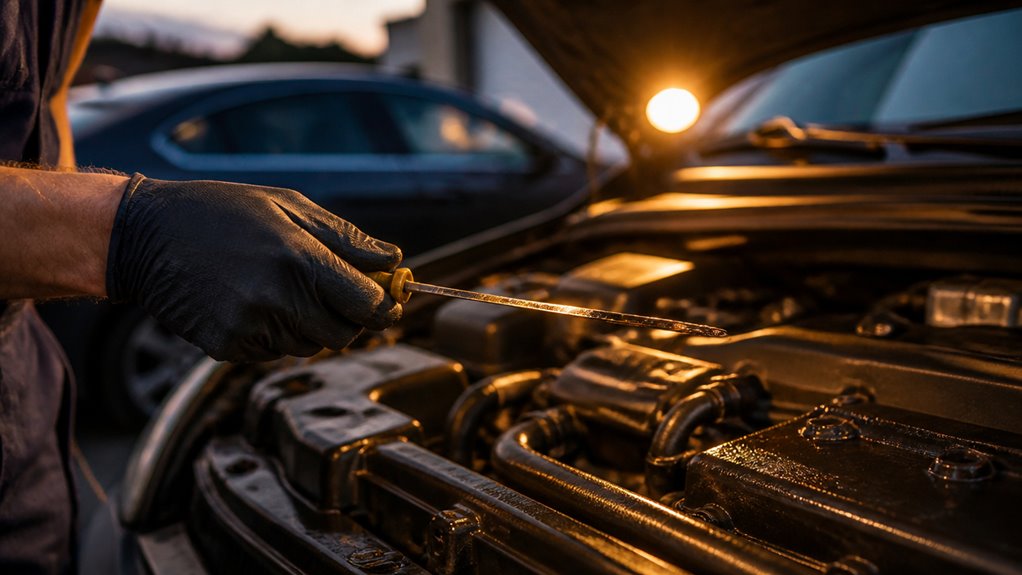
Yes, you can check your oil after driving, but first park on level ground and turn off the engine.
Wait 5 to 10 minutes to allow the oil to settle into the sump for an accurate reading. Warm oil flows better and reflects current engine conditions, but avoid checking immediately to prevent skewed results.
Use the dipstick correctly: wipe, reinsert fully, then remove to check levels. Understanding these steps guarantees you get precise readings and maintain engine health; there’s more to explore on this process.

Although you can check your engine oil shortly after driving, it’s crucial to do so safely to avoid burns from hot engine parts and guarantee an accurate reading.
First, park your vehicle on a level surface to prevent skewed oil level readings.
After shutting off the engine, wait at least 5 to 10 minutes to allow oil to drain back into the sump.
Avoid touching hot components like the engine block, belts, or exhaust parts.
When opening the hood, do so carefully, as heat can linger.
Use a clean rag to wipe the dipstick before reinserting it fully, then remove it again to check the oil level.
This method guarantees safety while providing a precise measurement of your oil’s true level after driving.
Keep in mind that modern engines maintain a residual oil film that helps protect components even during short intervals after driving.
You know, it’s best to check your oil either when the engine is cold or after you’ve driven and let it sit for about 5 to 10 minutes. This way, you get a more accurate reading.
When you wait, the oil has a chance to drain back into the sump, so you avoid those misleading low levels that can happen when the oil is still circulating.
And here’s a tip: try to check your oil at the same time and under the same conditions each time. This consistency really helps you keep track of your oil levels over time.
It makes it easier to spot any changes that might need your attention!
Also, keep in mind that the Maintenance Minder system monitors oil life based on driving conditions and engine use, helping you know when an oil change is due.
Balancing accuracy and convenience often leads drivers to choose between cold and warm oil checks.
Cold checks involve measuring oil after the engine has been off for several hours. This provides a stable reading since oil has fully settled into the sump.
This method minimizes the risk of false low readings caused by oil still circulating in engine components.
Warm checks, performed after the engine reaches operating temperature and then rests for 5 to 10 minutes, offer a practical approach.
This is especially useful when immediate assessment is needed. While warm checks reflect active engine conditions, they require careful waiting for oil to drain back to avoid inaccurate levels.
Consistency in your chosen method guarantees reliable comparisons over time. Both approaches are valid; select based on your convenience and adherence to vehicle-specific guidelines.
Using oil with the appropriate temperature resistance is crucial to maintain accurate readings and engine protection during these checks.
Allowing the oil to settle after driving guarantees you get an accurate reading of its true level. After you shut off your engine, wait about 5 to 10 minutes before checking the oil.
This pause lets the oil drain back into the sump, ensuring the dipstick reflects the actual volume. If you’ve driven hard, such as on highways or towing, extend the wait to 10 to 15 minutes.
Checking immediately can cause a falsely low reading because oil remains distributed throughout the engine. Always park on level ground to avoid skewed results.
During this waiting period, the engine must stay off to prevent circulation. Following this timing protocol helps you obtain precise oil measurements and maintain your engine’s health effectively.
Oil changes typically take 15 to 45 minutes depending on vehicle type and filter accessibility, so planning your maintenance can help optimize your schedule.
Consistently checking your oil at the same time and under similar conditions guarantees the most reliable comparisons over time.
Whether you choose a cold start or a warm-but-rested state after driving, maintaining that routine minimizes variability caused by temperature fluctuations and oil circulation.
Always perform the check on level ground and after waiting the recommended 5 to 10 minutes for oil to settle.
This consistency guarantees that dipstick readings reflect the true oil level in the sump rather than transient conditions.
Over multiple checks, this method helps you detect gradual oil loss or issues early.
Deviating from your established routine can produce misleading data, complicating maintenance decisions.
For accuracy, follow your vehicle’s manual guidance and replicate the same procedure each time you inspect the oil.
Regularly checking oil condition also helps identify problems like milky oil contamination early, preventing severe engine damage.
Because engine oil circulates through various components while running, checking the oil level immediately after driving can give you an inaccurate reading.
When the engine is off, the oil needs time, typically 5 to 10 minutes, to drain from the upper parts of the engine back into the oil sump.
This pause allows the dipstick to reflect the true oil volume in the reservoir rather than the transient state of oil distribution during operation.
Without this wait, you risk reading a falsely low level since oil remains dispersed.
Additionally, waiting helps equalize pressure within the engine’s lubrication system, stabilizing the oil’s position.
It is also important to use the correct oil type and viscosity to ensure accurate readings and proper engine lubrication, as incorrect oil use can affect oil distribution and performance.
While engine temperature plays a pivotal role in oil behavior, checking your oil at the right temperature guarantees accurate level readings.
Warm oil is less viscous, allowing it to flow back into the sump quickly. However, immediately after shutdown, oil remains distributed in the engine, leading to inaccurate dipstick readings.
Waiting 5 to 10 minutes balances oil drainage with safety from hot surfaces. Cold oil is thicker and settled but may not represent operating conditions.
| Engine State | Oil Viscosity | Recommended Wait Time |
|---|---|---|
| Cold | High (thick) | None or before startup |
| Operating Warm | Low (thin) | 5-10 minutes after stop |
| Just Shut Off | Medium (uneven) | 10-15 minutes |
Timing your check secures precise oil level readings and protects you from burns. Additionally, as oil temperature rises, its thermal expansion causes volume increases that can affect accurate level measurement.
When checking your engine oil, parking on level ground guarantees the most accurate reading by preventing oil from pooling unevenly inside the sump.
If your vehicle is on an incline, oil naturally shifts to one side, causing the dipstick to show a misleading level.
This can result in either overfilling or underfilling, both of which risk engine damage.
A level surface guarantees the oil distributes evenly, reflecting the true quantity present.
Manufacturers specify level ground conditions because oil’s static position affects the dipstick’s measurement precision.
Even slight slopes can skew results, so always prioritize flat terrain before checking.
This simple step eliminates a common error source, enabling you to trust your reading and maintain optimal engine lubrication.
Regularly checking your oil level can help detect low oil level early, preventing potential engine damage.
After you’ve parked on level ground and turned off the engine, wait about 5 to 10 minutes to allow the oil to settle before using the dipstick.
Park on level ground, turn off the engine, and wait 5 to 10 minutes for oil to settle before checking.
Open the hood carefully to avoid hot components.
Pull the dipstick out fully and wipe it clean with a lint-free cloth or paper towel to remove all oil residues.
Reinsert the dipstick fully back into its tube, ensuring it seats completely to avoid inaccurate readings.
Remove the dipstick again and hold it horizontally to read the oil level by comparing it against the minimum and maximum marks.
Avoid tilting the stick or your head, as this can distort the reading.
If the level is below the minimum mark, add oil cautiously, checking repeatedly to prevent overfilling.
Proper oil maintenance also depends on ensuring the oil drain plug is correctly tightened to avoid leaks or contamination.
Checking your oil while it’s warm offers practical advantages over cold checks by reflecting the oil’s behavior during normal engine operation.
Warm oil has a lower viscosity, allowing it to flow freely and settle more accurately in the sump after a brief resting period. This state reveals a realistic oil level, accounting for thermal expansion and circulation patterns that cold oil measurements might miss.
Additionally, inspecting warm oil helps you assess its condition more effectively, as contaminants and sludge are more visible when the oil is fluid.
However, you must wait 5 to 10 minutes after shutdown to allow oil to drain from engine components. By checking warm oil under these controlled conditions, you obtain a practical, operationally relevant reading that can better inform maintenance decisions than a purely cold measurement.
Regular monitoring of oil condition and viscosity is essential to maintain optimal engine lubrication and fuel efficiency.
If your oil level looks low after driving, you should first make sure the vehicle is parked on level ground. The engine should be off for at least 5 to 10 minutes to allow the oil to settle properly.
Then, recheck the dipstick by wiping it clean, reinserting it fully, and removing it again for an accurate reading.
If the level remains below the minimum mark, inspect for leaks around the engine and under the vehicle.
Avoid adding oil immediately without confirming the low reading, as residual oil circulation can cause inaccuracies. If leaks are absent, add oil gradually, checking frequently to avoid overfilling.
Persistent low levels warrant a professional inspection to rule out engine wear or oil consumption issues. Always use the recommended oil grade specified for your vehicle.
You know, it’s really important to pay attention to your vehicle’s manual when figuring out when to check your oil. That manual is like a guidebook specifically made for your engine, giving you all the details you need.
For example, it usually outlines the best temperature, how long to wait after shutting off your engine, and other conditions that can affect your oil reading.
Following those guidelines isn’t just a good idea; it helps ensure you get accurate measurements. Plus, it keeps you from running the risk of engine damage that might happen if you check your oil incorrectly. So, next time you’re thinking about checking your oil, just take a peek at the manual first! It really makes a difference.
Although general guidelines provide a useful framework for when to check your engine oil, your vehicle’s manual takes precedence. It offers the most accurate instructions tailored to your specific model.
Manufacturers conduct extensive testing to determine ideal conditions for oil level measurement, including engine temperature, wait times after shutdown, and recommended surfaces. Following these instructions guarantees you get precise readings, avoid overfilling or underfilling, and maintain engine longevity.
Your manual may specify different wait times after driving or emphasize cold versus warm checks based on your engine design. Ignoring these recommendations risks inaccurate readings and potential damage.
Always consult your manual first before applying general advice, as the manual’s guidance overrides generic rules and aligns directly with your vehicle’s operational requirements and oil system characteristics.
Since vehicle designs and oil systems vary widely, your owner’s manual provides the definitive instructions on when and how to check the engine oil level.
Manufacturers tailor guidelines based on engine type, oil capacity, and circulation systems, specifying optimal timing. They often advise a 5 to 10-minute wait after shutdown to allow oil to settle.
Some manuals emphasize cold checks before startup, while others permit warm checks after resting. They may also address special conditions like extended idling, towing, or high-performance driving, recommending longer wait times.
Ignoring these specifics risks inaccurate readings or safety hazards. Always follow the manual’s procedure for dipstick use, engine temperature state, and surface requirements to guarantee precise oil level assessment.
Adhering strictly to your vehicle’s manual maximizes engine maintenance and prolongs component lifespan.
Yes, your driving style affects how quickly oil settles after shutdown. Aggressive driving with high RPMs or towing increases engine temperature and oil circulation speed, meaning oil takes longer to drain back into the sump.
After such driving, you should wait 10 to 15 minutes before checking oil level to get an accurate reading. Gentle or steady driving heats the engine less, so oil settles faster, often within 5 to 10 minutes.
Yes, oil type and viscosity do influence the wait time before checking your oil.
Thicker, high-viscosity oils drain back to the sump more slowly. You might need to wait a bit longer, closer to 10-15 minutes, after driving.
Conversely, thinner oils settle faster, allowing accurate readings within 5-10 minutes.
Always consult your vehicle’s manual for specific recommendations, as manufacturers may adjust wait times based on the oil specs your engine requires.
After long highway trips, you should check your oil levels every time you park and let the engine rest for about 10 to 15 minutes.
Picture the oil settling smoothly back into the sump, giving you an accurate reading.
Regular checks prevent surprises from heat or strain-related oil loss.
Make sure you’re on level ground, wipe the dipstick clean, and confirm the oil sits between the marks to maintain engine health precisely.
Adding oil immediately after driving won’t harm your engine if done carefully, but it’s best to wait 5 to 10 minutes first.
This pause lets the oil settle into the sump, giving you an accurate reading and preventing overfilling.
Pouring oil while the engine is hot and oil is still circulating can cause inaccurate levels and lead to adding too much.
Always check on level ground and follow your vehicle’s manual for best results.
Think of a warm oil check like reading a novel by the fireplace—it reveals details cold pages can’t.
Yes, some signs like milky discoloration, indicating coolant leaks, or metal shavings from wear become visible only when oil is warm and fluid.
Warm oil also shows consistency issues, like sludge or thinning, which cold checks might mask.
When you check your oil after driving, wait 5 to 10 minutes to let it settle for an accurate reading.
For example, a mechanic found that a car’s oil level appeared low immediately after a drive but showed normal levels after waiting, preventing unnecessary top-ups.
Always consult your vehicle’s manual and check on level ground using the dipstick properly.
This approach guarantees precise oil monitoring, protecting your engine’s health and performance.