Physical Address
304 North Cardinal St.
Dorchester Center, MA 02124
Physical Address
304 North Cardinal St.
Dorchester Center, MA 02124
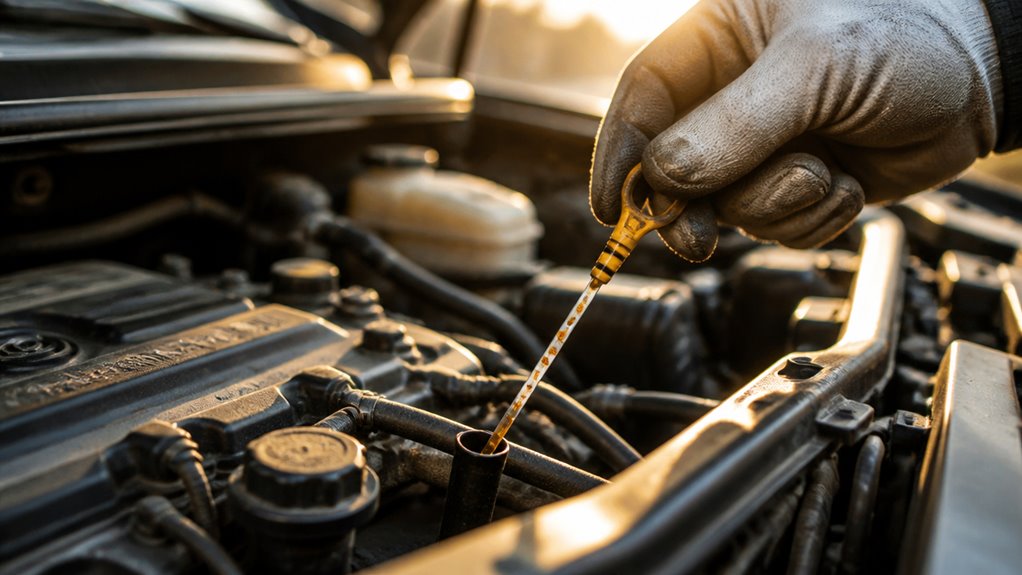
You should check your engine oil 5 to 10 minutes after turning off a warmed-up engine for the most accurate level.
This wait allows oil to settle in the sump, avoiding falsely low or high readings from circulating or expanded hot oil.
Always perform the check on a level surface and follow your owner’s manual for specifics.
Consistency in your method guarantees reliable monitoring.
Understanding the effects of temperature and timing can further optimize your oil maintenance routine.

To get the most accurate oil level reading, check your vehicle’s oil 5 to 10 minutes after shutting off a warmed-up engine.
Check your vehicle’s oil 5 to 10 minutes after turning off a warmed engine for the most accurate reading.
This pause allows oil to drain back into the sump, ensuring the dipstick reflects the true reservoir level.
You should avoid checking immediately after driving or with the engine running, as circulating oil skews readings and poses safety risks.
Some recommend cold checks before starting, as oil has fully settled; however, this may not represent operating conditions.
Since manufacturer instructions differ, some specify warm checks while others prefer cold.
You should always consult your owner’s manual.
Consistency matters more than method choice.
Also, always park on level ground to prevent skewed readings.
This timing balances accuracy, safety, and repeatability for reliable oil monitoring.
For optimal engine health, remember to change oil at least once every 12 months regardless of oil life percentage to prevent sludge buildup and damage.
Begin by parking your vehicle on a level surface and turning off the engine to guarantee an accurate oil level reading. Wait 5 to 10 minutes to allow oil to drain back into the sump.
Next, locate the dipstick, pull it out, and wipe it clean with a lint-free cloth. Fully reinsert the dipstick, ensuring it seats properly, then remove it again to observe the oil level.
Check that the oil level falls between the LOW and FULL marks; ideally, it should be closer to FULL without exceeding it. If necessary, top up with the recommended oil type, avoiding overfilling.
Always follow your owner’s manual instructions and avoid checking immediately after driving or on uneven ground to prevent inaccurate readings. Regular oil maintenance should also include inspecting the oil filter tightness to prevent leaks and ensure engine health.
When your engine heats up, the oil inside it expands, which directly influences the reading you get from the dipstick.
This thermal expansion means the oil level appears higher when warm, but that’s not the only factor affecting accuracy.
Consider these points to understand why temperature matters:
Additionally, low oil levels can cause inaccurate readings and may indicate underlying issues with oil pressure.
Although both cold and warm oil checks offer valid insights, choosing the right method depends largely on your vehicle’s specifications and the conditions under which you want the most accurate reading.
Cold checks involve measuring oil after the engine has been off for several hours. This allows oil to fully settle in the pan, providing a stable baseline level.
Warm checks, typically performed 5 to 10 minutes after shutdown, reflect oil behavior closer to operating conditions. This method allows oil to drain back while avoiding scalding heat.
Your owner’s manual usually specifies the preferred method since oil expansion and circulation vary by engine design. Consistency is key—stick to one approach to track changes reliably.
If unspecified, warm checks on level ground after a short wait offer a practical balance between accuracy and safety.
Keep in mind that oil volume changes with temperature due to thermal expansion, which can affect the accuracy of your reading if not accounted for.
Regularly checking your oil level is essential to maintaining engine health and preventing costly damage.
Establishing a consistent schedule helps you catch low oil before it leads to engine wear or failure. Here’s how often you should check:
This disciplined approach reduces the risk of running on insufficient oil and prolongs engine lifespan.
Adhere to your owner’s manual for vehicle-specific recommendations.
For efficient maintenance, combining oil checks with other services like oil changes and tire rotations can save time and improve vehicle health.
Yes, the type of oil can influence how you check the level.
Synthetic oils often flow more smoothly and may settle faster, allowing a quicker, more accurate reading after shutdown.
Conventional oils might require a slightly longer wait to return to the sump fully.
Regardless, always follow your vehicle’s manual instructions.
Consistency in your checking method matters more than oil type, so maintain the same procedure each time for reliable monitoring.
If your oil level is consistently low, first check for leaks under the vehicle and around the engine.
Monitor oil consumption by tracking how much you add between changes.
Inspect for burning oil signs like blue smoke or engine noise.
If unsure, have a mechanic perform a compression or leak-down test.
Address issues promptly to avoid engine damage.
Also, make certain you use the correct oil grade and change intervals per your owner’s manual.
If your engine guzzles oil like a thirsty beast, it’s a red flag for serious wear.
Excessive oil consumption means seals and piston rings might be worn, letting oil slip into combustion chambers or leak externally.
This accelerates engine degradation, risking overheating and damage to critical parts.
Monitoring oil use helps you catch wear early, so you can maintain performance and avoid costly repairs by addressing issues before they spiral out of control.
Yes, it’s safe to add oil immediately after checking the level, provided you’ve taken the proper safety steps.
Make sure the engine is off and has cooled down enough to avoid burns from hot components.
Use a clean funnel to prevent contamination and add oil gradually, checking the dipstick frequently to avoid overfilling.
Always follow your owner’s manual for the recommended oil type and quantity to maintain engine health.
Wondering if synthetic oil changes how often you should check it? Yes, synthetic oil generally extends oil change intervals due to superior stability and resistance to breakdown.
However, you shouldn’t drastically reduce checking frequency, especially if your vehicle is older or prone to leaks. Regular monthly checks or every 1,000 miles still help catch issues early.
Synthetic oil improves durability, but consistent monitoring guarantees engine protection and peak performance.
Checking your oil at the right time is like tuning a finely crafted instrument. It guarantees your engine runs smoothly and efficiently.
Always check when the engine is warm but turned off, allowing oil to settle for an accurate reading. Regularly monitoring your oil level helps you catch issues before they snowball, protecting your engine’s health.
Make it a habit, and your vehicle will thank you with reliable performance and longevity.