Physical Address
304 North Cardinal St.
Dorchester Center, MA 02124
Physical Address
304 North Cardinal St.
Dorchester Center, MA 02124

To remove oil stains from concrete effectively, start by blotting fresh spills with an absorbent like cat litter to prevent deep penetration. Apply a quality degreaser or enzyme-based cleaner, letting it sit per instructions, then scrub with a stiff brush.
For stubborn or aged stains, repeat chemical treatments and consider mechanical methods like power washing or gentle grinding. Finish by sealing the surface to block future stains and preserve appearance.
Continuing will reveal detailed steps and preventive tips.
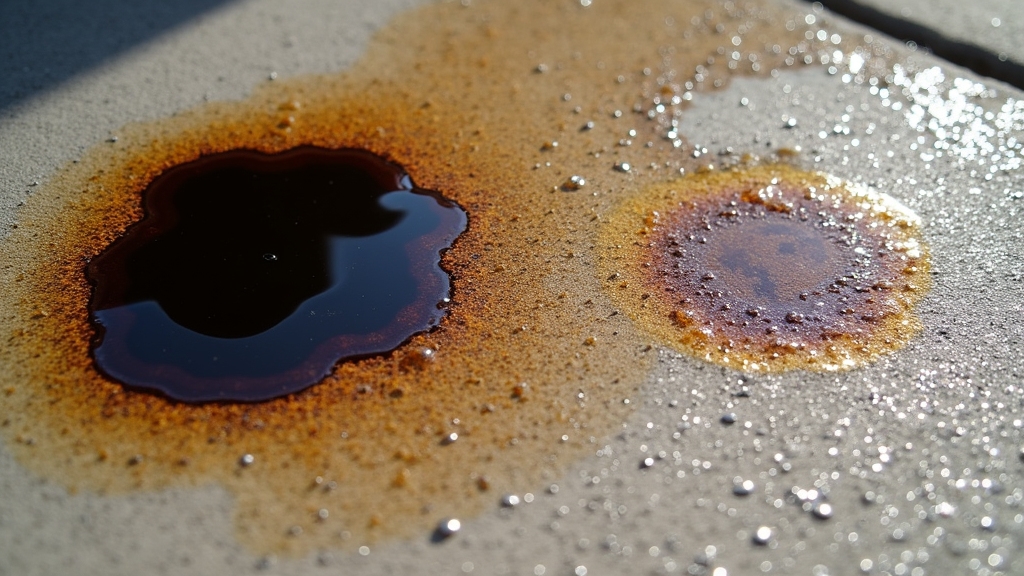
When you’re dealing with oil stains on concrete, identifying the type of oil is essential for effective removal.
Fresh stains look glossy and wet, while older ones dull as oil soaks deeper into the concrete’s tiny pores. Colors vary—black for motor oil, red for transmission fluid—and stains may darken surrounding concrete.
Recognizing these characteristics helps you select the right cleaning method and improve stain removal success. Using cleaners formulated with detergents and dispersants can prevent residue buildup and enhance stain removal effectiveness.
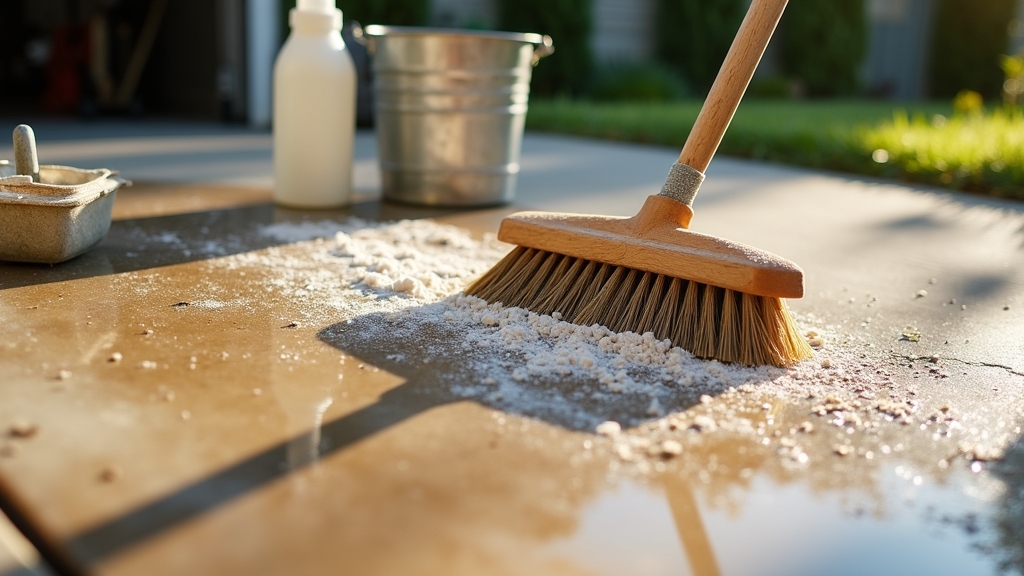
Although oil spills on concrete can quickly seep into porous surfaces, you can effectively manage fresh spills by applying absorbents immediately.
Start by liberally sprinkling a suitable absorbent like cat litter, clay-based powders, or commercial products such as ACT Absorbent over the spill. ACT Absorbent is a bio-remediation dry powder that breaks down hydrocarbons at the microbial level, making cleanup both fast and eco-friendly.
Choosing absorbents that support environmental sustainability can further reduce the impact of oil spills. Press gently to maximize oil uptake, then let it sit for 20–30 minutes. After absorption, sweep or vacuum the material carefully to avoid spreading oil.
Dispose of used absorbents per local regulations to prevent contamination.
| Absorbent Type | Key Feature | Application Tip |
|---|---|---|
| Clay-based | Forms rubbery mass | Scrape after absorption |
| Commercial (ACT, Zep) | Rapid uptake & bio-remediation | Ideal for large spills |
| Biodegradable powders | Eco-friendly | Use for sensitive environments |
After removing fresh oil with absorbents, tougher stains often require chemical cleaners or degreasers to break down and lift embedded oils.
Start by removing excess oil and debris, ensuring the concrete is dry for maximum penetration. Using a water-based microbial stain remover can enhance the cleaning process by breaking down oil stains more effectively.
It is important to maintain cooling systems in nearby machinery to prevent further oil contamination during cleaning. Begin by clearing away oil and debris, making sure the surface is dry for optimal cleaner absorption.
Choose the right product: enzyme-based for microbial breakdown, poultices for deep stains, surfactants to emulsify oil, or citrus-based for stubborn spots. Apply the cleaner directly, covering the entire stain, and let it dwell as recommended.
Remember to:
Follow safety instructions and dispose of waste properly to protect yourself and the environment.
Because chemical treatments alone sometimes can’t fully remove oil stains embedded in concrete, mechanical agitation and scrubbing techniques become essential. You’ll use wire brushes, power washers, or floor scrubbers to physically remove the stained surface layer.
Choose brush type carefully: metal for aggressive scrubbing, plastic to protect texture. Mechanical methods expose clean concrete but may alter surface appearance, so treat the entire floor evenly.
| Method | Tools | Notes |
|---|---|---|
| Manual Scrubbing | Stiff wire/plastic brushes | Best for small, localized stains |
| Mechanical Scrubbing | Floor scrubbers | Efficient for large areas |
| Power Washing | Pressure washer | Use with degreaser pre-treatment |
| Wire Brushing | Copper, steel brushes | Aggressive stain removal |
| Surface Texture | Grinding, shotblasting | Alters surface, uniform treatment |
Apply consistent pressure and multiple passes for best results. Understanding the composition of base oil can help tailor cleaning methods to effectively break down different types of motor oil stains on concrete.
When tackling light to moderate oil stains on concrete, you can rely on common household items to achieve effective results. Start by choosing an appropriate method based on your supplies and stain severity. Here are four reliable approaches:
Select a cleaning method that suits your materials and the intensity of the oil stain.
Repeat treatments if necessary. These household methods are cost-effective, straightforward, and environmentally friendly for maintaining clean concrete surfaces.
When it comes to dealing with old or deep oil stains, you really need to use some specialized chemical treatments. These products are designed to break down those embedded oils that can be such a pain to remove. Because concrete’s porous nature causes oil to sink deep into the substrate, embedded oil is difficult to remove without products designed to break through and extract it.
Plus, you’ll want to incorporate some mechanical methods to really lift those residues off effectively. Using tools with careful pressure application can help avoid damage while loosening stubborn stains.
You might find that repeated cleaning cycles are key here. They often provide the thorough extraction needed for those stubborn stains that just don’t want to budge. By combining these approaches, you can be confident that you’re restoring your concrete without compromising its surface integrity.
Although old or deep oil stains can be stubborn, specialized chemical treatments offer effective solutions to remove them from concrete. You’ll want to choose methods that penetrate deeply without damaging the surface.
Consider these options:
Always follow product instructions carefully to maximize effectiveness and protect your concrete.
Since chemical treatments sometimes fall short on old or deeply embedded oil stains, mechanical removal offers a reliable alternative by physically stripping the contaminated concrete surface.
You can choose from sandblasting, shotblasting, flame scarification, or grinding, each suited to specific conditions. Selecting the correct method depends on factors such as stain depth and the surrounding material sensitivity to ensure effective deposit control.
Sandblasting aggressively blasts abrasive sand, effective for large outdoor areas but risks surface damage. Shotblasting uses steel shots for a gentler clean, ideal indoors with less dust. Flame scarification burns off stubborn stains but demands skilled handling to avoid cracking.
Grinding employs rotating discs to remove stains and smooth the surface, though it can be labor-intensive. Heat treatment can also be used after mechanical methods to remove any residual oil, enhancing overall stain removal effectiveness heat treatment benefits.
Keep in mind, these methods permanently alter the concrete’s texture and appearance, often requiring refinishing afterward. Always use proper protective gear and manage dust during the process.
If oil stains have settled deep into concrete pores, you’ll need to commit to repeated cleaning cycles to fully lift them.
Deep-set stains often require a methodical approach, combining various treatments and persistence. Because oil’s low surface tension and hydrophobic nature cause it to seep into microscopic pores instantly, simple cleaning is usually ineffective.
Using oils with a high viscosity index can influence how deeply they penetrate surfaces and how challenging they are to remove. Start by applying specialized degreasers or poultices to break down and absorb embedded oil.
Follow with thorough scrubbing and rinsing, then let the surface dry completely before reassessing. Repeating this process gradually reduces the stain’s intensity. Key steps include:
Stay patient and systematic. Old, ingrained stains respond only to persistent effort.
When you’re getting ready to pressure wash your concrete, it’s important to set your pressure washer between 1,800 and 3,000 PSI. You might need to adjust that based on how old or worn your concrete is. The goal here is to avoid causing any surface damage.
Also, make sure to keep the nozzle at least 12 inches away from the surface. Using the proper pressure settings helps prevent erosion and surface damage.
It’s a good idea to use sweeping motions while you’re washing. This technique helps protect the concrete from any gouging or streaking that can happen if you stay in one spot too long. And hey, before you dive into the whole area, take a moment to test on a small spot first.
This way, you can find that sweet spot between effective cleaning and keeping your concrete looking great! Proper ventilation and safety precautions should also be considered to ensure a safe cleaning environment.
When removing oil stains from concrete, selecting the essential pressure setting is vital to balance effective cleaning and surface preservation. You’ll want to adjust PSI and GPM according to your concrete’s age and stain severity. Too low won’t clean well; too high risks damage.
Keep these guidelines in mind:
Choose a 15- or 25-degree nozzle to balance pressure and surface safety. Using hot water can significantly improve the dissolution of oil during pressure washing.
Adjusting pressure settings properly sets the foundation, but protecting the concrete surface during pressure washing is just as important.
First, clear the area of furniture, vehicles, and debris. Sweep thoroughly to remove loose dirt. Shield nearby plants and electrical outlets with covers. It is also advisable to wear long pants and closed-toe shoes for additional protection during the process.
Inspect the concrete for cracks, avoiding high pressure on weak spots. When washing, use a 25-degree nozzle held 12 to 18 inches away, moving in slow, overlapping strokes to prevent etching or streaks.
Always wear safety goggles, gloves, closed-toe shoes, and hearing protection.
Apply cleaning agents following instructions, rinse thoroughly, and avoid spraying people or pets.
After cleaning, flush the equipment, inspect for missed areas, and let the concrete dry completely before use.
This methodical approach preserves surface integrity and ensures safe, effective cleaning.
Although concrete is durable, it remains vulnerable to oil stains without proper protection. Applying high-quality sealers and implementing routine maintenance are essential to safeguard its surface.
Concrete’s durability doesn’t prevent oil stains; sealing and regular upkeep are key to protection.
You should use penetrating or film-forming sealers to reduce porosity and block stain ingress effectively. Promptly clean spills to prevent deep penetration and regularly sweep and wash concrete with mild soaps.
Additionally, place absorbent mats or drip pans in high-risk zones to catch leaks before they reach the surface. Using protective barriers under plant containers and equipment further reduces localized staining.
Environmental factors such as moisture and temperature fluctuations can affect concrete’s vulnerability, so understanding these environmental influences helps in selecting the right protective measures.
Protecting concrete from oil stains doesn’t stop at preventive measures; combining thorough cleaning with proper sealing offers a more all-encompassing defense. You’ll remove existing stains and shield the surface from future damage by applying this two-step approach promptly after cleaning, ensuring the concrete is dry.
| Step | Purpose |
|---|---|
| Cleaning | Removes oil and prepares surface for sealing |
| Sealing | Blocks oil penetration and prolongs surface life |
| Timing | Sealing immediately after cleaning maximizes protection |
Choose the right sealer for your surface—penetrating types for outdoors, film-forming for high-traffic indoors—and follow manufacturer instructions precisely. This method reduces maintenance, enhances appearance, and extends your concrete’s durability, giving you long-term results worth the effort.
Yes, oil stains on concrete can cause structural damage over time. When oil seeps into concrete, it increases permeability, letting moisture and harmful chemicals in.
This can corrode reinforcement bars and weaken the concrete’s strength, leading to cracks and crumbling. If you don’t treat oil contamination, especially on rough or untreated surfaces, you risk long-term deterioration and potential structural failure.
Regular cleaning and sealing are essential to protect your concrete.
Yes, you can find many eco-friendly oil stain removal products.
These use natural enzymes, plant-based degreasers, or microbial action to break down oil without harsh chemicals.
Options like enzyme powders or biodegradable liquids work safely around plants and pets.
They require minimal rinsing and are often EPA-approved.
Choosing these products means you effectively clean oil stains while protecting the environment and maintaining concrete integrity.
Oil stains start setting into concrete within minutes, usually under 10 minutes. The quicker you act, the easier removal gets.
Within hours to days, oil bonds deeper into pores, making stains tougher. After weeks or more, stains become nearly permanent without specialized treatment.
Factors like concrete porosity, temperature, and humidity speed or slow this process. So, you need to clean spills immediately or risk a stubborn, set-in stain.
Yes, you can remove oil stains from painted or sealed concrete, but you need to be cautious.
Use mild detergents or cleaners specifically made for sealed surfaces to avoid damaging the coating.
Act quickly to prevent deep penetration and scrub gently with a soft brush.
Avoid harsh chemicals and pressure washing.
Multiple treatments might be necessary, and sometimes professional help or re-coating is needed to fully restore the surface.
Using bleach on oil-stained concrete isn’t safe; you risk damaging the surface.
Studies show bleach can cause discoloration and weaken concrete, leading to permanent etching.
If you must use it, always dilute bleach heavily, wear protective gear, and avoid mixing it with other chemicals.
Instead, opt for gentler cleaners like dish soap or commercial degreasers designed for concrete.
Bleach is better reserved for disinfecting, not oil stain removal.
Think of your concrete as a canvas; each oil stain a dark brushstroke disrupting its clarity. By acting swiftly with absorbents, scrubbing with precision, and sealing with care, you restore its clean, solid foundation.
Combining these steps is like wiping away shadows, revealing strength beneath. Stay vigilant and protect your surface so it remains a pristine stage for years to come, standing resilient against the inevitable marks of everyday life.