Physical Address
304 North Cardinal St.
Dorchester Center, MA 02124
Physical Address
304 North Cardinal St.
Dorchester Center, MA 02124
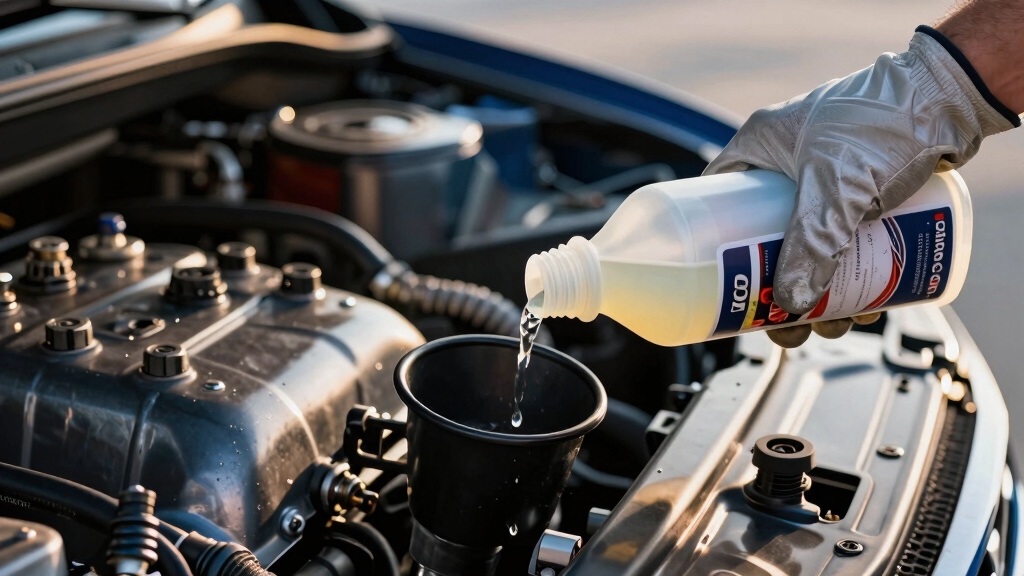
You can raise your fuel’s octane effectively with boosters, which introduce chemical compounds like toluene to resist knocking.
However, their impact depends on your engine type and knock susceptibility. They benefit high-compression or turbocharged engines most.
Typical boosters increase octane by 1 to 6 points, with premium products reaching up to 8. Gains don’t always translate into power unless your engine is knocking.
Quality and ingredient transparency matter to avoid risks. There’s more to contemplate about using octane boosters wisely.
Octane boosters increase fuel octane by introducing chemical compounds that enhance the fuel’s resistance to knocking during combustion.
Octane boosters add chemical compounds to fuel, improving its resistance to knocking during combustion.
These additives, often aromatic hydrocarbons like 1,2,4-trimethylbenzene, toluene, or xylene, elevate the octane rating by raising the fuel’s anti-detonation threshold.
You’ll find quality boosters typically increase octane by 1 to 6 points at recommended doses, with premium formulations delivering up to 8 points under higher concentrations.
The effect is immediate once mixed and circulated through your engine.
However, the actual octane increase varies based on product quality and dosage.
Lower-tier boosters generally offer minimal gains (1-2 points), while higher-grade options achieve significant octane elevation.
Understanding this chemical interaction helps you gauge booster effectiveness without conflating octane increase with guaranteed performance improvements.
Many fuel treatments also provide additional benefits such as corrosion protection and fuel system cleaning to enhance overall engine performance.
Though many drivers overlook fuel octane ratings, higher octane levels directly influence an engine’s ability to resist knocking under high pressure and temperature conditions.
When combustion occurs prematurely, knock damages engine components and reduces efficiency. Higher octane fuels delay ignition timing, allowing your engine to operate closer to its ideal compression ratio without detonation.
This is critical for high-compression and turbocharged engines, which generate elevated cylinder pressures and temperatures. By maintaining stable combustion, higher octane preserves power output and prevents harmful pre-ignition events.
However, if your engine isn’t prone to knock, raising octane won’t enhance performance or efficiency. Understanding this relationship helps you determine when using higher octane fuel or additives is justified versus when it’s an unnecessary expense.
Ethanol’s higher octane rating compared to regular gasoline is a key reason why E85 and blended fuels can improve knock resistance in compatible engines.
When it comes to quality octane boosters, you can generally expect them to raise your fuel’s octane rating by about 1 to 6 points when used at the recommended doses. Some formulas can even achieve increases of up to 8 points if you use a higher concentration.
However, it’s important to note that the actual increase really depends on the specific composition of the booster and how much you use. If you go for budget products, you might find that they deliver smaller gains.
Typically, quality octane boosters raise fuel octane by 1 to 6 points when used at recommended doses. Some premium products achieve increases up to 8 points at higher concentrations.
You can expect budget-tier boosters to deliver modest 1–2 point gains. High-aromatic or specialty formulations yield more substantial increases.
Independent lab tests confirm these measurable octane elevations. However, results vary by product quality and dosage.
Realize that achieving race-fuel octane levels often requires multiple bottles, escalating costs and potential engine risks. The octane boost activates immediately upon mixing and circulation in the fuel system.
Keep in mind that the magnitude of octane increase depends critically on the booster’s chemical composition and concentration. This directly influences its knock resistance enhancement capability.
Certain fuel additives also provide combustion enhancement benefits, promoting more efficient fuel burn and smoother engine performance.
Because the effectiveness of octane boosters depends on multiple variables, understanding these factors is essential to accurately gauge the expected octane increase.
You’ll find that product quality and dosage primarily determine the extent of octane elevation. High-grade boosters typically deliver 5 to 8 points at recommended doses, while budget options yield only 1 to 2 points.
The chemical composition, such as concentrations of 1,2,4-trimethylbenzene or toluene, also plays a critical role.
Additionally, the volume of booster mixed into the fuel directly affects results. Multiple bottles may be necessary to reach elevated octane levels, increasing cost and risk.
Immediate mixing with fuel guarantees rapid effect. However, engine-specific factors like compression ratio and operating conditions influence whether this octane increase translates into tangible performance benefits.
It is also important to consider the engine protection provided by the motor oil used, as certain additive technologies can impact overall engine performance and compatibility with octane boosters.
Although octane boosters reliably raise fuel octane levels, they don’t automatically translate into measurable power gains for most engines. If your engine doesn’t operate near its knock threshold or experience detonation, adding octane booster won’t increase horsepower or torque.
Independent dyno tests confirm that many popular boosters produce no performance improvement in standard naturally aspirated engines. You’ll see power gains only if your high-compression or turbocharged engine is actively knocking and limited by fuel octane.
Even then, the boost depends on the magnitude of knock suppression and ignition timing advance enabled by higher octane. For most users, octane boosters serve as knock mitigation rather than outright power enhancers.
Consequently, unless your engine demands higher octane to prevent knock, you shouldn’t expect real power increases from octane additives. Proper fluid selection with thermal stability is similarly critical for maintaining engine and transmission performance over time.
You’ll notice the biggest advantages from octane boosters if your engine is turbocharged. Why? Well, turbocharged engines operate at higher boost pressures, which can lead to increased cylinder temperatures and a greater risk of detonation.
On the other hand, high-compression engines that are already running close to their knock threshold can also benefit. In these cases, elevated octane levels help prevent premature ignition, which is definitely a plus for performance.
Proper warm-up and lubrication are also essential for turbocharged engines to maintain optimal performance and prevent damage during operation, especially in cold conditions with extended warm-up times.
When operating under boost pressure, turbocharged engines generate higher cylinder temperatures and increased detonation risk, making them prime candidates for octane boosters.
These engines compress intake air, raising combustion chamber pressures that elevate knock propensity. By increasing fuel octane rating, boosters enhance knock resistance, allowing the engine to maintain ideal ignition timing without premature detonation.
However, the efficiency gains depend on the engine’s proximity to its knock threshold. If knock is absent, octane boosters provide negligible performance benefits.
High-quality boosters can raise octane by up to 6 points at recommended doses, offering measurable protection under boost. Still, you should apply boosters selectively, as excessive use or inferior products may harm spark plugs and sensors.
In turbocharged setups, octane boosters primarily serve as a safeguard against knock rather than a power enhancer.
Selecting the correct oil viscosity and maintaining high thermal stability are also critical to protecting turbo engines under high stress, as outlined in Viscosity and Temperature Range Considerations.
Turbocharged engines highlight the importance of managing knock under elevated cylinder pressures. Naturally aspirated high-compression engines also benefit markedly from octane boosters.
If your engine employs higher compression ratios, typically above 10:1, it operates closer to the knock threshold. This increases detonation risk during aggressive throttle input or under load.
By raising the fuel’s octane rating by 1 to 6 points, quality octane boosters enhance knock resistance. This allows ideal ignition timing without premature combustion.
This can improve engine safety and performance consistency, especially when using marginal fuel grades. However, if your high-compression engine doesn’t experience knock, octane boosters won’t deliver tangible benefits.
Consequently, their value depends on whether your engine’s operating conditions approach or exceed its knock tolerance.
Additionally, selecting additives that improve engine performance and reduce oil consumption can complement the benefits of octane boosters for maintaining overall engine health.
Although many engines operate without knock issues, those nearing their knock threshold stand to gain the most from octane boosters.
If your engine runs high compression or uses forced induction, elevated cylinder pressures increase detonation risk.
Octane boosters raise fuel resistance to knock, allowing your engine to maintain ideal ignition timing and prevent pre-ignition damage.
However, if your engine doesn’t experience knock, adding octane boosters provides no performance or efficiency benefits.
You’ll want to focus on engines operating close to their knock limit, such as turbocharged or heavily loaded engines, especially under high thermal stress.
Using boosters selectively helps avoid unnecessary expense and potential additive-related issues.
This ensures your engine’s combustion remains stable without compromising fuel system components.
For ongoing engine health, using fuel additives like Sea Foam can help maintain fuel system cleanliness and prevent deposits that might otherwise increase knock risk.
If your engine operates near its knock threshold or experiences detonation, octane boosters can provide vital protection by raising fuel octane levels.
You should use them primarily in high-compression or turbocharged engines where combustion chamber pressures and temperatures increase knock risk.
Situations like heavy towing, maximum cargo loads, or track days with inconsistent fuel quality also justify their application.
Emergency use with low-octane fuel is another valid scenario.
Keep in mind, octane boosters deliver no performance or economy gains in engines not experiencing knock, making them unnecessary for most standard vehicles.
For best results, select high-quality boosters and dose according to manufacturer instructions. This ensures immediate octane elevation that protects engine components and maintains combustion stability under high-stress conditions.
Additionally, proper engine maintenance including regular cleaning of carbon deposits can help reduce knock and improve octane effectiveness.
While high-quality octane boosters can safely raise fuel octane and protect your engine, low-quality products pose significant risks.
Using inferior boosters often introduces metal-based additives that can foul spark plugs, contaminate oxygen sensors, and degrade catalytic converters.
Inferior boosters can introduce metal additives that foul spark plugs and damage key emission components.
These effects impair combustion efficiency and increase emissions. Additionally, products with undisclosed or questionable formulations elevate fuel system contamination risks, potentially causing erratic engine behavior.
Regular application of such boosters may accelerate sensor wear and compromise emission control systems, leading to costly repairs.
Since these risks correlate with additive composition and frequency of use, you should avoid budget-tier boosters lacking transparent ingredient disclosure.
Instead, rely on reputable formulations used sparingly and according to manufacturer instructions to minimize damage and maintain engine reliability.
Since octane boosters primarily increase fuel’s knock resistance without altering its energy content, they don’t improve fuel economy in engines free from knocking.
If your engine doesn’t experience detonation, adding an octane booster won’t reduce fuel consumption or increase combustion efficiency. The energy density remains unchanged, so mileage stays constant regardless of additive use.
Spending on boosters for economy gains is generally inefficient unless knock mitigation is necessary.
| Engine Condition | Octane Booster Effect | Fuel Economy Impact |
|---|---|---|
| Non-knocking engine | No power/fuel gain | No fuel economy change |
| Knocking engine | Detonation reduced | Potential slight gain |
| High-performance use | Knock prevention | May protect efficiency |
Use boosters only if knock problems justify their cost and application.
Choosing a reliable octane booster requires evaluating product formulation transparency, octane increase claims, and independent test verification.
Reliable octane boosters combine clear formulations, accurate octane claims, and independent test validation for best results.
You should prioritize boosters with clear ingredient disclosure, as this correlates with predictable octane elevation and fewer hidden risks.
Examine independent lab results to confirm the claimed octane boost, noting that quality products typically raise octane by 1 to 6 points at recommended doses.
Be wary of exaggerated performance promises unsupported by dyno or real-world testing.
Consider product concentration; premium formulas with high-aromatic compounds tend to deliver more substantial octane gains than budget options.
Also, assess dosage requirements and cost-effectiveness since multiple bottles may be necessary to reach desired octane levels.
Choosing products with verified efficacy and transparent formulations guarantees you avoid unnecessary expenses and potential engine issues.
When it comes to choosing an octane booster, having clear ingredient disclosure is essential. You really want to know what’s in the product to accurately assess its reliability and any potential risks.
Unfortunately, many brands tend to keep their formulations under wraps. This lack of transparency can lead to harmful additives sneaking in—think metals that could foul spark plugs or even damage your sensors.
Although many octane boosters claim impressive performance gains, their ingredient transparency often remains limited.
This complicates safety assessments and product reliability evaluations.
When manufacturers don’t fully disclose ingredients, you face uncertainty about chemical composition and potential engine impacts.
This lack of clarity hinders your ability to compare products objectively and assess long-term effects.
Consider these critical points:
Undisclosed compounds increase the risk of fuel system contamination.
Transparency correlates with formulation consistency and octane boost reliability.
Known ingredients like 1,2,4 trimethylbenzene provide predictable outcomes.
Proprietary blends may mask harmful additives or metal contaminants.
Ingredient disclosure enables informed decisions on compatibility with your engine.
Because ingredient transparency directly affects fuel system safety, you should scrutinize octane boosters for their disclosed chemical contents. Undisclosed or metal-based additives risk spark plug fouling, oxygen sensor contamination, and catalytic converter damage.
Reliable products list compounds like 1,2,4-trimethylbenzene, whereas low-cost boosters often hide toluene or xylene, increasing contamination risk.
| Risk Factor | Common Cause | Consequence |
|---|---|---|
| Spark Plug Fouling | Metal additives | Misfires, poor combustion |
| Oxygen Sensor Contamination | Undisclosed chemicals | Faulty readings, engine issues |
| Catalytic Converter Damage | Excessive additive use | Emission failures |
Use octane boosters sparingly and choose transparent formulations to minimize fuel system degradation and maintain engine integrity.
Yes, octane boosters can help prevent engine knocking in older vehicles, especially if they’ve high-compression engines or are near their knock threshold.
You’ll see immediate octane increases, reducing detonation risk. However, the effectiveness depends on booster quality and dosage.
Using premium boosters is safer and more reliable, but overuse or poor formulations can cause spark plug fouling or sensor issues.
For standard engines not knocking, boosters won’t provide benefits.
Think of ethanol-blended fuels as a mixed orchestra; octane boosters can harmonize but won’t change the ensemble’s core makeup.
Yes, octane boosters are compatible with ethanol blends and can raise octane levels by 1 to 6 points, improving knock resistance.
However, their effectiveness depends on product quality and dosage.
You must use high-quality boosters cautiously, as some additives might interact negatively with ethanol’s properties or engine sensors.
This could risk fouling or contamination.
Octane boosters can increase emissions risks if you use low-quality products containing metals or harmful compounds. These may foul spark plugs and contaminate oxygen sensors, leading to inefficient combustion and higher pollutant output.
However, reputable boosters used as directed generally have minimal environmental impact. They don’t improve fuel economy, so your overall emissions stay the same unless knock reduction enables more efficient engine timing on high-compression setups.
Yes, octane boosters can damage fuel system components over time, especially if you use low-quality or metal-based products excessively.
These can foul spark plugs, contaminate oxygen sensors, and degrade catalytic converters.
However, if you stick to high-quality boosters and follow manufacturer instructions, the risk is minimal.
Avoid products with undisclosed or questionable ingredients, as they increase contamination risks and potential sensor issues.
This can compromise engine longevity and emission control systems.
Mixing different brands of octane boosters isn’t inherently unsafe, but you should proceed cautiously.
Think of it like blending unknown chemicals; you risk unpredictable reactions that could harm your fuel system.
Since formulations vary markedly, combining boosters might introduce contaminants or metal-based compounds causing spark plug fouling or sensor issues.
To protect your engine, it’s best to stick with one reputable product, follow dosing instructions precisely, and avoid mixing unless you verify ingredient compatibility.
If you want your engine to run smoother and avoid knocking, octane boosters can be the secret ingredient in your fuel recipe. They raise octane levels, offering real gains mainly in high-compression engines.
But don’t expect miracles if your fuel already meets requirements. Choose quality products with transparent ingredients to dodge risks. Think of octane boosters as precision tools, effective when matched correctly.
But they can be unnecessary or risky if misused. Use them wisely to get the best performance out of your ride.