Physical Address
304 North Cardinal St.
Dorchester Center, MA 02124
Physical Address
304 North Cardinal St.
Dorchester Center, MA 02124
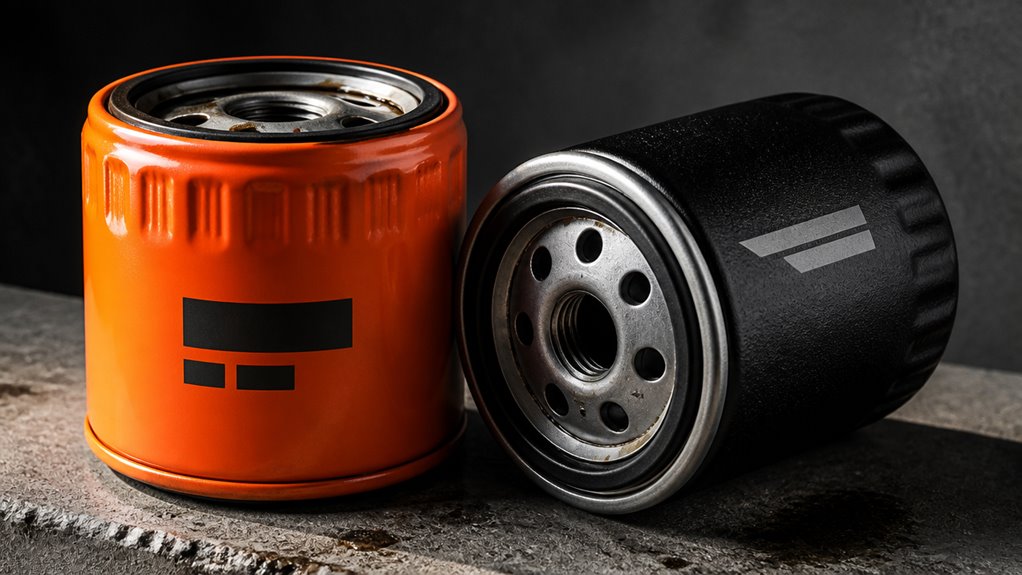
If you need an oil filter, Fram and Purolator offer solid choices tailored to your driving and maintenance preferences.
Fram’s Synthetic Endurance and Titanium lines focus on long 20,000-mile intervals with high-efficiency synthetic media.
Purolator’s 20K series also targets extended drains, featuring metal end caps and silicone valves for durability.
Both brands provide effective filtration and valve designs, but your best pick depends on your oil type, driving habits, and desired service interval.
Explore further to match the ideal filter to your engine.


| Comparison Factors | Fram Oil Filter | Purolator Oil Filter |
|---|---|---|
| Primary Focus | Synthetic filtration and extended service intervals | Filtration efficiency and structural durability |
| Product Lines | Extra Guard, Titanium, Synthetic Endurance | Premium Engine Protection, PurolatorONE, High Efficiency, 20K |
| Filter Media | Synthetic and blended filtration media, depending on series | High-density synthetic blends and advanced filtration media |
| Filtration Efficiency | Article mentions up to 99% for premium models | Article mentions over 99% for selected premium models |
| Contaminant Capture | Designed to trap engine oil contaminants | Designed for fine-particle capture and contaminant retention |
| Dirt-Holding Capacity | Varies by filter series and media construction | Article mentions over 13 grams for selected filters |
| End Cap Construction | Materials vary by product tier | Metal end caps emphasized in premium models |
| Center Tube Design | Model-dependent structural construction | Selected models feature reinforced metal center tubes |
| Anti-Drainback Valve | Silicone or other valve materials, depending on model | Silicone valves highlighted in higher-tier filters |
| Bypass Valve Function | Maintains oil flow when filter restriction increases | Maintains oil flow when filter restriction increases |
| Cold-Start Protection | Anti-drainback valve helps retain oil in the filter | Anti-drainback valve helps reduce oil drainback |
| Synthetic Oil Compatibility | Premium models designed for synthetic oil applications | Premium models support synthetic oil applications |
| Routine Service Intervals | Depends on filter model and vehicle maintenance requirements | Article describes routine-use options around 5,000 miles |
| Extended Service Intervals | Article describes selected models supporting up to 20,000 miles | Article describes the 20K series targeting extended intervals |
| Structural Durability | Varies across entry-level and premium construction | Article emphasizes metal components and reinforced construction |
| Everyday Driving | Extra Guard and similar routine-maintenance options | Premium Engine Protection and PurolatorONE options |
| Overall Recommendation | Choose based on filtration media, fitment, and service needs | Choose based on construction features, fitment, and service needs |

While both Fram and Purolator offer a range of oil filter tiers, understanding their product lines and positioning helps you choose the right filter for your vehicle’s needs.
Fram focuses on long-drain premium filters like Synthetic Endurance and Titanium, engineered for extended intervals up to 20,000 miles.
Purolator structures its lineup into Premium Engine Protection, PurolatorONE, High Efficiency, and 20K series, with routine-use filters rated for 5,000 miles and premium options designed for 10,000 to 20,000 miles.
You’ll notice Purolator emphasizes durability features such as metal end caps and silicone anti-drainback valves. Fram markets synthetic-media filters optimized for endurance.
Both brands balance cost-efficiency and durability, catering to different maintenance habits and budgets.
Your ideal pick hinges on matching the specific Fram or Purolator series to your vehicle’s oil type, driving conditions, and desired maintenance intervals.
Because effective filtration directly impacts engine longevity, understanding how Fram and Purolator compare in dirt-trapping and efficiency is essential.
Purolator’s High Efficiency and 20K filters claim filtration rates exceeding 99%, effectively capturing microscopic contaminants with advanced micronic media.
Purolator’s High Efficiency and 20K filters capture over 99% of microscopic contaminants with advanced micronic media.
Similarly, Fram’s premium lines advertise up to 99% efficiency, though exact micron ratings vary between models, affecting particle capture precision.
Purolator filters often trap upwards of 13 grams of debris, demonstrating robust dirt-holding capacity.
Fram emphasizes extended protection with synthetic media optimized for longer drain intervals.
Both brands tailor efficiency to specific tiers, meaning your choice depends on intended oil change frequency and contamination levels.
Evaluating published efficiency alongside micron ratings provides a clearer picture of filtration performance and dirt-trapping capability between these competitors.
K&N filters also utilize pleated synthetic-blend media that balances contaminant removal with high oil flow and minimal pressure drop, offering a benchmark for filtration technology.
You’ll notice that Purolator filters have a high-density synthetic blend media. They also feature metal center tubes and wear-resistant end caps, which really enhance their durability and oil flow. Pretty impressive, right?
On the other hand, Fram’s premium filters also use synthetic media, but here’s the catch: their structural build varies across different product tiers. This means some might perform better than others depending on what you need.
Understanding these differences can really help you evaluate each filter’s ability to maintain integrity under stress. Plus, it can optimize filtration performance, which is always a win!
Filters with high-flow designs improve contaminant capture while maintaining optimal oil circulation.
Filter media plays a critical role in determining an oil filter’s effectiveness and durability. When choosing between Fram and Purolator, you’ll notice differences in media composition and design that impact filtration performance and longevity.
PurolatorONE uses a high-density synthetic blend media that enhances contaminant capture and resists wear. Fram’s premium filters also utilize synthetic media but vary by tier in fiber density and filtration capability.
As you evaluate filter media types, consider these key points:
Understanding these factors helps you select a filter that balances protection with engine demands.
Explore the structural differences between Fram and Purolator oil filters to understand how construction quality impacts durability and filtration performance.
Purolator filters commonly feature metal center tubes and wear-resistant metal end caps that enhance structural integrity and support consistent oil flow under pressure. Their high-density synthetic blend media offers robust filtration, capable of trapping over 99% of contaminants, especially in High Efficiency and 20K lines.
Fram’s premium filters also use synthetic media but vary in construction strength depending on the tier. While Fram emphasizes synthetic endurance, Purolator’s rugged internal build, including silicone anti-drainback valves and bypass valves, provides reliable dry-start protection and sustained oil circulation.
When you choose between them, consider how Purolator’s reinforced construction may offer enhanced durability for extended drain intervals compared to Fram’s variable designs.
Additionally, Purolator’s use of a silicone anti-drainback valve significantly reduces the risk of dry starts, protecting engine wear during startup.
Although both Fram and Purolator offer anti-drainback and bypass valve features to protect your engine during cold starts and maintain oil flow under high-viscosity conditions, Purolator distinctly emphasizes the use of silicone anti-drainback valves.
These outperform traditional nitrile valves in durability and effectiveness. This silicone valve prevents oil from draining out when the engine is off, reducing dry starts and subsequent wear.
Both brands include bypass valves that open if the filter clogs or oil thickens, ensuring continuous lubrication.
Key points to bear in mind:
Additionally, Purolator filters feature a double helix high-flow center tube design that enhances oil flow while maintaining structural integrity under stress.
When selecting between Fram and Purolator oil filters, you should carefully consider the intended service intervals and driving conditions. Each brand tailors its product lines to specific use cases.
Purolator’s routine-use filters typically support up to 5,000 miles. Their High Efficiency and 20K lines extend service intervals to 10,000 and 20,000 miles respectively, especially when paired with synthetic oil.
Fram’s premium lines, such as Synthetic Endurance and Titanium, also target extended protection up to 20,000 miles under synthetic oil use. Your choice depends on desired drain intervals, oil type, and vehicle demands.
Both brands’ premium filters suit longer intervals and synthetic oils. Entry-level filters best serve shorter, routine maintenance schedules under standard driving conditions.
Fram filters often include a silicone non-drain back valve that provides superior startup protection and resists extreme heat better than conventional valves.
When it comes to choosing between Fram and Purolator, it’s really important to take a close look at their tiered product lines. You’ll notice that the price often reflects how efficient the filtration is and the quality of construction.
If you’re just doing routine oil changes and don’t want to break the bank, budget filters can work just fine. They’re great for short intervals.
But if you’re looking for something more advanced, the premium tiers are where it’s at. They come with better filtration media and longer service intervals, which can definitely justify the higher price tag.
In the end, your choice should really match up with your vehicle’s needs and how you plan to maintain it. This way, you can get the best value while also keeping your engine protected.
For example, the Fram PH2 Extra Guard offers a 96% Single Pass Efficiency that balances dirt-trapping with steady oil flow for everyday driving.
Typically, choosing the right oil filter requires understanding the tiered product offerings both Fram and Purolator provide. These tiers directly influence pricing and performance characteristics.
You’ll find entry-level, mid-tier, and premium lines with distinct filtration media, durability, and mileage claims. Fram’s Synthetic Endurance and Titanium lines focus on extended service intervals.
Purolator’s range includes Premium Engine Protection, PurolatorONE, High Efficiency, and 20K tiers tailored for varying mileage needs.
Entry-level filters suit routine driving with shorter intervals. Mid-tier offers enhanced synthetic media and durability.
Premium tiers target long drain intervals up to 20,000 miles. Construction features vary, including metal end caps and silicone valves.
Filter efficiency and micron ratings differ by tier and brand. Understanding these helps you match filter choice to your vehicle’s requirements.
Purolator filters also feature anti-drainback valves to ensure consistent oil flow and reduce engine wear during startup.
Understanding the tiered product offerings sets the stage for evaluating how price correlates with performance across Fram and Purolator filters.
You’ll find Fram’s premium Synthetic Endurance and Titanium lines priced higher, reflecting extended service intervals and advanced synthetic media designed for up to 20,000 miles.
Purolator’s pricing scales with its product tiers, from the routine-use Premium Engine Protection to the advanced High Efficiency and 20K lines.
These feature metal end caps, silicone anti-drainback valves, and filtration efficiencies exceeding 99%.
When selecting your filter, consider that Purolator’s higher-priced models emphasize durability and contaminant retention.
Fram’s premium filters focus on filtration efficiency and longevity.
Your best choice balances cost with the intended drain interval, oil type, and vehicle demands.
This makes detailed specification matching essential for maximizing performance relative to price.
For example, some filters meet rigorous standards like SAE USCAR-36 to ensure durability and consistent performance under extreme conditions.
When weighing the choice between budget and premium oil filters, your decision hinges on matching product tiers to specific vehicle needs and maintenance habits. Budget filters from Fram and Purolator suit routine drives and short drain intervals, offering adequate protection at lower prices.
Premium filters leverage advanced synthetic media, metal structural components, and superior anti-drainback valves for enhanced filtration efficiency and durability. They’re ideal for extended intervals and synthetic oils.
Consider these factors:
Selecting filters with advanced filtration media can improve contaminant capture and engine longevity.
Selecting the right oil filter from Fram or Purolator hinges on your vehicle’s specific maintenance needs, driving habits, and oil type preferences.
If you prioritize extended drain intervals with synthetic oil, Fram’s Synthetic Endurance or Titanium lines offer up to 20,000 miles of protection.
Conversely, Purolator’s 20K series matches that with robust metal end caps and silicone anti-drainback valves for dry-start protection.
For routine use, Purolator’s Premium Engine Protection at 5,000 miles or Fram’s basic lines suffice.
Evaluate filtration media: Purolator’s high-density synthetic blends and micronic media capture over 96-99% contaminants.
Fram’s efficiency varies by micron rating. Also consider bypass valve presence for cold starts.
Your choice depends on balancing filtration efficiency, service interval, and vehicle demands. Match the filter tier precisely to optimize engine longevity and performance.
You’ll find that both Fram and Purolator offer oil filters compatible with a wide range of vehicle makes and models.
However, compatibility depends on selecting the correct filter series and size for your specific engine.
Always verify fitment using your vehicle’s year, make, and model details.
Neither brand’s filters are universally compatible, so matching part numbers or consulting fitment guides guarantees proper sealing, filtration efficiency, and engine protection.
You’ll find that both Fram and Purolator filters support engine performance by maintaining oil cleanliness. This reduces wear and extends engine life.
Over time, their premium synthetic media effectively trap contaminants. This minimizes abrasive particles that harm engine components.
Purolator’s silicone anti-drainback valves and robust construction also help prevent dry starts. This further protects your engine.
Choosing the right filter tier and matching service intervals guarantees peak filtration. It ensures sustained engine efficiency.
You need to handle used oil filters carefully to prevent environmental contamination.
Both Fram and Purolator filters contain residual oil that can pollute soil and waterways if not disposed of properly.
You should drain filters thoroughly and recycle them at authorized centers, where metal components are recovered.
Avoid throwing filters in regular trash, as improper disposal risks hazardous waste exposure.
Following local regulations guarantees you protect ecosystems and comply with environmental laws.
You’ll find that Purolator offers a limited warranty covering defects in materials and workmanship, typically providing replacement filters if issues arise.
Fram also backs its filters with a limited warranty, often guaranteeing performance against defects under normal use.
Both brands emphasize their warranties don’t cover engine damage from improper installation or use.
Always check specific product documentation to understand exact coverage and claim procedures before purchase.
You’ll find Fram filters primarily manufactured in the United States, with some production facilities also located in Mexico and China, depending on the specific product line.
Purolator filters are mainly produced in North America, including plants in the U.S. and Canada, with select models potentially made in Mexico.
Both brands maintain strict quality controls across their facilities to meet performance standards, so geographic origin varies by filter tier and distribution region.
When choosing between Fram and Purolator, consider your priorities: Fram offers affordable, reliable filtration with solid construction. Purolator delivers advanced media, superior dirt-trapping, and enhanced valve features.
You want durability, efficiency, and peak engine protection. You want precise engineering and consistent performance. Ultimately, your choice depends on balancing cost, filtration needs, and service intervals to match your vehicle’s demands and driving conditions.
Make an informed decision for lasting engine health.
Last update on 2026-11-02 / Affiliate links / Images from Amazon Product Advertising API