Physical Address
304 North Cardinal St.
Dorchester Center, MA 02124
Physical Address
304 North Cardinal St.
Dorchester Center, MA 02124

You’ll want a fuel injector cleaner for precise, solvent-based removal of light deposits within injector nozzles. This restores spray patterns and prevents minor rough idling every 3,000 to 5,000 miles.
In contrast, fuel system cleaners use detergent-heavy formulas to tackle extensive carbon buildup across fuel lines, intake valves, and combustion chambers. They offer broader restoration but are used less frequently, around 10,000 to 15,000 miles.
Understanding their distinct chemistry and best use guarantees you target the right level of maintenance for your engine’s fuel system.
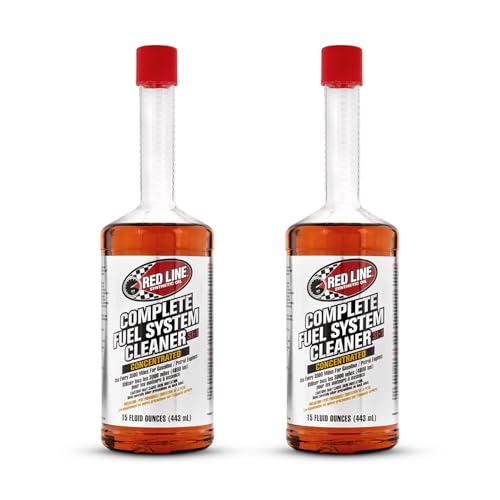

| Comparison Factors | Fuel System Cleaner | Fuel Injector Cleaner |
|---|---|---|
| Primary Purpose | Broader fuel system cleaning | Targeted fuel injector cleaning |
| Cleaning Focus | Multiple fuel delivery components, depending on formulation | Injector nozzles and spray passages |
| Common Deposits | Carbon, gum, varnish, and fuel-related residues | Injector deposits, gum, and varnish |
| Chemical Formulation | Often detergent-focused, depending on product | Often solvent or detergent-based |
| Cleaning Coverage | May address injectors and other fuel-wetted components | Primarily focuses on injector-related deposits |
| Fuel Flow Improvement | May improve overall fuel delivery when deposits restrict flow | May restore injector spray patterns and fuel atomization |
| Engine Performance | May help address deposit-related performance problems | May reduce deposit-related rough idling and hesitation |
| Carbon Buildup | Designed for broader deposit control, depending on formulation | Focuses on injector-specific buildup |
| Usage Frequency | Article suggests 10,000–15,000 miles | Article suggests 3,000–5,000 miles |
| Maintenance Application | Broader periodic fuel system maintenance | Routine injector-focused maintenance |
| Heavy Deposits | May help with more extensive deposits, within product limitations | Generally intended for lighter injector deposits |
| Best For | Drivers seeking broader fuel system cleaning | Drivers targeting injector performance and spray quality |
| Overall Recommendation | Best for broader deposit-management needs | Best for focused injector maintenance |

When deciding between a fuel injector cleaner and a fuel system cleaner, you need to take into account the extent of deposits and the components affected.
If deposits are localized primarily within the fuel injectors and spray nozzles, a fuel injector cleaner’s solvent-based formula targets these specific areas efficiently.
When deposits concentrate in injectors and nozzles, solvent-based fuel injector cleaners provide effective targeted treatment.
However, if buildup extends beyond injectors and impacts fuel lines, intake valves, or combustion chambers, a fuel system cleaner is more appropriate. Its broader detergent-heavy composition is designed for thorough cleaning.
Your choice should reflect whether you’re addressing minor, injector-specific issues or broader fuel pathway contamination.
Additionally, consider whether you need preventive maintenance or restoration of performance. Injector cleaners suit the former, while fuel system cleaners address more severe, multi-component deposits.
This analytical approach guarantees peak fuel system health and engine efficiency.
For persistent or severe buildup, professional fuel system cleaning can provide deep solvent flushing and comprehensive diagnostics to restore optimal performance.
You’ll notice that fuel injector cleaners have a pretty specific focus: they’re all about clearing deposits right within the injector nozzles.
On the other hand, fuel system cleaners take a broader approach, tackling buildup throughout the entire fuel delivery path.
Now, let’s talk about the chemical formulations. Injector cleaners usually use lighter solvents, making them a bit gentler for that targeted cleaning.
In contrast, system cleaners pack a punch with stronger detergents, which helps them provide a thorough clean across the whole system.
When it comes to how often you should use them, there’s a difference too. Injector cleaners are often recommended for more regular use.
Meanwhile, system cleaners are typically applied less frequently, and that really depends on how much contamination you’ve got in your fuel system.
Many system cleaners also offer fuel stabilizer benefits, helping to keep fuel fresh and prevent deposits during storage.
Although both fuel injector cleaners and fuel system cleaners aim to improve fuel efficiency and engine performance, they differ markedly in their cleaning scope.
Fuel injector cleaners focus specifically on deposits within the injector nozzles and spray passages, targeting fuel flow restrictions.
In contrast, fuel system cleaners address a broader range of components along the entire fuel delivery path.
Fuel injector cleaner targets injector nozzle deposits exclusively. Fuel system cleaner cleans injectors, fuel lines, intake valves, carburetors, and combustion chambers.
Injector cleaner offers precise, localized cleaning for minor issues.
Fuel system cleaner provides thorough removal of deposits affecting multiple fuel system parts.
Understanding these scope differences helps you select the appropriate cleaner based on whether you need focused injector maintenance or full fuel system restoration.
For deeper cleaning effectiveness, consider that many off-the-shelf additives fail to reach critical injector components or dissolve embedded carbon, making specialized formulations a better choice for heavy deposits.
Because fuel injector cleaners and fuel system cleaners serve different cleaning scopes, their chemical formulations also differ markedly to target specific deposit types and locations.
Fuel injector cleaners typically use solvent-based formulas designed to dissolve varnish and gum deposits within injector nozzles and spray passages. These solvents are lighter and precisely calibrated for focused injector cleaning without affecting other components.
In contrast, fuel system cleaners employ detergent-heavy formulations that aggressively break down carbon buildup across the entire fuel delivery path, including fuel lines, intake valves, and combustion chambers.
These detergents exhibit broader surface activity and enhanced dispersant properties to address complex, multi-site deposits. Understanding these chemical distinctions helps you select the appropriate product based on deposit severity and component coverage, optimizing cleaning efficacy while minimizing potential adverse effects.
Many fuel system cleaners also include dual lubricants that condition rubber and plastic components while rejuvenating gaskets and seals to protect fuel system integrity during and after cleaning.
Chemical formulation differences between fuel injector cleaners and fuel system cleaners influence how often you should apply them for peak performance and maintenance. Injector cleaners, typically solvent-based and targeted, require more frequent use to prevent buildup. Detergent-heavy fuel system cleaners call for less frequent but broader application.
Follow manufacturer guidelines closely, as intervals vary by product chemistry and deposit severity. Consider these usage frequencies:
Use fuel injector cleaner every 3,000 to 5,000 miles for targeted injector deposits. Apply fuel system cleaner every 10,000 to 15,000 miles to address all-encompassing fuel path deposits. Some injector cleaners are safe for use every 1,000 miles if needed, per specific brands.
Always adhere to label instructions, as recommendations differ across formulations and vehicle conditions. Regular maintenance with PEA-based formulas can prevent silent performance degradation and reduce deposit-related engine issues.
Fuel injector cleaner works by dissolving and loosening carbon deposits and varnish that accumulate on injector nozzles. These deposits can restrict fuel flow and disrupt spray patterns.
When you add injector cleaner to your fuel tank, its solvent-based formula targets these hardened residues, breaking their molecular bonds. This process restores the injector’s ability to atomize fuel precisely.
Adding injector cleaner breaks down stubborn residues, restoring precise fuel atomization for optimal engine performance.
By ensuring consistent spray angles and droplet sizes, the cleaner eliminates flow restrictions. This helps prevent uneven fuel delivery, misfires, or rough idling.
The result is improved combustion efficiency and smoother engine performance. Injector cleaners focus exclusively on the injector’s internal passages, making them effective for resolving localized flow issues.
Many formulations also include cetane-boosting additives to enhance combustion efficiency and engine power.
When you add a fuel system cleaner to your tank, it works beyond the injectors to address deposits throughout the entire fuel delivery path.
Unlike injector cleaners that focus narrowly on nozzles, fuel system cleaners use detergent-based formulas to dissolve residue across multiple components. This thorough action helps restore peak fuel flow and combustion efficiency.
Fuel system cleaners target buildup in:
Many fuel system cleaners also help stabilize fuel quality, preventing moisture accumulation and further deposit formation during storage.
If you’re looking to keep your fuel system running smoothly, a fuel injector cleaner is just what you need. It’s perfect for targeting those pesky deposits that can build up inside the injectors and spray nozzles. By focusing on these specific areas, you’re not only cleaning things up but also practicing preventive care. This way, you maintain ideal fuel flow and combustion efficiency before any buildup gets out of hand.
Using an injector cleaner on a regular basis can really help with minor issues, like rough idling or hesitation. It’s a simple way to tackle these problems without having to go for a more extensive system treatment. So, if you want to keep things running smoothly and avoid bigger headaches down the road, adding a fuel injector cleaner to your maintenance routine is a smart move! Many effective products emphasize powerful detergents that ensure lasting cleaning and protection throughout the fuel system.
If you want to tackle minor injector deposits without overhauling your entire fuel system, choosing a fuel injector cleaner is the most precise approach. This cleaner specifically targets nozzle deposits and fuel flow restrictions, restoring injector spray patterns efficiently.
You’ll benefit from a focused solvent-based formula designed for light maintenance rather than broad system restoration.
Key advantages include:
For best results, regular use helps maintain smooth idling and prevents buildup from recurring.
Maintaining injector performance through regular use of a fuel injector cleaner helps prevent buildup before it impairs fuel delivery or causes drivability issues.
By targeting nozzle deposits and flow restrictions specifically, you guarantee optimal spray patterns and combustion efficiency.
This preventive approach reduces minor hesitation and rough idling without the need for aggressive, full-system treatments.
Using injector cleaner every 3,000 to 5,000 miles aligns with manufacturer recommendations for light maintenance, minimizing the risk of deposit accumulation.
You’ll also benefit from its solvent-based formula, which is lighter and less invasive than detergent-heavy fuel system cleaners.
For routine upkeep, injector cleaner offers a cost-effective, precise solution that preserves injector function.
This enables you to maintain engine responsiveness and fuel economy without unnecessary chemical exposure or over-cleaning of unrelated fuel system components.
Products like Lucas UCL are suitable for both gasoline and diesel engines, offering broader fuel compatibility for various vehicle types.
When heavy carbon deposits and fuel residue build up across multiple components of your vehicle’s fuel system, a fuel system cleaner can break down and remove these stubborn contaminants more effectively than an injector-specific product.
You’ll want to use a fuel system cleaner when restoration requires all-encompassing action beyond injectors alone. This cleaner targets:
Although both fuel injector cleaners and fuel system cleaners aim to remove deposits, their chemical formulations differ markedly. This influences their effectiveness and application.
Fuel injector cleaners typically rely on solvent-based formulas designed to break down light, targeted deposits within injector nozzles and spray passages. These solvents offer precision cleaning without aggressive detergent action. This helps preserve sensitive injector components.
Conversely, fuel system cleaners employ detergent-heavy formulations that aggressively target a broader array of deposits across the entire fuel pathway, including fuel lines, intake valves, and combustion chambers. The stronger detergents facilitate thorough removal of heavier carbon buildup. However, they may be too harsh for delicate injector parts if overused.
Understanding these chemical distinctions helps you select a cleaner that matches the severity and location of fuel system deposits. This optimizes performance restoration while minimizing potential component wear.
Typically, you’ll use fuel injector cleaners more frequently than fuel system cleaners due to their targeted action on injector deposits. Injector cleaners are often applied every 3,000 to 5,000 miles to prevent buildup.
In contrast, system cleaners are recommended roughly every 10,000 to 15,000 miles for broader maintenance. Your expected results differ accordingly: injector cleaners address minor rough idles and fuel spray issues, whereas system cleaners tackle widespread carbon deposits affecting multiple components.
Use injector cleaner regularly for light deposits and preventive care. Apply fuel system cleaner less often for comprehensive fuel path restoration.
Follow manufacturer instructions closely due to varying formulations and intervals. Expect more noticeable performance improvements from system cleaners when deposits are extensive.
This approach guarantees precision in maintenance and peak engine performance.
Yes, overusing fuel system cleaners can potentially harm your engine.
These products contain strong detergents designed to dissolve deposits.
Excessive use may degrade fuel system components, seals, or catalytic converters.
You should follow manufacturer-recommended intervals and dosage precisely to avoid corrosion or buildup disruption.
This might cause rough running or sensor issues.
Moderation guarantees cleaning benefits without risking damage from chemical overexposure or imbalance in your engine’s fuel system.
Imagine tuning a Model T. Compatibility matters just as much today.
Yes, certain fuel system and injector cleaners can conflict with specific fuel types.
For instance, cleaners formulated for gasoline might harm diesel engines or ethanol-blended fuels if misused.
Always check product labels and manufacturer specs to ensure chemical compatibility with your fuel type.
Using incompatible cleaners risks residue buildup or damage. Precision and adherence to guidelines are essential for peak engine performance.
You’ll typically notice effects from fuel injector cleaners within a few tanks of fuel, often as soon as 1,000 miles. They target specific injector deposits.
Fuel system cleaners tackle broader buildup and may take longer, around 2,000 to 3,000 miles, to show noticeable improvements in performance and efficiency.
However, results depend on deposit severity, product formulation, and your vehicle’s condition.
Follow manufacturer recommendations for peak timing and usage.
Think of your engine as a finely tuned orchestra: when instruments (fuel components) are clogged or dirty, the performance falters.
Using these cleaners can sharpen that performance, often improving fuel economy by a few percentage points.
However, the impact depends on deposit severity and vehicle condition.
So, while you might see noticeable gains after cleaning, don’t expect drastic improvements.
These products optimize efficiency but don’t replace mechanical repairs or upgrades.
Yes, fuel injector cleaners are generally safe for most vehicle makes and models, but you should always check your owner’s manual or product label first.
These cleaners use solvent-based formulas designed to dissolve deposits without damaging injectors or seals.
However, older vehicles or those with specialized fuel systems might require specific formulations.
Using the wrong cleaner or overusing it could cause issues, so following manufacturer recommendations is essential for safe, effective use.
When deciding between fuel injector cleaner and fuel system cleaner, you’ll choose precision for light maintenance or power for heavy restoration.
You’ll rely on injector cleaner to target nozzle deposits and improve flow, or trust system cleaner to cleanse the entire fuel delivery path and revive performance.
You’ll balance chemical formulation with usage frequency, ensuring best results.
Ultimately, you’ll optimize your engine’s efficiency, reduce emissions, and extend its lifespan by using the right cleaner at the right time.
Last update on 2026-10-17 / Affiliate links / Images from Amazon Product Advertising API