Physical Address
304 North Cardinal St.
Dorchester Center, MA 02124
Physical Address
304 North Cardinal St.
Dorchester Center, MA 02124
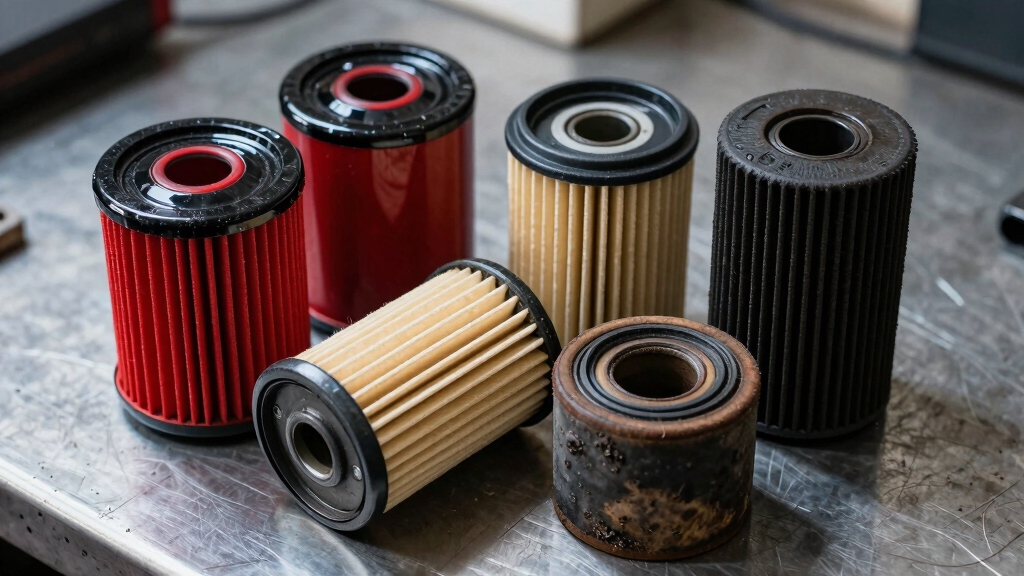
No, all oil filters aren’t the same. They differ in design, like spin-on or cartridge types, and filter media, ranging from cellulose to advanced synthetic blends.
These variations impact contaminant capture, flow restriction, and durability, affecting your engine’s protection and efficiency.
Premium filters with silicone valves and synthetic media offer superior performance, especially for extended oil change intervals.
Understanding these differences helps you select the right filter tailored to your vehicle’s needs and maintenance goals. Explore further to grasp these critical factors fully.

When choosing an oil filter, you’ll encounter several types designed to meet different engine requirements and maintenance preferences.
Spin-on filters come as disposable canisters housing the filter media, offering straightforward replacement.
Cartridge filters separate the media from a reusable housing, reducing waste in modern engines.
High-efficiency premium filters utilize synthetic or synthetic-blend media, enhancing contaminant capture and durability.
Magnetic filters incorporate magnets to attract metallic particles, supplementing filtration.
Centrifugal filters apply spinning forces to segregate heavy contaminants from oil.
Each type balances filtration efficiency, flow restriction, and maintenance complexity differently.
Understanding these distinctions helps you select a filter tailored to your engine’s demands, whether prioritizing ease of use, environmental impact, or contaminant removal capabilities.
This technical awareness guarantees optimal engine protection and performance.
For vehicles using full synthetic oil, choosing filters with advanced synthetic media can significantly improve contaminant capture and extend service intervals.
When it comes to choosing between spin-on and cartridge oil filters, it really depends on your needs. Spin-on filters are super easy to install and make oil changes a breeze, all thanks to their handy disposable canister design. If you’re looking for something straightforward, these might be the way to go.
On the flip side, cartridge filters have their own set of perks. They’re designed to reduce waste, and many come with reusable housings, which is a nice touch for those of us who care about the environment. Plus, they fit well with modern engine designs.
Additionally, selecting the right filter media and durability based on your driving habits—such as choosing filters with reinforced polymer mesh for demanding conditions—can greatly impact engine protection and oil change intervals.
Choosing between spin-on and cartridge oil filters hinges on balancing ease of replacement with environmental considerations.
Spin-on filters simplify oil changes because you replace the entire canister, avoiding messy media handling. This design also integrates components like the anti-drainback and bypass valves into a sealed unit, ensuring consistent filtration performance with minimal installation error.
However, they generate more waste since the housing is disposable.
You should consider spin-on filters if you:
Spin-on filters excel in routine maintenance scenarios, delivering reliable filtration with user-friendly application despite higher environmental impact. Filters like the 1R-0716 and 1R-1808 models highlight differences in efficiency and compatibility that can influence your choice.
Cartridge oil filters stand out by separating the filter media from the housing. This allows you to replace only the internal element while reusing the durable outer shell.
This design reduces waste and often lowers long-term costs, especially if you perform frequent oil changes. Cartridge filters typically integrate advanced synthetic or blended media, enhancing contaminant capture without substantially increasing flow restriction.
When choosing between spin-on and cartridge, consider your vehicle’s design and maintenance preferences. Spin-ons simplify replacement with an all-in-one unit, ideal for DIYers. Cartridge filters suit modern engines prioritizing sustainability and precise filtration performance.
Additionally, cartridge housings accommodate robust anti-drainback and bypass valves, ensuring reliable oil flow and protection under variable conditions. Ultimately, cartridges offer a balance of efficiency, environmental benefit, and serviceability in contemporary applications.
For removal and installation, specialized CNC machined aluminum cup wrenches are recommended to avoid damage to the cartridge housing’s plastic tabs.
When it comes to oil filter media types—like synthetic, cellulose, or blends—they really do play a significant role in how well your filter performs. Synthetic media, for instance, is great at trapping those finer contaminants and tends to have a longer lifespan.
On the flip side, cellulose is more budget-friendly and still provides decent protection, though it’s more basic. Many high-performance filters use tri-fiber filtration media, which offers higher capacity and improved oil flow for demanding engines.
How does the type of oil filter media impact engine protection and filter longevity? The media determines contaminant capture efficiency, flow restriction, and durability under operating conditions.
Synthetic media traps smaller particles more effectively and sustains filtration performance longer than cellulose. Pleated designs increase surface area, balancing dirt-holding capacity and oil flow.
Synthetic blends combine durability and filtration depth, optimizing lifespan.
Consider these media distinctions:
Understanding media types helps you select filters that maintain consistent oil cleanliness and protect engine components over extended intervals. Many high-performance filters feature pleated synthetic-blend media to balance contaminant trapping with high flow rates and durability.
Understanding filtration efficiency is pivotal when evaluating oil filters because it directly influences engine protection and oil flow dynamics.
The filter media determines particle capture rates and pressure drop. Synthetic media, with its finer fibers, traps smaller contaminants over extended intervals but may increase flow restriction.
Cellulose media offers lower resistance but less effective filtration.
Pleated designs maximize surface area, enhancing contaminant capacity without severely impacting flow.
Blended synthetic-cellulose media strike a balance between efficiency and durability. High-efficiency filters, like Amsoil, excel in filtration but exhibit higher pressure drops, potentially stressing the oil pump.
Conversely, filters like Mobil 1 maintain low PSI even at high flow rates, preserving oil circulation.
Selecting media that optimizes contaminant retention while minimizing flow restriction is essential for sustained engine performance and longevity.
Baldwin filters, for example, achieve an average filtration efficiency of approximately 85.2% due to their advanced filtration media technology, ensuring effective contaminant removal with minimal flow restriction.
Because oil filters play a critical role in maintaining engine health, knowing their key components helps you evaluate their effectiveness.
Understanding oil filter components is essential for evaluating their role in protecting engine health.
Each component ensures oil flows properly while trapping contaminants and protecting against damage.
Understanding these parts lets you assess if a filter meets your engine’s demands.
Key components include:
Recognizing these components helps you distinguish quality filters that safeguard engine longevity. Additionally, choosing the correct filter size is essential for optimal filtration and engine performance.
Once you grasp the key components that influence oil filtration, comparing performance among brands becomes clearer.
Brands differ particularly in particle capture efficiency, flow restriction, and valve durability. For instance, Amsoil achieves superior filtration but with the highest pressure drop, potentially stressing the oil pump.
Mobil 1 balances low PSI at 3 GPM (5.1) and 11 GPM, optimizing flow and filtration. K&N and Mann filters present higher pressure drops at varying flow rates, affecting engine oil pressure differently.
Valve materials also vary; silicone valves in synthetic filters outperform rubber in durability. Media thickness and type, synthetic versus cellulose, further distinguish brands by contaminant retention and filter longevity.
These measurable differences guide you toward selecting filters that align with your engine’s operational demands and maintenance intervals. It is important to remember that regularly replacing disposable filters is crucial to maintaining optimal engine health and avoiding performance issues.
While standard filters meet basic engine protection needs, premium and synthetic oil filters offer enhanced performance by combining advanced media and durable components.
Premium and synthetic oil filters deliver superior protection with advanced materials and robust construction.
They use synthetic or blended media, which traps smaller contaminants more effectively and sustains filtration efficiency over longer intervals.
Their construction typically includes silicone anti-drainback valves, which resist heat and wear better than rubber, ensuring consistent oil pressure during startup.
When you choose premium or synthetic filters, you benefit from:
These improvements translate into extended engine life and compatibility with longer synthetic oil change intervals.
This makes premium and synthetic filters a superior choice for modern engines demanding rigorous protection.
Many top-rated filters also feature durable steel construction combined with advanced synthetic media to maximize filtration performance and longevity.
Selecting the right oil filter for your vehicle requires understanding key factors such as filter type, media composition, and compatibility with your engine’s specifications.
First, confirm your vehicle’s OEM recommendations. Then, consider whether a spin-on or cartridge filter suits your maintenance preferences.
Choose media based on filtration efficiency. Synthetic media captures finer particles longer than cellulose. Check for essential components like silicone anti-drainback valves for durability and bypass valves for safety.
Performance metrics like flow restriction influence engine efficiency. Use this table to compare common filter types:
| Filter Type | Media Composition | Application |
|---|---|---|
| Spin-on | Cellulose/Pleated | DIY, regular oil changes |
| Cartridge | Synthetic blends | Modern engines, less waste |
| High Efficiency | Synthetic | Extended service, racing |
| Magnetic | Magnetic elements | Metallic particle removal |
Match filter specs precisely to optimize engine protection and oil flow.
Using a magnetic oil filter can improve engine longevity by attracting and trapping metallic particles that standard filters might miss.
This reduces abrasive wear on engine components caused by metal debris.
However, magnetic filters don’t replace the need for high-efficiency filter media to capture smaller contaminants.
Combining magnetic filtration with synthetic or blended media enhances overall protection.
This helps you maintain cleaner oil and extend your engine’s life more effectively.
How often should you replace oil filters in racing vehicles? You need to change them after every race or every 500 to 1,000 miles, depending on track conditions and engine stress.
Racing filters handle high flow and contaminants but degrade faster due to extreme heat and debris. Frequent replacement guarantees peak filtration, prevents clogging, and maintains peak engine performance.
Skipping this risks reduced oil flow and potential engine damage.
No, centrifugal oil filters typically require special installation tools due to their unique design. You’ll need tools to secure the spinning assembly and properly mount the unit without damaging the housing or seals.
Unlike spin-on filters, which screw on directly, centrifugal filters often need precise alignment and torque control. Using the correct tools guarantees the filter functions effectively, maintains sealing integrity, and prevents leaks under high-speed rotation conditions common in these systems.
If the bypass valve fails closed, your engine oil flow can be severely restricted, causing oil starvation and potential engine damage.
If it fails open, unfiltered oil circulates, allowing contaminants to reach critical engine parts, accelerating wear. The valve’s role is vital when the filter clogs or oil is cold and thick.
You need a reliable valve to maintain consistent oil pressure and protect your engine under all conditions.
Yes, synthetic oil filters are compatible with all engine oils, including conventional, synthetic blends, and full synthetics.
You can rely on their synthetic media and silicone valves to handle various oil formulations without degradation.
Their design targets enhanced contaminant trapping and durability, making them suitable regardless of oil type.
Just make sure you select a filter meeting your engine’s specifications to maintain peak filtration and flow characteristics.
Choosing the right oil filter is like selecting the shield for your engine’s heart. Not all filters offer the same protection; their types, media, and build quality create a barrier against wear and contaminants.
By understanding the nuances between spin-on and cartridge, and valuing premium materials, you guarantee your engine runs cleaner, longer. Treat your engine to the precise defense it deserves. A strong filter means a resilient, efficient machine.