Physical Address
304 North Cardinal St.
Dorchester Center, MA 02124
Physical Address
304 North Cardinal St.
Dorchester Center, MA 02124

You can expect proven global oil reserves, about 1.77 trillion barrels in 2025, to last roughly 35 to 50 years. This depends on your consumption rate and production growth.
New projects and enhanced recovery techniques can boost output but also accelerate depletion. Geopolitical factors and strategic stockpiles influence short-term supply and market stability.
Demand trends and technological advances play vital roles in extending or shortening reserve longevity. Understanding these dynamics reveals how long oil supply may truly endure.
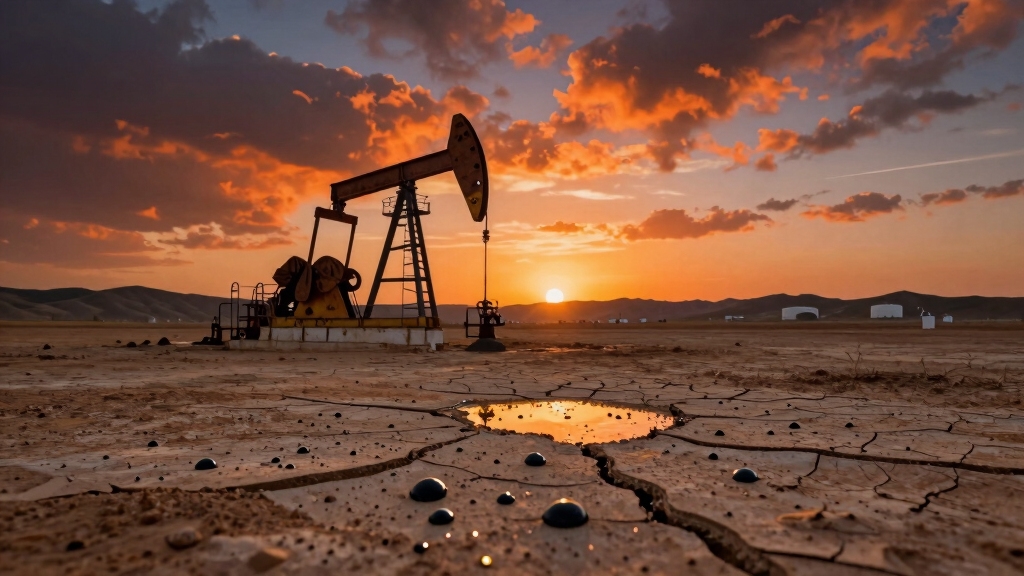
As of 2025, global proven oil reserves stand at approximately 1.77 trillion barrels. This figure represents the volume of commercially viable and recoverable oil from recognized reservoirs.
You should understand that this figure excludes unconventional sources and speculative resources not yet classified as proven. These reserves equate to about 47.2 times the annual global consumption, implying a multi-decade supply at current extraction and demand rates.
Reserve estimates have slightly increased recently due to new discoveries and enhanced recovery techniques. When you analyze these numbers, it becomes clear that while global proven reserves are substantial, their longevity depends heavily on production growth, technological advances, and consumption trends.
Your assessment must consider that proven reserves are dynamic, reflecting ongoing exploration and field developments. Additionally, factors such as the viscosity stability of oils used in extraction and machinery can influence operational efficiency and resource longevity.
Understanding the distribution of proven oil reserves across nations provides critical insight into global energy dynamics.
You’ll find that Venezuela leads with 303.2 billion barrels, followed by Saudi Arabia’s 267.2 billion barrels and Iran’s 208.6 billion barrels.
Iraq holds 145 billion barrels, rounding out the top four, which collectively control over half of the world’s 1.77 trillion barrels of proven reserves.
These figures reflect commercially recoverable oil, excluding unconventional sources.
While Venezuela’s reserves are largest, geopolitical factors like U.S. sanctions limit its export potential.
Saudi Arabia and Iran maintain substantial production capacities, influencing market stability.
Iraq’s reserves indicate potential for increased output.
Understanding these reserve concentrations helps you analyze supply security and geopolitical risk across global oil markets with precision and clarity.
For industries relying on reliable power sources, considerations similar to those in durability and recharge efficiency of battery technologies are vital for managing energy resources effectively.
Hey there! So, let’s chat about how our annual oil consumption really plays a role in how long those proven reserves will last. You see, when demand shoots up faster than what we can pump out, it really shortens the timeline for how long we can rely on those reserves.
On the flip side, if we keep our consumption stable or even see it decline a bit, it can actually stretch out how long the oil supply lasts, even if those reserve volumes stay the same. Quite interesting, right? It really shows how our choices can impact the future! Additionally, the transition to Ultra-Low Sulfur Diesel standards has influenced fuel processing and consumption patterns, impacting overall oil demand.
Several variables shape how long global oil reserves can sustain consumption, but annual consumption rates remain the primary determinant of supply duration.
If you increase consumption, reserves deplete faster; lower consumption extends supply longevity.
For instance, proven reserves of 1.77 trillion barrels equate to 47.2 times current annual consumption, implying multi-decade availability at steady rates.
Yet, shifts in consumption directly affect this timeframe.
| Annual Consumption (billion barrels) | Supply Duration (years) |
|---|---|
| 35 | 50.6 |
| 40 | 44.3 |
| 45 | 39.3 |
| 50 | 35.4 |
Understanding the impact of density differences between water and diesel is also crucial in managing fuel storage and consumption efficiency.
As demand grows, the duration that proven oil reserves can sustain global consumption shortens proportionally.
When you increase annual consumption, the 1.77 trillion barrels of proven reserves, currently equivalent to 47.2 years of supply at 2025 consumption rates, deplete faster.
Even with new production projects adding 462,000 barrels per day in 2026, accelerated demand growth compresses the reserve lifespan.
You must consider that demand not only affects depletion timelines but also influences investment in exploration and enhanced recovery methods, which can extend effective supply.
However, sustained demand growth without corresponding supply expansion risks earlier reserve exhaustion.
Consequently, the interplay between consumption rates and reserve replenishment critically determines how long oil can last under evolving market conditions.
Additionally, the choice of oil products, such as those meeting Dexos certification standards, can influence engine efficiency and fuel consumption, indirectly impacting overall oil demand.
Did you know there are about 1.77 trillion barrels of proven oil reserves around the globe? That’s a staggering number!
To put it into perspective, it’s roughly 47 times what we consume in a year.
So, if we keep extracting oil and our demand stays consistent, we could be looking at several decades’ worth of supply. It’s pretty fascinating, right?
Understanding how these reserves stack up against our consumption is crucial. It helps us get a clearer picture of how long we can expect global oil availability to last.
Proper storage and handling, such as maintaining tanks in shaded areas and keeping fuel free from contaminants, are essential to maximize the long-term fuel quality of diesel and other petroleum products.
A vast quantity of proven oil reserves, estimated at 1.77 trillion barrels worldwide, forms the foundation for understanding how long global oil supplies can last.
These reserves represent oil volumes commercially recoverable under current technological and economic conditions.
With reserves equivalent to about 47.2 times annual consumption, you can infer a supply horizon spanning multiple decades, assuming stable production and demand.
Major holders like Venezuela, Saudi Arabia, Iran, and Iraq control over half of these reserves, impacting global supply dynamics.
Incremental additions from new field developments slightly increase total reserves, extending supply duration.
However, reserve longevity depends on production rates, technological advances, and geopolitical factors.
You should note that these figures exclude unconventional and speculative sources, so they provide a conservative baseline for evaluating oil availability.
Blending fuels like diesel and kerosene can influence fuel economy and operational efficiency, which are important considerations in managing oil resource utilization.
Understanding proven reserves provides a foundation.
However, translating those figures into how long oil can actually last requires examining the balance between consumption rates and supply availability.
You need to take into account how current annual consumption compares to the total 1.77 trillion barrels of proven reserves.
This equals approximately 47.2 years of supply at today’s extraction pace.
However, supply dynamics shift with new project startups and production growth, influencing this timeline.
Key factors affecting duration include:
This analysis clarifies how reserve estimates translate to multi-decade oil availability. Additionally, understanding the impact of oxidation and degradation on fuel quality highlights the importance of managing consumption and supply efficiently.
Eight major oil field developments are set to boost global supply by 462,000 barrels per day in 2026, markedly impacting market dynamics.
Eight major oil fields will increase global supply by 462,000 barrels per day in 2026, reshaping market dynamics.
You’ll see significant contributions from Africa and South America, where projects like Uganda’s Tilenga and Kingfisher fields will deliver a combined plateau output of 230,000 barrels daily over two decades.
Additionally, Gulf of Mexico deepwater operations will add roughly 39,000 barrels per day early in 2026. Brazil, Guyana, and Argentina also plan substantial production increases, reinforcing supply growth.
Despite these gains, you must account for technical and execution risks that could affect timely delivery. Proper fuel storage and handling practices remain essential to maintain oil quality during distribution and storage.
Because offshore developments represent the majority of new project additions coming online, they’ll be pivotal in sustaining and expanding future oil supply.
You’ll find offshore projects critical due to their substantial reserve volumes and capacity to offset declines in mature onshore fields.
Here’s why you should focus on offshore oil:
As production growth accelerates through new field developments and enhanced recovery techniques, the lifespan of global oil reserves faces both extension and increased depletion pressures.
While new projects add supply, like the 462,000 barrels/day from 2026 startups, they also accelerate extraction rates, reducing reserve longevity. Enhanced recovery improves recoverable volumes, marginally extending lifespan but intensifying short-term depletion.
Additionally, increasing biofuel adoption such as ethanol blends helps reduce reliance on crude oil, potentially easing pressure on oil reserves.
| Factor | Impact on Lifespan | Example |
|---|---|---|
| New Field Development | Increases production | Tilenga project (230,000 bpd) |
| Enhanced Recovery | Extends reserves | Improved extraction efficiency |
| Production Growth | Accelerates depletion | South America output surge |
Balancing growth with reserve management is critical in projecting oil’s sustainable availability.
While increasing global production adds more barrels to the market, strategic oil reserves play a crucial role in shaping supply dynamics by buffering short-term disruptions and influencing inventory levels.
Strategic oil reserves buffer short-term disruptions and crucially shape global supply dynamics beyond production increases.
You can rely on these reserves to stabilize markets during geopolitical tensions or unexpected supply interruptions. Here’s how they affect global supply:
Understanding strategic reserves helps you grasp how supply continuity persists despite fluctuating production and demand.
Though new production projects are set to increase supply in 2026, you should anticipate continued pressure on oil prices due to an oversupplied market and slower demand growth. OPEC+ and non-OPEC expansions, combined with rising inventories, contribute to this dynamic.
Technical risks in project execution could moderate supply growth but likely won’t offset the overall surplus.
| Factor | Impact |
|---|---|
| New production (2026) | +462,000 barrels/day |
| Demand growth | Slower than supply expansion |
| Inventory levels | Increasing, pressuring prices |
| Technical risks | Potential delays, limited effect |
Understanding these trends helps you anticipate price volatility and supply fluctuations in the near term.
You know, there are actually some interesting ways to extend oil’s lifespan beyond just the proven reserves we usually talk about. One major avenue is tapping into unconventional sources like shale and tar sands. This can really boost the total recoverable volumes, which is pretty exciting.
Another factor to consider is the use of enhanced recovery techniques. For example, methods like CO2 injection and thermal processes can significantly improve how efficiently we extract oil from existing fields. It’s amazing what technology can do!
And let’s not forget about demand and production rates. These factors play a huge role in determining how long our current and future supplies of oil will last. So, it’s a bit of a balancing act, really!
Exploring unconventional oil sources markedly broadens the potential lifespan of global oil supplies beyond proven reserves.
These sources, while technically challenging and costlier, represent significant additional hydrocarbon volumes you can tap into:
1. Oil Sands
Bitumen-rich deposits requiring extraction and upgrading, mostly in Canada and Venezuela, with reserves exceeding 200 billion barrels.
2. Tight Oil
Hydrocarbons trapped in low-permeability formations accessed via hydraulic fracturing and horizontal drilling.
3. Oil Shale
Kerogen-containing rock processed through heating to release synthetic crude oil; resource-intensive but abundant.
4. Coal-to-Liquids (CTL)
Conversion of coal into liquid hydrocarbons, offering a supplementary supply pathway.
While proven reserves provide a baseline for oil supply duration, enhanced recovery techniques markedly increase the volume of extractable hydrocarbons from existing fields.
You can use methods like water flooding, gas injection, and chemical EOR (Enhanced Oil Recovery) to mobilize residual oil trapped in reservoirs.
These techniques improve sweep efficiency and reservoir pressure, boosting recovery factors from an average 30-40% to as high as 60% or more in some cases.
Thermal methods, such as steam injection, are particularly effective in heavy oil reservoirs, reducing viscosity and enhancing flow.
Implementing these technologies requires detailed reservoir characterization, monitoring, and optimization to maximize incremental recovery while managing costs.
Although proven reserves establish a baseline for oil availability, the interplay between demand trends and production dynamics markedly impacts how long these reserves will last.
You must consider that demand fluctuations and production rates directly influence reserve depletion timelines.
Key factors that could extend oil’s lifespan beyond current estimates include:
You’ll find oil consumption varies widely by industry and region.
Transportation dominates global demand, especially in North America and Europe, where vehicle use is intense.
Industrial sectors, including petrochemicals and manufacturing, consume significant amounts in Asia and the Middle East.
Power generation uses oil mainly in regions lacking alternative energy infrastructure, like parts of Africa.
Regional economic development, energy policies, and resource availability directly influence consumption patterns, impacting global oil demand dynamics.
You face an environmental nightmare with ongoing oil extraction. It causes massive ecosystem disruption and contaminates water through spills and drilling waste.
It also releases methane, a greenhouse gas far more potent than CO₂. Offshore projects risk marine biodiversity, while land-based extraction leads to deforestation and soil degradation.
These impacts contribute heavily to climate change. You must balance energy demands against escalating ecological damage with precision and urgency.
You’ll find that geopolitical conflicts disrupt global oil supply stability by threatening production and export capacities, especially in top reserve countries like Venezuela and Iran.
Sanctions, regional tensions, or conflicts can reduce output or block shipments, causing supply volatility.
As oil markets are tightly linked, any disruption in key regions triggers price fluctuations and forces shifts in strategic reserves and production plans.
This complicates global supply-demand balance and increases market uncertainty.
You can rely on emerging projects adding 462,000 barrels daily in 2026 to offset major field declines.
Additionally, enhanced recovery methods and unconventional oil sources can supplement supply.
Strategic reserves, like China’s 1 million barrels per day stockpiling, provide short-term buffers.
Also, increasing production in South America and Africa diversifies supply.
Together, these factors help stabilize markets if major fields suddenly falter, though execution risks remain significant.
Technological innovations enhance your ability to increase oil recovery by enabling advanced extraction techniques like enhanced oil recovery (EOR), horizontal drilling, and reservoir simulation.
These methods improve reservoir management and maximize output from existing fields, boosting recoverable reserves.
You’ll see longer field lifespans and higher production efficiencies, which mitigate depletion risks.
Innovations also open up unconventional sources and improve monitoring, ensuring you extract hydrocarbons more precisely and sustainably.
Considering proven reserves, consumption rates, and new production projects, oil supply could last several decades. How long exactly depends on multiple variables. Strategic reserves and technological advances may extend this timeline.
Yet rising demand and geopolitical factors add uncertainty. You must weigh reserve data alongside market trends and production growth to understand oil’s true lifespan. In this complex balance, can you confidently predict when oil will run out?