Physical Address
304 North Cardinal St.
Dorchester Center, MA 02124
Physical Address
304 North Cardinal St.
Dorchester Center, MA 02124
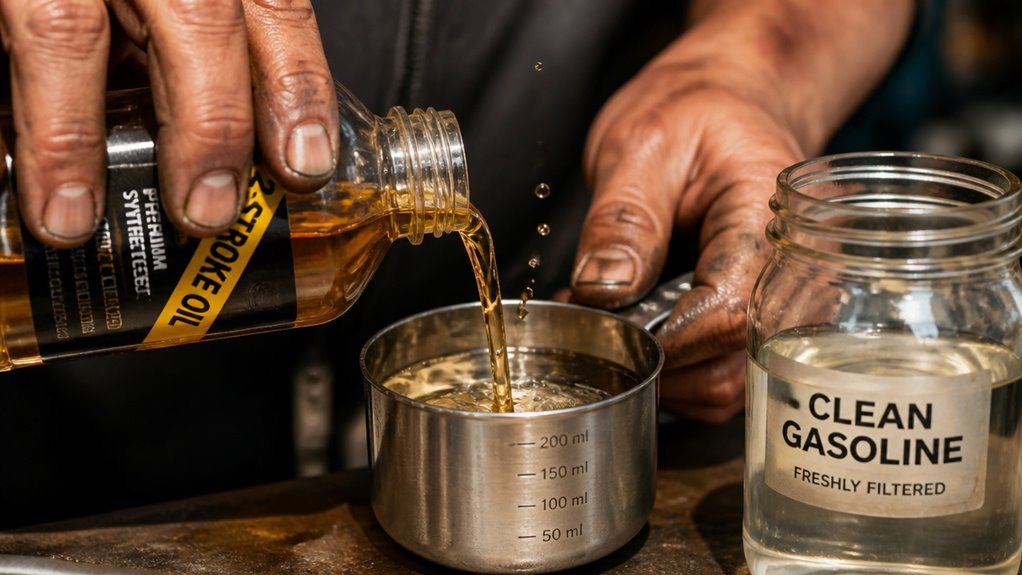
You need to mix gasoline and two-stroke oil precisely to keep your engine lubricated and running smoothly.
Common ratios like 50:1 or 40:1 indicate parts gas to one part oil, balancing lubrication with combustion efficiency.
Too little oil causes wear and overheating, while too much leads to deposits and poor performance.
Modern engines often use leaner mixes; vintage models may need richer ones.
Following proper ratios preserves engine health and reliability under stress.
Understanding these details helps optimize your two-stroke engine’s performance and lifespan.

Although it might seem straightforward, understanding the two-stroke gas-to-oil ratio is essential for proper engine lubrication. This ratio defines how many parts gasoline mix with one part two-stroke oil.
Understanding the two-stroke gas-to-oil ratio is key to ensuring proper engine lubrication and performance.
For example, a 50:1 ratio means you combine 50 parts gasoline with 1 part oil. Since two-stroke engines lack a separate oil sump, this fuel-oil mixture provides critical lubrication during combustion.
Different ratios like 50:1, 40:1, or 32:1 reflect varying lubrication demands based on engine design and usage. Accurately measuring these components guarantees the oil disperses evenly, protecting internal parts from wear.
You must grasp this ratio to prepare the correct fuel blend, optimizing engine performance and longevity without relying on guesswork or assumptions. Using pre-mixed fuel options can eliminate mixing errors and ensure consistent engine protection.
Getting the right gas-to-oil ratio is super important for keeping your engine running smoothly. Two-stroke engines depend on this mix for proper lubrication, and if you don’t get it right, you could be in for some trouble.
Using the wrong ratio can lead to insufficient lubrication, which isn’t great for your engine. Plus, you might end up with increased deposits or excessive smoke. Nobody wants that! It can really hurt your engine’s performance and shorten its lifespan. Using oils that meet industry standards like JASO FD ensures optimal lubrication and reduced emissions for better engine health.
When your two-stroke engine runs, it relies on the precise mixture of gasoline and oil to create a lubricating film. This film reduces friction and wear on moving parts.
It forms a critical barrier between the piston, cylinder walls, and crankshaft, preventing metal-to-metal contact that causes premature damage. You need the right gas-to-oil ratio to maintain ideal viscosity and distribution of lubrication throughout the engine.
Too little oil compromises this film, increasing friction and heat. Too much oil can lead to deposits and inefficient combustion.
Accurate ratios guarantee consistent oil delivery during combustion, preserving engine components and sustaining performance. By adhering to manufacturer-specified ratios, you optimize lubrication, extending engine life and reliability under varying operational stresses. This minimizes the risk of mechanical failure.
Using premium synthetic oils designed for two-stroke engines can further enhance lubrication and reduce engine wear under high-stress conditions.
Since two-stroke engines rely on a precise gas-to-oil ratio for lubrication, using incorrect proportions directly affects engine performance and longevity.
If you don’t mix the right ratio, you risk inadequate lubrication or excessive oil, both of which harm your engine.
Here’s what happens when the ratio is off:
Maintaining the correct gas-to-oil ratio is vital to guarantee peak lubrication, prevent damage, and sustain engine reliability over time. Improper mixtures can also accelerate additive breakdown, reducing the oil’s ability to protect engine parts effectively.
Incorrect gas-to-oil ratios can quickly undermine engine reliability. The exact mixture your two-stroke engine requires depends heavily on manufacturer specifications.
These guidelines are calibrated to balance lubrication, combustion efficiency, and emission standards tailored to specific engine designs. For example, a modern chainsaw might specify a leaner 50:1 ratio due to improved oil formulations and tighter tolerances.
Older models could require richer mixes like 40:1 or 32:1 to prevent wear and deposits. Ignoring these ratios risks inadequate lubrication, increasing friction and component wear, or excessive oil leading to fouling and smoke.
Following manufacturer ratios guarantees ideal oil film thickness, reduces carbon buildup, and prolongs engine life. Always consult your owner’s manual and use accurate measurements to maintain the performance and durability your engine was engineered for.
Using oils with proper viscosity and additives ensures the mixture protects against wear, deposits, and spark plug fouling, further enhancing engine longevity.
Understanding common two-stroke mix ratios helps you match the right fuel-to-oil blend to your engine’s requirements.
These ratios guarantee proper lubrication, minimize deposits, and extend engine life. You’ll typically encounter these standard ratios:
Always verify the manufacturer’s specifications since using incorrect ratios can compromise engine performance and longevity. Selecting the right oil viscosity grade and formula type is crucial for optimal lubrication and engine protection in air-cooled two-stroke engines.
Common two-stroke mix ratios vary markedly between modern and vintage engines, reflecting advancements in engine design and oil formulation.
Modern two-stroke engines typically require leaner mixtures, such as 50:1, due to improved synthetic oils and tighter manufacturing tolerances that reduce oil consumption and emissions.
Modern two-stroke engines use leaner 50:1 mixes thanks to advanced oils and precise manufacturing.
In contrast, vintage engines often specify richer ratios like 25:1 or 16:1 to guarantee adequate lubrication because of less efficient oil circulation and older sealing technologies.
You’ll notice that vintage engines demand higher oil volumes per gallon, up to 6.4 ounces at 20:1, to counteract increased wear and deposit formation risks.
Conversely, modern engines operate efficiently with lower oil amounts, minimizing smoke and carbon buildup.
Ultimately, the gas-to-oil ratio difference hinges on balancing lubrication needs against emission and performance standards dictated by evolving engine technology.
Selecting oils that meet NMMA TC-W3 certification helps ensure optimal protection and performance for both modern and vintage two-stroke engines.
How do you guarantee the perfect two-stroke fuel mixture every time?
Precise measurement and thorough mixing are key to achieving the correct gas-to-oil ratio. This ratio is vital for engine lubrication and performance.
Follow these steps:
Proper lubrication is crucial because lower lubricity fuels like diesel-kerosene blends can increase engine wear without adequate oil.
Calculate the exact amount of two-stroke oil you need per gallon of gasoline by referencing the specific gas-to-oil ratio for your engine.
For instance, a 50:1 ratio requires 2.6 fluid ounces of oil per gallon, while 40:1 calls for 3.2 ounces, and 32:1 uses 4 ounces.
Measure your gasoline volume precisely, then multiply by the oil quantity dictated by the ratio.
Avoid estimating to maintain lubrication integrity and engine performance.
For example, if your engine specifies 50:1, mix 2.6 ounces of oil with each gallon of gasoline.
Using accurate measurements guarantees proper combustion, reduces deposits, and prolongs engine life.
Always use calibrated measuring tools to maintain consistency across mixes, minimizing the risk of over-oiling or under-oiling your two-stroke engine.
Choosing high-quality 2-cycle oil with low smoke emissions can also help ensure cleaner combustion and longer engine life.
Because two-stroke engines vary widely in design and lubrication requirements, you should always follow the manufacturer’s recommended gas-to-oil ratio for your specific model.
Two-stroke engines differ greatly, so always use the manufacturer’s recommended gas-to-oil ratio for your model.
Each engine is engineered with precise tolerances, combustion characteristics, and oil delivery systems that dictate optimal lubrication levels.
Ignoring these guidelines risks inefficient operation or mechanical issues.
Key reasons to adhere to manufacturer recommendations include:
Following these guarantees proper protection, maximizes performance, and extends your engine’s lifespan.
Don’t guess; consult your manual to mix with accuracy.
Additionally, using oils that meet TC-W3 certification ensures compatibility and maintains your engine’s protection coverage.
Using the wrong gas-to-oil ratio can materially impact your two-stroke engine’s performance and longevity.
If you use too little oil, such as a leaner mix than specified, you risk inadequate lubrication, causing increased friction and overheating.
This can lead to accelerated wear on critical components like piston rings and cylinder walls.
Conversely, excess oil in the mixture leads to carbon buildup, fouled spark plugs, and smoky exhaust, which degrade combustion efficiency and can clog exhaust ports.
Both conditions impair engine operation, reduce power output, and shorten service life.
Additionally, improper ratios can void coverage and increase maintenance costs.
Always measure precisely, matching manufacturer specifications to maintain ideal lubrication balance, minimize deposit formation, and guarantee reliable, efficient operation of your two-stroke engine.
When it comes to storing your two-stroke fuel mixture, it’s really important to use an approved, airtight container. This helps keep the fuel safe from contamination and evaporation. You don’t want anything messing with that mixture!
Also, make sure to stash the fuel in a cool, dark place. Avoid direct sunlight and fluctuating temperatures; those can really mess with the stability of your fuel.
Oh, and don’t forget: premixed fuel doesn’t last forever! It usually has a shelf life of about 30 days. So, it’s a good idea to plan your storage wisely to avoid any degradation. Happy storing!
Selecting the right container guarantees the longevity and safety of your two-stroke fuel mixtures. Using an appropriate container minimizes contamination, evaporation, and chemical degradation. You want to assure your fuel maintains proper gas-to-oil ratios and remains stable for future use.
Consider these four factors for container selection:
Proper container choice is critical for maintaining fuel quality and engine performance.
Proper container selection sets the foundation for maintaining two-stroke fuel mixture integrity. However, storage conditions play an equally important role in preserving fuel quality over time.
You should store your fuel mixture in a cool, dry place away from direct sunlight. Heat and UV exposure accelerate oxidation and degrade both gasoline and oil components.
Keep the container tightly sealed to prevent moisture ingress and evaporative losses. This can alter the gas-to-oil ratio and reduce lubrication effectiveness.
Avoid temperature fluctuations that may cause condensation inside the container, potentially contaminating the mixture. Additionally, store fuel mixtures away from ignition sources and in well-ventilated areas to mitigate safety risks.
Understanding the shelf life of two-stroke fuel mixtures is critical for ensuring peak engine performance and longevity. Fuel degrades over time due to oxidation and evaporation, which can compromise combustion and lubrication.
To maintain mixture integrity, follow these storage tips:
You shouldn’t use automotive oil instead of two-stroke oil because automotive oils lack the specific additives designed for two-stroke engines.
Two-stroke oil provides essential lubrication, reduces deposits, and burns cleaner, preventing engine damage.
Using automotive oil can cause poor lubrication, increased smoke, and buildup.
Always follow the manufacturer’s recommendation and use oil formulated for two-stroke engines to guarantee peak performance and engine longevity.
You can safely store premixed two-stroke fuel for about 30 days under ideal conditions: cool, dark, and sealed tightly.
After that, fuel degradation accelerates, causing loss of volatility and lubrication quality.
For longer storage, consider fuel stabilizers, which can extend shelf life up to six months.
Always mix fresh fuel when possible to avoid engine performance issues, deposits, or damage from stale or oxidized fuel mixtures.
Altitude doesn’t directly affect the ideal gas-to-oil ratio for your two-stroke engine.
Instead, altitude primarily impacts air density and combustion efficiency, which can influence fuel mixture requirements but not oil lubrication ratios.
You should still follow the manufacturer’s recommended gas-to-oil ratio to guarantee proper lubrication.
Adjustments for altitude typically involve carburetor tuning or fuel mixture changes, but the oil proportion remains consistent to protect internal engine components effectively.
You might think pouring extra oil will supercharge your two-stroke engine’s performance, but it won’t.
While proper lubrication is critical, adding more oil than recommended only causes fouling, smoke, and deposit buildup. This harms efficiency and power.
Stick to the manufacturer’s specified ratio for peak combustion and protection.
Over-oiling clogs spark plugs and reduces performance, so precision mixing, not excess, is the key to keeping your engine running strong and clean.
Using an incorrect two-stroke fuel mixture can increase harmful emissions, releasing excess hydrocarbons and particulate matter into the environment.
Too much oil causes more smoke and deposits, polluting air and contaminating soil or water when spilled.
Too little oil risks incomplete combustion and engine damage, leading to inefficient fuel use and higher emissions.
You should always follow manufacturer ratios to minimize environmental harm and guarantee peak engine efficiency.
So, you want to wing it with your two-stroke mix and play fuel roulette? Sure, go ahead. Your engine might thank you with a puff of smoke or a permanent nap.
But if you actually care about performance and longevity, stick to the manufacturer’s ratios. Measuring precisely isn’t rocket science; it’s basic chemistry with a side of common sense.
Your engine deserves more than a guessing game. Treat it right, or prepare for costly consequences.