Physical Address
304 North Cardinal St.
Dorchester Center, MA 02124
Physical Address
304 North Cardinal St.
Dorchester Center, MA 02124
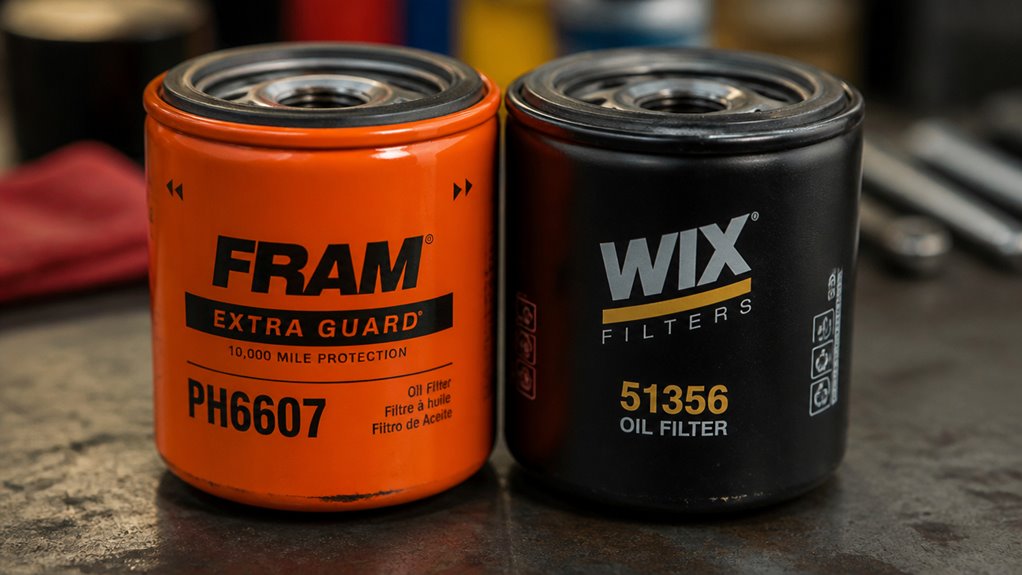
When choosing between Fram and Wix oil filters, consider your priorities. Wix offers premium synthetic media and robust metal end caps, delivering superior filtration down to 25 microns and longer service intervals up to 20,000 miles.
Fram targets budget-conscious users with lighter construction, using cellulose or layered synthetic media suited for standard 5,000–10,000-mile changes. Wix excels in durability and high-demand conditions, while Fram provides cost-effective routine maintenance.
Understanding these factors will clarify which fits your vehicle and needs best.

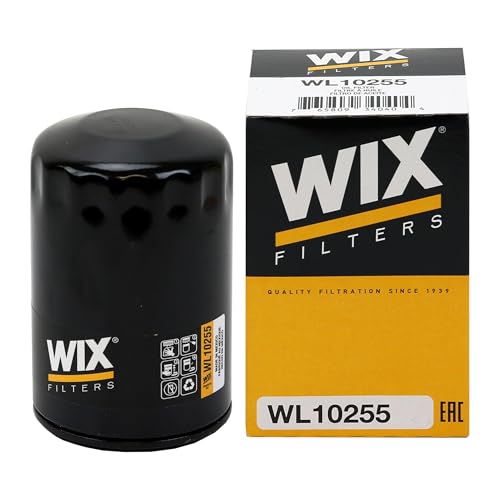
| Comparison Point | Fram Oil Filter | Wix Oil Filter | Best Choice |
|---|---|---|---|
| Main Focus | Built for budget-friendly routine maintenance | Built for premium durability and filtration | Depends on maintenance needs |
| Filter Media | Uses cellulose or layered synthetic media depending on line | Uses synthetic or composite media for finer filtration | Wix for advanced filtration |
| Filtration Performance | Good for standard oil change intervals | Filters smaller particles, often around 25 microns | Wix for cleaner oil |
| Construction Quality | Lighter internal construction in many economy models | Stronger build with metal end caps | Wix for durability |
| Bypass Valve Design | Often uses a leaf-spring bypass valve | Often uses a coil-spring bypass valve | Wix for pressure control |
| Service Interval | Better for 5,000–10,000-mile changes | Some lines support up to 20,000 miles | Wix for extended intervals |
| Oil Flow Stability | Designed for regular driving and standard service | More consistent flow under high-demand conditions | Wix for heavy use |
| Price Point | Usually more cost-effective and widely available | Usually costs more due to premium components | Fram for lower upfront cost |
| Best Use Case | Daily drivers with frequent oil changes | High-mileage, demanding, or longer service schedules | Match to driving style |
| Best Overall Fit | Drivers prioritizing affordability | Drivers prioritizing engine protection and longevity | Fram for value, Wix for performance |

Although both Wix and Fram oil filters serve the same essential function, they occupy distinct positions in the market that influence your purchasing decision.
Wix is generally positioned as a premium option, commanding higher prices due to its reputation for robust construction and durability.
Wix stands out as a premium choice, known for its durable build and higher price point.
Fram, on the other hand, targets budget-conscious buyers, frequently offering lower-cost filters widely available in mainstream retail channels.
The price gap between them can be modest or significant depending on the model, so you’ll want to weigh cost against build quality.
If longevity and stronger internal components matter most, Wix often justifies its premium.
Conversely, if you prioritize upfront savings and routine maintenance, Fram provides practical value.
Your choice ultimately depends on whether you favor cost efficiency or premium durability.
Wix’s higher pleat count and consistent filtration efficiency contribute to its appeal for those seeking reliable engine protection.
Understanding the differences in filter media and filtration efficiency helps clarify why Wix commands a premium price while Fram appeals to budget buyers.
Wix typically employs synthetic or composite media engineered for consistent particle capture, often filtering down to 25 microns. This precision guarantees cleaner oil over extended intervals.
Fram’s media varies by line, using cellulose or layered synthetics. Premium models offer high filtration efficiency but generally target shorter service lives.
Wix’s media construction emphasizes durability and fine particle retention. In contrast, Fram balances cost and performance, especially in economy lines.
When evaluating filtration efficiency, consider how Wix’s media maintains structural integrity under stress, reducing bypass risk. Fram’s media suits standard intervals but may allow more microscopic contaminants through under heavy use.
Filters designed with reinforced polymer mesh media can better withstand prolonged use and maintain filtration integrity over extended oil change intervals.
You’ll notice that Wix filters come with metal end caps and a coil-spring bypass valve. This combination really boosts their durability, especially under pressure.
On the other hand, some Fram models go with fiber or paper end caps and a leaf-spring bypass design. This difference can affect how rigid the filter is.
Additionally, Fram filters often feature dual-layer synthetic media for superior dirt trapping and extended service intervals.
When examining the internal construction of Wix and Fram oil filters, end cap materials emerge as a critical differentiator affecting durability and performance.
Wix consistently uses metal end caps, typically steel or aluminum, which provide superior structural integrity and resistance to deformation under high pressure and temperature.
This metal construction also enhances sealing reliability and supports the filter media firmly, reducing bypass risks.
In contrast, many Fram filters, especially in economy lines, utilize fiber or molded paper end caps, which are lighter but less robust.
These materials can degrade faster and offer less mechanical support, potentially compromising filter longevity during extended service intervals.
Choosing Wix means opting for metal end caps that maintain form and function under demanding conditions.
Fram’s fiber-based end caps suit standard, budget-conscious maintenance but may not match Wix’s durability.
Additionally, using high-quality products like CAM2 synthetic oils can complement the durability offered by metal end caps in maintaining engine performance.
Although both Wix and Fram filters include bypass valves to maintain oil flow under restrictive conditions, their internal designs differ markedly in materials and mechanics.
Wix employs a coil-spring bypass valve that offers consistent pressure regulation and durability. Fram utilizes a leaf-spring bypass valve, which can be lighter but may provide less precise control.
The differences in valve design impact valve response and long-term reliability under heavy use.
| Feature | Wix Bypass Valve | Fram Bypass Valve |
|---|---|---|
| Valve Type | Coil Spring | Leaf Spring |
| Material | Metal | Fiber-reinforced composite |
| Pressure Regulation | Consistent, precise | Moderate, less precise |
| Durability Under Load | High | Moderate |
You’ll find Wix’s design better suited for high-demand applications.
Because internal structural rigidity directly influences filter performance and longevity, understanding the construction differences between Wix and Fram filters is essential.
When you examine Wix filters, you’ll notice metal end caps coupled with a coil-spring bypass design. This provides superior support and resistance to deformation under pressure. Their backing mesh is finer and more rigid, which helps maintain pleat integrity during heavy use.
In contrast, Fram filters often use fiber or paper-type end caps and a leaf-spring bypass. This results in a lighter but less robust internal frame, especially in economy models. This simpler construction can lead to quicker fatigue under stress.
If you prioritize durability and structural strength, especially for demanding applications, Wix’s reinforced internal build offers a clear advantage over Fram’s more budget-oriented design.
Additionally, enhancements such as revised end cap geometry in advanced filters significantly increase flow-through area, contributing to improved filtration efficiency and structural performance.
Understanding the pleat design and oil flow characteristics is essential for evaluating Wix and Fram filters. These factors directly impact filtration efficiency and engine protection.
Wix filters often feature more uniform pleat spacing, optimizing media surface area and promoting consistent oil flow while minimizing restriction.
Fram filters may have fewer pleats but focus on service-life oriented designs, balancing flow and filtration for typical oil-change intervals. Pleat count alone doesn’t define performance; thickness and media density matter too.
| Feature | Wix Filters |
|---|---|
| Pleat Design | Even spacing, higher count |
| Oil Flow | Balanced flow, reduced restriction |
| Filtration Focus | Optimized for efficiency and longevity |
| Feature | Fram Filters |
| Pleat Design | Variable spacing, fewer pleats |
| Oil Flow | Designed for standard intervals |
| Filtration Focus | Service-life and cost-effective |
Wix filters use advanced synthetic-blended media designed for enhanced filtration efficiency and durability under severe conditions, contributing to superior engine protection.
When evaluating durability and service life between Wix and Fram oil filters, you’ll find that Wix generally supports longer intervals, often rated for up to 20,000 miles in some product lines.
Wix oil filters typically offer longer service intervals, often rated up to 20,000 miles in select models.
Fram filters typically serve shorter intervals, around 5,000 to 10,000 miles, reflecting their economy-oriented design.
Wix’s robust internal construction, including metal end caps and coil-spring bypass, enhances structural integrity over extended use.
Meanwhile, Fram’s lighter materials suit routine maintenance cycles.
Wix uses synthetic media engineered for sustained filtration efficiency during prolonged intervals.
Fram’s cellulose or layered synthetic media performs well but may degrade faster under extended service.
Wix’s rigid backing mesh and pleat design reduce collapse risk during high mileage.
Fram’s leaf-spring bypass and fiber end caps favor cost-efficiency over maximum durability.
For optimal maintenance, pairing these filters with durable removal tools helps ensure damage-free servicing and extends filter life.
Although Wix filters often carry a higher price tag, their premium construction and advanced synthetic media justify the investment for users prioritizing durability and extended service intervals.
You’ll find Wix filters employ metal end caps and coil-spring bypass valves, enhancing structural integrity under high pressure. Their synthetic filter media traps particles efficiently down to 25 microns, supporting longer oil-change cycles up to 20,000 miles in some models.
Conversely, Fram offers more budget-friendly options with cellulose or layered synthetic media, suitable for standard intervals between 5,000 and 10,000 miles. Fram’s simpler internal design reduces cost but might limit heavy-duty performance.
When choosing, consider whether you need a filter optimized for extended service and durability (Wix) or a cost-effective, readily available option for routine maintenance (Fram).
Additionally, understanding the role of bypass valves is crucial, as they prevent oil starvation by allowing oil to bypass clogged media, protecting your engine during filter use.
When it comes to vehicle fitment and maintenance, both Wix and Fram filters have you covered across a wide range of models. However, their compatibility can differ, depending on specific filter lines and engine requirements.
For instance, Wix filters are known for supporting extended maintenance intervals—up to 20,000 miles in some cases! On the other hand, Fram typically targets shorter service intervals, usually between 5,000 and 10,000 miles, depending on the product. Fram’s PH2 Extra Guard filter offers a 96% Single Pass Efficiency that balances protection with steady oil circulation, making it ideal for regular maintenance schedules.
Since vehicle compatibility hinges on precise fitment and maintenance requirements, choosing between Wix and Fram filters requires careful consideration of your specific engine model and service schedule.
Both brands offer extensive fitment guides, but Wix often targets premium applications with tighter tolerances. Fram covers a wider range of mainstream vehicles. You need to confirm gasket size, thread pitch, and filter height to guarantee proper sealing and clearance.
Wix filters typically suit engines requiring longer service intervals and higher durability. Fram filters provide broad compatibility, especially for budget-conscious maintenance.
Verify OEM part numbers and cross-reference to avoid fitment issues. Consider engine demands and operating conditions to select the optimal filter type for your vehicle.
Additionally, evaluating the service mileage rating of each filter ensures you choose one that maintains steady filtration and oil flow for your desired maintenance interval.
This approach guarantees you balance fitment precision with maintenance needs effectively.
Once you confirm the proper fitment for your vehicle, understanding the recommended maintenance intervals for Wix and Fram filters becomes a key factor in optimizing engine protection.
Wix filters typically support longer service intervals, often up to 20,000 miles, due to their premium construction and synthetic media that provide superior particle capture and durability.
In contrast, Fram filters, especially economy lines, are designed for shorter intervals, generally between 5,000 and 10,000 miles, aligning with standard oil-change schedules.
However, some Fram premium filters approach higher mileage capabilities. When selecting, consider your driving conditions and oil type.
Relying on Wix for extended intervals can reduce filter replacements but demands strict adherence to manufacturer guidelines.
Fram suits frequent oil changes and budget-conscious maintenance without compromising basic filtration performance.
For extreme weather, you’ll want Wix filters because their synthetic media and rigid internal construction handle temperature fluctuations better.
They maintain filtration efficiency and structural integrity under harsh conditions.
This is unlike some Fram models that use lighter materials more suited for standard intervals.
Wix’s metal end caps and coil-spring bypass design guarantee durability and consistent oil flow despite thermal stress.
This makes them the smarter choice when you face extreme cold or heat regularly.
You’ll notice that filters with finer media and more consistent pleat spacing, like Wix, can improve engine performance by providing cleaner oil flow and better particle capture.
This reduces wear.
Fram’s filters, especially economy lines, might allow more contaminants through, slightly impacting efficiency over time.
You know what they say: the proof is in the pudding. Wix generally offers better customer service and a more all-encompassing warranty, reflecting their premium positioning.
They back their filters with solid support and often provide longer coverage periods. Fram’s warranty is decent but more limited, aligning with their budget-friendly focus.
If after-sales support and warranty strength matter to you, Wix tends to be the safer bet for peace of mind.
You’ll find that Wix filters generally use more synthetic media, which can be less biodegradable but often last longer, reducing waste frequency.
Fram filters, especially economy lines, tend to use more cellulose media, which is more biodegradable but may require more frequent changes.
Neither brand prioritizes environmental impact heavily, so your best bet is to choose longer-lasting filters and recycle used filters properly to minimize environmental harm.
You can’t squeeze water from a stone. Oil filters like Wix and Fram aren’t designed to be cleaned or reused.
Both use delicate media and internal components that trap contaminants. Once clogged, their effectiveness drops.
Attempting to clean them risks damaging the filter’s structural integrity and filtration ability. For best engine protection, replace filters per manufacturer recommendations instead of trying to extend their life through cleaning or reuse.
Choosing between Wix and Fram oil filters is like selecting the right lens for a camera: Wix offers precision and durability with superior filtration media, ensuring long-lasting protection.
Fram provides cost-effective options with decent efficiency for regular use. You’ll want to weigh your vehicle’s needs, maintenance habits, and budget carefully.
Ultimately, both brands deliver reliable performance, but your choice hinges on prioritizing advanced filtration or affordability in your engine’s protection.
Last update on 2026-09-10 / Affiliate links / Images from Amazon Product Advertising API