Physical Address
304 North Cardinal St.
Dorchester Center, MA 02124
Physical Address
304 North Cardinal St.
Dorchester Center, MA 02124
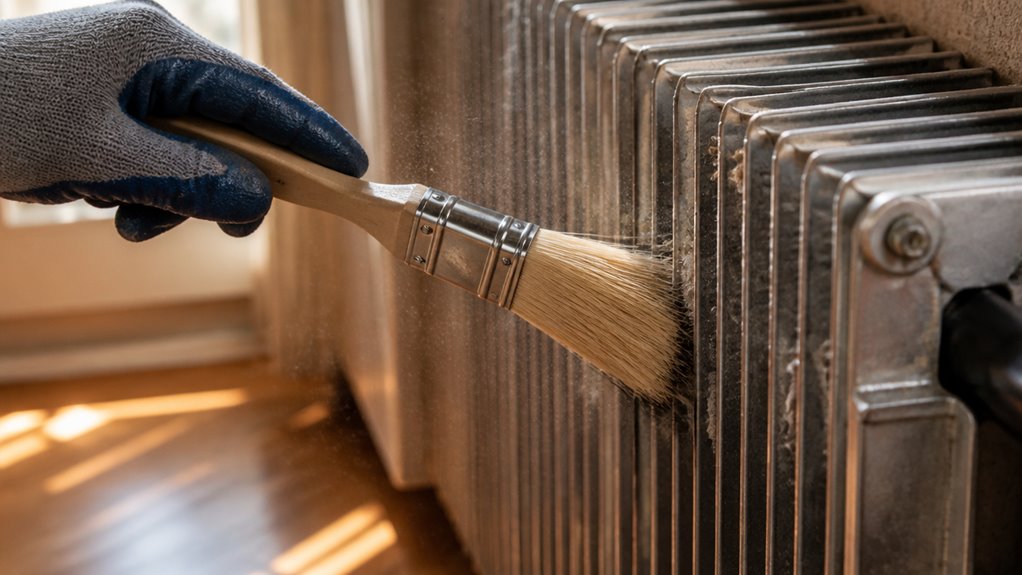
To clean your radiator fins effectively, first make certain the radiator has fully cooled to prevent damage. Use a soft-bristle brush and gentle compressed air to remove debris without bending fins.
Apply a mild automotive cleaner carefully, then rinse with a low-pressure garden hose directed from the engine side outward. Avoid harsh chemicals, high-pressure sprays, and abrasive tools that can deform fins or cause corrosion.
Proper cleaning preserves airflow and cooling efficiency. Explore detailed inspection, straightening, and safety tips to optimize performance further.

Although radiator fins may seem delicate, they play a crucial role in your vehicle’s cooling system by maximizing heat transfer through increased surface area.
Radiator fins, though delicate, are vital for efficient heat transfer in your vehicle’s cooling system.
When dirt, bugs, or bent fins block airflow, they reduce your radiator’s efficiency, causing engine temperatures to rise. Cleaning these fins restores proper airflow and heat dissipation, preventing overheating.
You’ll want to avoid pushing debris deeper into the core, as that hampers cooling. Straightening bent fins enhances air passage and recovers lost performance.
However, overly aggressive cleaning risks deforming fins, worsening heat rejection. By maintaining clean, well-aligned fins, you ensure your radiator operates at peak efficiency, protecting your engine and improving overall vehicle reliability.
Proper fin care is essential for sustained cooling performance and engine longevity. Duralast radiators feature high-density multi-louvered fins designed to increase airflow and heat transfer efficiency, underscoring the importance of keeping fins clean and undamaged.
First, take a good look at the radiator fins. You want to see if there are any bent or damaged sections that might be blocking airflow. A quick visual inspection can really help here.
Next, grab a soft brush or some compressed air. These tools are great for gently removing any debris stuck between the fins. Just be careful not to cause any further distortion while you’re at it.
Once you’ve cleared out the debris, it’s time to check the fin alignment. Make sure everything looks straight. If you find any bent fins, don’t worry! You can use a fin comb to straighten them out. After that, you’ll be all set to move on to the cleaning phase. Proper maintenance, including regular radiator flushes with corrosion inhibitors, can help keep your cooling system running efficiently.
Before you begin cleaning, carefully inspect the radiator fins for signs of bent or crushed areas and accumulated debris. Bent fins restrict airflow, reducing the radiator’s cooling efficiency, so identifying these areas is essential.
Look for sections where fins are flattened or folded over, often caused by impact or improper cleaning. Also, check for compacted dirt, leaves, or insects, especially near the leading edge where airflow first contacts the fins.
Use adequate lighting and, if needed, a magnifying glass to discern fine damage. Document the condition to guide your cleaning approach and fin straightening efforts. Avoid pressing or probing the fins during inspection to prevent further deformation.
Accurate visual assessment guarantees you target cleaning effectively without exacerbating existing damage. Additionally, inspecting for corrosion or rust near the radiator cap and fins can help identify early signs of cooling system issues.
Once you’ve assessed the radiator fins visually, the next step is to identify the types of debris affecting airflow and potentially causing damage.
Accurate identification helps you select the right cleaning method without worsening fin condition. Look closely for common debris that can clog or corrode the fin surfaces and restrict airflow.
Organic matter: Leaves, grass, and insect remains can build up and trap moisture, accelerating corrosion.
Dirt and dust: Fine particles settle deeply between fins, reducing heat transfer efficiency and requiring gentle agitation to remove.
Oily residues: Grease and road grime adhere stubbornly, demanding mild detergents to break down without damaging fin coatings.
Identifying these debris types guarantees you apply the safest, most effective cleaning techniques to restore peak radiator function. Using cleaning agents with corrosion inhibitors can help protect the radiator surfaces during the cleaning process.
Although radiator fins are designed to maximize airflow, even slight misalignment or bending can markedly reduce cooling efficiency. When checking fin alignment, visually inspect the surface for any bent or crushed fins that obstruct airflow.
Use a fin comb to carefully straighten these fins, restoring their original orientation without applying excessive force. Pay special attention to areas with accumulated debris, as deposits often cause or hide fin damage.
Avoid using tools that can further deform the fins, and never attempt alignment on a warm radiator. Properly aligned fins guarantee optimal air passage, enhancing the radiator’s heat dissipation.
Regularly monitoring fin condition before cleaning helps maintain performance and prevents debris from embedding deeper into the core during washing. Additionally, using non-corrosive degreasers can safely remove stubborn grime without damaging delicate radiator materials.
Because radiators retain heat long after engine shutdown, you should allow the unit to cool completely before starting any cleaning procedure. Working on a hot radiator risks burns and can warp delicate fins when exposed to rapid temperature changes.
Before cleaning, make sure the engine is off and the radiator feels cool to the touch. To prepare your radiator safely before cleaning, follow these steps:
Inspect for bent fins or heavy debris that might require gentle handling. Remove loose particles with a soft-bristle brush to avoid damaging fins.
Wear gloves and eye protection to guard against irritants from dirt or cleaning agents. Taking these precautions guarantees you protect the radiator’s structural integrity while maximizing cleaning effectiveness.
Additionally, always open the hood fully and inspect hoses and connections for leaks before beginning any maintenance to ensure safety and system integrity during cleaning safety precautions.
Cleaning radiator fins can be a bit tricky, but with the right tools, it’s totally manageable! You’ll want to have a soft-bristle brush on hand, a garden hose with a spray nozzle, and a fin comb to straighten out any bent fins. These tools will make the job much easier.
Oh, and don’t forget to protect yourself! Wearing gloves and eye protection is a must when you’re dealing with cleaners and debris. It might seem like a hassle, but trust me, it’s worth it to keep yourself safe.
Using the right equipment and protective gear not only helps you clean effectively but also ensures you won’t damage those delicate components. So, gear up and get ready for a cleaner, more efficient radiator!
For cleaning degreasing tasks, consider using a non-corrosive aluminum cleaner to protect your radiator fins while effectively removing grime.
Equip yourself with the right tools to clean radiator fins efficiently and safely. This ensures you don’t damage the delicate aluminum surfaces.
Using improper tools risks bending fins or pushing debris deeper, reducing cooling performance. Start with a soft-bristle brush to gently remove loose dirt and bugs without deforming fins.
A garden hose with a spray nozzle provides controlled, low-pressure rinsing that prevents fin damage. Finally, a fin comb lets you carefully straighten bent fins, restoring airflow and heat dissipation.
Key tools include:
These tools help maintain peak radiator function while protecting fin integrity during cleaning. For enhanced cleaning, consider using foaming degreasers that cling to grime and penetrate crevices without damaging delicate surfaces.
Handling cleaning tools properly means paying close attention to your personal safety. When cleaning radiator fins, you’ll want to wear protective gloves to shield your hands from sharp fins, debris, and chemical cleaners.
Use safety goggles to prevent splashes of cleaner or dirt from entering your eyes, especially when rinsing or applying sprays. A dust mask or respirator is essential if you work with compressed air or powders to avoid inhaling airborne particles.
Make certain your clothing covers exposed skin to reduce irritation risk. Always check that your gloves and eye protection are chemical-resistant if you use automotive degreasers.
For enhanced protection and maintenance, consider using products with durable coatings that resist environmental wear when cleaning automotive components.
Start by making sure the radiator has completely cooled down before you begin cleaning. This prevents damage and guarantees safety.
Next, carefully inspect the fins for debris and bent areas. Use a soft-bristle brush to remove loose dirt without bending the fins. Then, apply a mild automotive cleaner and let it dwell briefly to break down grime.
Follow these key steps for effective cleaning:
Brush gently from the engine side outward to avoid pushing debris deeper. Rinse with a low-pressure garden hose, directing water straight into the fins.
After drying, straighten any bent fins using a fin comb to restore airflow. This precise sequence restores cooling efficiency while preserving fin integrity.
Avoid high-pressure sprays or harsh chemicals that can cause damage. For durable fixes, consider using water-resistant epoxy to repair any cracked or damaged radiator components.
While ensuring the radiator is completely cool, you’ll want to use controlled water and airflow to dislodge and remove debris without damaging the fins.
Start by rinsing with a low-pressure garden hose, directing water straight into the fins from the engine side outward. Avoid angling the spray sharply, as this can bend or flatten the delicate fins.
Work from top to bottom to encourage debris to exit naturally. For dry debris, use compressed air carefully, blowing from the back side toward the front to avoid pushing dirt deeper.
Maintain moderate pressure with both water and air to prevent fin deformation. This method efficiently clears dirt, leaves, and insects while preserving fin integrity, ensuring peak airflow and radiator performance.
Bent radiator fins can greatly restrict airflow and reduce cooling efficiency, so it’s essential to carefully straighten them to restore peak performance.
Use a fin comb designed for aluminum fins to gently realign bent sections without causing further damage. Work slowly, aligning fins in the direction of airflow, usually vertically.
Avoid using sharp tools or excessive force, which can tear or break fins.
To straighten bent fins effectively:
Inspect the radiator under good light to locate all bent areas. Position the fin comb carefully and pull it through fins in small sections.
Use a magnifying glass if needed to ensure fins are parallel and evenly spaced.
This precise approach restores airflow and optimizes heat transfer without compromising fin integrity.
When it comes to cleaning your radiator, it’s important to pick mild cleaners that are specifically designed for the job.
You really want to avoid anything too harsh, like bleach or vinegar. These can actually corrode the aluminum and steel, which can shorten your radiator’s lifespan and mess with its efficiency.
Instead, go for a gentle automotive cleaner. It’ll help break down all that grime without risking damage to the delicate fins and metal components.
This way, you’ll keep your radiator in great shape and ensure it performs well for years to come!
Because harsh chemicals can damage delicate radiator components, choosing mild cleaners is essential to preserving your radiator’s integrity and performance.
Mild cleaners effectively remove dirt, grime, and oily buildup without compromising the aluminum fins or core materials. They minimize the risk of corrosion and prevent the weakening of metal surfaces, ensuring long-term durability.
Using a mild solution also reduces the chance of residue buildup that could obstruct airflow after cleaning.
When selecting mild cleaners, consider these benefits:
Although cleaning your radiator fins thoroughly is essential, selecting the right cleaning agents plays a critical role in maintaining their structural integrity and performance.
Harsh chemicals like bleach or vinegar can corrode metal surfaces, reducing heat transfer efficiency and causing premature wear. You should opt for mild automotive cleaners or diluted degreasers that effectively remove grime while preserving the aluminum or steel fins.
Avoid abrasive solvents that risk damaging the delicate fin structure. Use controlled application and always rinse with low-pressure water to prevent chemical residue buildup.
| Chemical Type | Effect on Radiator | Recommended Use |
|---|---|---|
| Mild Cleaner | Safe, non-corrosive | Preferred for routine |
| Automotive Degreaser | Removes oily deposits | Use diluted, sparingly |
| Bleach | Corrodes metal | Avoid entirely |
| Vinegar | Promotes rust | Avoid entirely |
| Abrasive Solvent | Damages fins | Do not use |
When cleaning radiator fins, using gentle methods preserves their delicate structure and maintains peak airflow. Pressure washing risks bending or puncturing the fins, reducing cooling efficiency.
You want to avoid forcing debris deeper into the core or distorting the aluminum fins. This can drastically impair heat transfer. Gentle cleaning with soft brushes and low-pressure water carefully lifts dirt without damaging the fin’s thin metal.
Consider these points:
High-pressure water jets can deform or puncture fins, creating airflow blockages. Gentle rinsing from the engine side outward prevents pushing debris deeper.
Controlled water flow and mild cleaners prevent corrosion and maintain fin integrity.
If you want to maintain your radiator’s efficiency, you must avoid common mistakes that compromise fin integrity and airflow.
First, never use a pressure washer; excessive force bends or punctures delicate fins.
Never use a pressure washer as its force can easily bend or puncture fragile radiator fins.
Avoid spraying water at sharp angles, which pushes debris deeper and damages fins.
Don’t clean a hot radiator; wait until it cools to prevent injury and cleaning inefficiency.
Steer clear of abrasive tools like wire brushes, which scratch and deform the fins.
Also, avoid harsh chemicals such as bleach or vinegar; they corrode metals and promote rust.
Instead, use a soft-bristle brush, mild cleaner, and low-pressure water flow directed from the engine side outward.
Following these precautions guarantees you restore airflow without harming the fin structure, preserving peak heat dissipation.
You should clean your radiator fins at least twice a year to maintain peak performance, especially before and after heavy use seasons.
If you drive in dusty, bug-prone, or off-road conditions, increase cleaning frequency to every three months.
Regular inspections help you spot debris or bent fins early.
Staying proactive prevents airflow blockages and overheating, ensuring your cooling system works efficiently without risking fin damage from overly aggressive cleaning.
Yes, cleaning radiator fins can improve fuel efficiency. When fins are clean and straightened, airflow increases, allowing your engine to cool more effectively.
This reduces the workload on the cooling system, preventing your engine from overheating or running inefficiently. As a result, your engine operates closer to ideal temperature, improving combustion efficiency and reducing fuel consumption.
Regular cleaning helps maintain this balance, indirectly enhancing fuel economy over time.
You can safely clean radiator fins yourself if you follow proper precautions.
Let the radiator cool completely, use a soft-bristle brush, mild cleaner, and low-pressure water to avoid damage.
Avoid harsh chemicals, high-pressure washers, and aggressive scrubbing.
If you feel unsure or the radiator has significant damage, consult a professional.
With careful technique, DIY cleaning restores airflow and cooling efficiency without risking fin deformation or corrosion.
You’ll notice your engine running hotter than usual or your vehicle’s cooling fan working harder, signaling restricted airflow through radiator fins.
Reduced fuel efficiency or occasional overheating during idle or stop-and-go traffic can also indicate clogged or bent fins.
If your heater isn’t warming effectively, airflow might be compromised.
Regularly check for airflow obstruction signs beyond visible dirt to maintain peak cooling and prevent engine damage.
If your radiator fins were a sunbather, dirt and bent fins would be like a heavy blanket blocking all the rays. Your engine’s heat can’t escape efficiently.
Cleaning them helps restore airflow, improving heat dissipation and reducing overheating risk. You’ll want to gently remove debris and straighten fins to maintain peak cooling.
Neglecting this can trap heat, causing your engine to run hotter and potentially overheat. So yes, cleaning really does prevent overheating.
By consistently cleaning your radiator fins carefully, you can conserve cooling capacity and curb costly car complications.
Choose gentle tools and mild cleaners to protect delicate components, and always assess for bent fins to restore peak airflow.
Avoid aggressive approaches that can cause costly corrosion or crushing.
With cautious cleaning and consistent care, you’ll confidently keep your radiator running reliably, reducing risks and reinforcing radiator resilience for the road ahead.