Physical Address
304 North Cardinal St.
Dorchester Center, MA 02124
Physical Address
304 North Cardinal St.
Dorchester Center, MA 02124

You’ll find OEM oil filters engineered to meet exact factory specs, ensuring precise fit, peak flow, and reliable filtration efficiency with durable materials.
Aftermarket filters vary widely. Premium options can match or exceed OEM performance, but budget models often sacrifice quality.
Your choice should balance cost with filtration effectiveness and durability based on your engine’s needs.
Understanding these distinctions helps you make a well-informed selection tailored for protection and longevity. More detailed differences and use cases follow.


| Comparison Point | OEM Oil Filter | Aftermarket Oil Filter | Best Choice |
|---|---|---|---|
| Fit and Compatibility | Built to match exact factory specifications | Fit can vary by brand, model, and quality level | OEM for guaranteed fit |
| Filtration Efficiency | Designed for the engine’s required flow and filtration balance | Premium options can match or exceed OEM, but budget models may vary | Premium aftermarket for advanced filtration |
| Build Quality | Usually has consistent materials and quality control | Ranges from premium construction to lower-cost materials | OEM for consistency |
| Filter Media | Uses manufacturer-specified cellulose or synthetic blends | May use cellulose, synthetic, or mixed media | Depends on media quality |
| Anti-Drainback Valve | Matched to engine needs for reliable startup protection | Premium filters may use silicone valves; cheaper options may use nitrile | Premium options for cold-start protection |
| Durability | Strong housing and calibrated parts for normal service intervals | Premium filters can be durable; budget filters may use weaker parts | OEM or premium aftermarket |
| Cost | Often costs more because of factory-spec design | Usually offers lower upfront pricing | Aftermarket for budget value |
| Quality Confidence | Safer choice for coverage-sensitive vehicles | Acceptable if it meets required specs and quality standards | OEM for peace of mind |
| Best Use Case | Newer vehicles, factory maintenance, logbook-focused service | Performance use, extended intervals, or cost-conscious maintenance | Match to engine needs |
| Overall Value | Reliable but often more expensive | Can be excellent if you choose a verified premium filter | Quality matters more than label |

While choosing between OEM and aftermarket oil filters, you need to focus on more than just the brand name. Understanding the exact specifications, build quality, and intended application is essential.
OEM filters are engineered to meet stringent factory requirements for fit, flow, filtration efficiency, and service intervals specific to your engine platform. In contrast, aftermarket filters come from independent manufacturers and vary widely in quality.
OEM filters meet strict factory standards, while aftermarket options vary greatly in quality and specifications.
Some are budget models with basic materials, while others are premium units that can match or exceed OEM specs. It’s important to evaluate how well an aftermarket filter aligns with your engine’s demands rather than assuming OEM superiority by default.
Also, remember that OEM filters may be produced by suppliers under the automaker’s standards. The distinction lies in specification adherence and manufacturing consistency, not solely the source label.
Many aftermarket options offer extended performance intervals that can rival or surpass OEM filters when matched correctly to your vehicle’s needs.
Because the design and build quality directly impact an oil filter’s performance and engine protection, understanding the distinctions between OEM and aftermarket filters in these areas is essential.
OEM filters match exact engine specifications with precise gasket fit, valve calibration, and flow rates. Aftermarket filters vary widely; premium options may exceed OEM quality, while budget units often use lower-grade materials.
| Aspect | OEM Filters | Aftermarket Filters |
|---|---|---|
| Design Fit | Engine-specific, precise | Often universal, variable fit |
| Housing Material | Durable, thick steel | Varies; some thinner or weaker |
| Valve & Gasket | Engine-matched, reliable | Range from silicone to nitrile |
| Filter Media | Specified quality, balanced | Synthetic to cellulose spectrum |
| Build Consistency | Strict quality control | Depends on brand and cost |
Some aftermarket filters incorporate advanced features such as silicone non-drain back valves to improve startup protection and support extended oil change intervals.
Choose based on your engine’s needs and quality demands.
Understanding the filtration performance and durability of oil filters requires examining their internal components and how they handle contaminants under varying conditions.
Examining oil filter components reveals how they manage contaminants and ensure durability across conditions.
You’ll find OEM filters use media calibrated precisely for particle capture efficiency, often employing cellulose or synthetic blends that trap over 90% of 10-micron particles. Their anti-drainback valves, typically silicone-based, maintain flexibility during cold starts, ensuring immediate oil flow.
In contrast, aftermarket filters vary widely. Premium units match or exceed OEM standards with synthetic media and robust valve materials, while budget options may use inferior media, less durable gaskets, or weaker springs. This compromises contaminant retention and increases clogging risk.
Durability hinges on housing strength and valve reliability. OEM and quality aftermarket filters generally resist deformation and maintain pressure integrity, safeguarding engine longevity under diverse operating stresses.
Many top-tier filters incorporate silicone anti-drainback valves and reinforced metal components to reduce leaks and enhance filter endurance.
Having examined how filtration performance and durability impact engine protection, the next important factor to weigh is the cost-effectiveness of choosing between OEM and aftermarket oil filters.
You’ll find OEM filters typically cost two to three times more than quality aftermarket options. This premium reflects precise engineering and factory specification compliance.
Aftermarket filters vary widely in price and quality, so evaluating value means balancing upfront cost against filtration efficiency and durability.
Consider these points:
Additionally, selecting filters with advanced filtration media can significantly improve contaminant capture and engine longevity.
Deciding when to use OEM or aftermarket oil filters depends largely on your vehicle’s requirements, driving conditions, and maintenance priorities.
Choose OEM filters for spec-sensitive engines or when precise factory specs are critical.
Opt for premium aftermarket filters if you want advanced filtration and better value, especially under extended intervals or performance use.
Budget aftermarket filters suit routine driving only if verified for quality.
Selecting a filter with the correct fit/thread compatibility is critical to prevent leaks and ensure secure attachment.
| Condition | Recommended Filter Type |
|---|---|
| Compliance-sensitive engine | OEM |
| Performance driving | Premium aftermarket |
| Normal daily use | OEM or quality aftermarket |
| Extended intervals | Premium aftermarket |
| Budget constraints | Verified aftermarket only |
Match your filter choice to your engine’s needs to guarantee peak protection and longevity.
Using aftermarket oil filters won’t automatically void your vehicle’s warranty.
The Federal Trade Commission clarifies that warranties can’t be denied solely for using non-OEM parts.
However, if an aftermarket filter causes damage, the manufacturer may deny warranty coverage for that specific repair.
To stay safe, choose premium aftermarket filters that meet or exceed OEM specs.
Keep records showing proper maintenance. This guarantees protection without risking your warranty.
Synthetic media captures finer particles more effectively than cellulose, removing over 90% of 10-micron debris. In contrast, cellulose filters about 50%.
You’ll notice synthetic media holds more dirt, allowing longer service intervals and better cold-start performance due to flexible silicone valves. Cellulose tends to clog faster and may degrade quicker under heat.
Choosing synthetic improves engine protection, especially in demanding conditions. Cellulose suits standard use but requires more frequent changes.
Silicone valves shine in severe settings, staying supple in subzero temperatures. You’ll see smoother oil flow at startup.
Nitrile valves, however, can stiffen and stick in cold conditions, risking delayed lubrication.
But silicone isn’t always superior; it’s pricier and can degrade faster in extreme heat or certain chemicals.
You should weigh your engine’s operating environment carefully. Silicone excels in cold climates, while nitrile might suffice elsewhere, balancing cost and performance.
You’ll notice premature oil filter failure through signs like low oil pressure, engine overheating, or unusual engine noises due to inadequate oil flow.
Leaks around the filter housing, dirty or discolored oil, and increased engine wear also signal problems.
If the filter clogs early, bypass valves may open, causing unfiltered oil to circulate, risking engine damage.
Regular checks and timely replacement help prevent these issues.
You should replace oil filters more frequently under extreme driving conditions, typically every 3,000 to 5,000 miles or at every oil change interval recommended for severe use.
Harsh environments, such as towing, high temperatures, or dusty terrain, accelerate filter clogging and media degradation.
Staying on a stricter schedule guarantees peak filtration, prevents contaminants buildup, and protects your engine from premature wear caused by compromised oil flow and filtration efficiency.
Choosing between OEM and aftermarket oil filters is like selecting the right shield for your engine’s battle.
OEM filters offer a trusted fortress, engineered to exact specs, ensuring maximum protection and durability.
Aftermarket filters can be reliable allies, often providing cost-effective defense but with varying quality.
You’ll want to match your filter choice to your engine’s demands and driving conditions, ensuring your engine’s longevity stays uncompromised by any weak link in its armor.
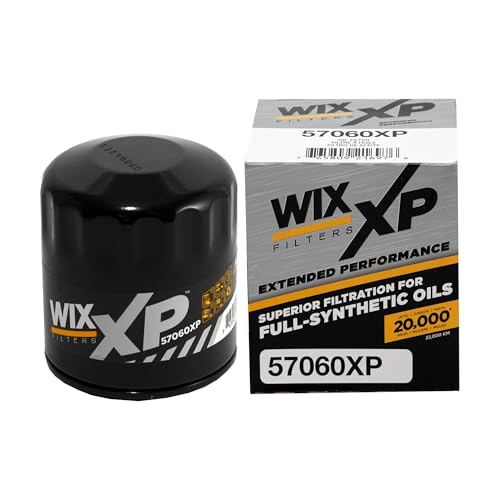

Last update on 2026-10-04 / Affiliate links / Images from Amazon Product Advertising API