Physical Address
304 North Cardinal St.
Dorchester Center, MA 02124
Physical Address
304 North Cardinal St.
Dorchester Center, MA 02124

You should replace your engine air filter every 12,000 to 15,000 miles or at least once a year to make certain your engine runs efficiently. If you drive in dusty conditions or heavy traffic, replace it more often to avoid clogged filters.
Ignoring replacement can reduce fuel efficiency, cause poor acceleration, and increase engine wear. Regular inspection helps spot issues early. Keep exploring to understand signs of wear, the consequences of delay, and how to inspect or replace the filter properly.
Typically, you’ll want to replace your engine air filter every 12,000 to 15,000 miles or once a year, whichever comes first. This interval aligns with recommendations from manufacturers like FRAM, ensuring peak filtration and engine performance.
Some automakers, such as Toyota, suggest a more extended replacement range of 30,000 to 45,000 miles, reflecting differences in engine design and filter quality. It’s advisable to inspect the filter annually or every 15,000 to 30,000 miles to assess its condition.
Depending on your vehicle’s specifications, replacement intervals can vary between 12,000 and 30,000 miles. Certain sources recommend changing the filter every two years or between 15,000 and 25,000 miles regardless of apparent wear.
Always consult your owner’s manual for precise guidance tailored to your vehicle model. Driving in dusty or polluted environments can accelerate filter clogging, necessitating more frequent replacements.
Frequently driving in dusty or sandy environments markedly accelerates the rate at which your engine air filter becomes clogged.
The increased particulate matter strains the filter’s capacity, forcing you to replace it more often to maintain peak engine performance.
Other factors also demand more frequent replacements, including:
Regular use on unpaved roads or gravel surfaces that generate excessive dust.
Operating the vehicle in hot weather, which intensifies contaminant accumulation.
Heavy stop-and-go traffic that increases engine load and air intake demand.
Driving habits involving short trips, limiting filter self-cleaning through airflow.
Monitoring these conditions is vital, as they reduce the filter’s effective lifespan below standard intervals.
Adjust your replacement schedule accordingly to prevent airflow restriction, maintain fuel efficiency, and protect engine components from premature wear.
Additionally, maintaining and replacing fuel and air filters on schedule is vital to prevent dirt and debris contamination which can degrade engine oil quality and overall engine performance.
When your engine air filter becomes clogged, you’ll notice specific signs that indicate it’s time for a replacement.
Common indicators include a decrease in fuel efficiency, as the engine compensates for restricted airflow. You might also experience reduced acceleration or sluggish engine response.
Another clear signal is the illumination of the check engine light, which can result from sensor readings affected by poor air intake.
Additionally, inspect your spark plugs; fouling or malfunctioning plugs can suggest inadequate air filtration.
Black smoke from the exhaust may also appear, reflecting incomplete combustion caused by insufficient airflow.
Monitoring these symptoms helps guarantee timely replacement, preventing further engine complications. For precise diagnosis, pair symptom observation with regular filter inspections as outlined in your vehicle’s maintenance schedule.
Ignoring a clogged air filter can lead to increased engine wear due to reduced lubrication and poor combustion efficiency.
If you delay replacing your engine air filter, restricted airflow forces your engine to work harder than necessary. This increases fuel consumption and decreases overall performance.
Over time, the buildup of contaminants can cause carbon deposits on spark plugs, leading to misfires and inefficient combustion.
Additionally, your vehicle will emit more pollutants due to incomplete fuel burning. Prolonged neglect accelerates engine wear, risking costly repairs.
Key consequences include:
Timely filter replacement guarantees peak airflow, preserving engine health and maintaining performance standards.
Using fuels with higher contamination risks, such as off-road diesel, can increase the frequency of filter replacements due to accelerated clogging.
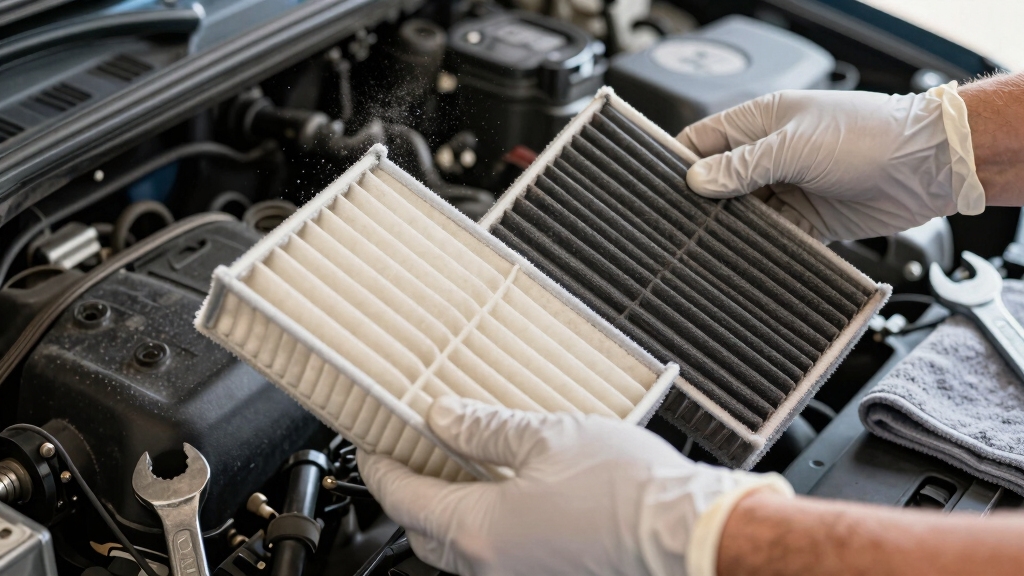
Start by consulting your vehicle’s owner’s manual to locate the air filter housing and understand the recommended inspection and replacement intervals.
Once located, open the housing carefully, avoiding disturbance unless you plan to replace the filter. Remove the air filter and inspect it visually for dirt, debris, or damage.
If you notice excessive contamination or physical degradation, it’s time to replace it. When installing a new filter, make sure it fits snugly without gaps, securing the housing properly to prevent unfiltered air intrusion.
Perform inspections annually or every 15,000-30,000 miles, adjusting frequency based on driving conditions like dusty or unpaved roads. If unsure, seek professional service to maintain peak engine performance and fuel efficiency.
For optimal engine protection, also consider maintaining proper oil filter replacement intervals as recommended by your vehicle manufacturer.
Yes, you can use a reusable engine air filter instead of a disposable one, provided it fits your vehicle’s specifications. Reusable filters offer washable and reusable benefits, reducing waste and potentially improving airflow.
However, you must clean and re-oil them regularly to maintain performance and prevent engine damage.
Always consult your owner’s manual or a professional to confirm compatibility and proper maintenance intervals for your reusable filter to avoid adverse effects on engine efficiency.
A dirty air filter can negatively impact your car’s warranty if it leads to engine damage or reduced performance.
Manufacturers expect regular maintenance, including timely air filter replacements, as outlined in your owner’s manual.
Neglecting this can void warranty coverage on related engine components.
To protect your warranty, you should inspect and replace the air filter per recommended intervals, especially if you drive in dusty or harsh conditions that accelerate filter clogging.
Imagine you swap your OEM air filter for a high-flow aftermarket one promising better performance.
Aftermarket filters can offer improved airflow and potentially enhance horsepower, but they might compromise filtration efficiency, risking more engine wear.
OEM filters are designed specifically for your vehicle, ensuring peak balance between airflow and protection.
Yes, a clogged air filter can cause your car to fail emissions tests.
When the filter is dirty, it restricts airflow, causing incomplete combustion and increased emissions.
This leads to higher pollutant outputs, including black smoke and carbon buildup on spark plugs.
To avoid failures, inspect and replace the air filter regularly, ensuring proper engine performance and peak emission levels.
Addressing this promptly helps you pass emissions tests without issues.
Yes, changing your air filter can improve engine noise and sound.
A clean air filter allows proper airflow, reducing intake restriction that often causes a muffled or uneven engine tone.
When the filter’s clogged, your engine works harder, leading to rougher sounds.
Replacing it restores smooth air intake, which can make your engine run quieter and more smoothly, enhancing overall sound quality and performance.
You should replace your engine air filter regularly, inspect it frequently, and address any signs of clogging immediately. By following recommended intervals, considering factors like driving conditions, and recognizing warning signs, you’ll maintain peak engine performance, improve fuel efficiency, and prevent costly damage.
Don’t delay replacement, don’t ignore symptoms, and don’t risk engine health. Staying proactive guarantees your engine breathes clean air, runs smoothly, and lasts longer.