Physical Address
304 North Cardinal St.
Dorchester Center, MA 02124
Physical Address
304 North Cardinal St.
Dorchester Center, MA 02124

You’ll want Kroil if microscopic precision and rapid penetration into tiny seized parts matter most. It uses low surface tension oil to access gaps as small as 0.0003 inches within 15–30 minutes.
PB Blaster suits you better for broader rust-breaking and quicker surface action. It also offers lasting lubrication with corrosion resistance, though it may leave a heavier residue and takes longer for deep penetration.
Understanding these differences helps you select the best fit for your project’s demands.
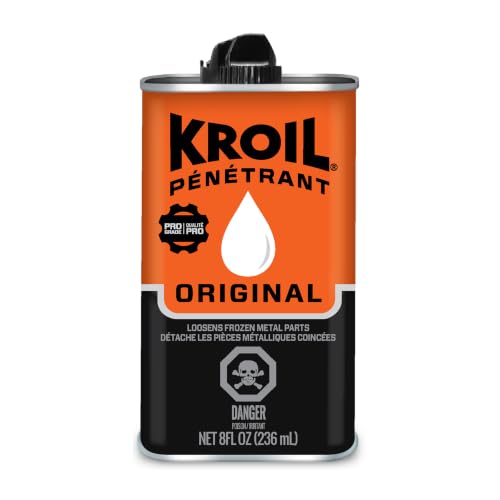


When deciding between Kroil and PB Blaster, you’ll want to focus on your specific application needs and the nature of the seized parts.
Kroil excels with its low surface tension and capillary action, penetrating microscopic gaps down to 0.0003 inches within 15 to 30 minutes. This makes it ideal for precision loosening.
In contrast, PB Blaster combines penetration with a non-evaporating lubricant, breaking rust and corrosion while providing lasting lubrication and rust inhibition.
You should consider Kroil for applications demanding fast, deep penetration on diverse metals, including sensitive alloys and plastics.
PB Blaster suits general maintenance where rust-breaking and residual protection are priorities.
Your choice hinges on whether you prioritize microscopic penetration precision or multifunctional rust loosening combined with lubrication and corrosion resistance.
Both products vary in their application and dispensing methods, which can influence ease of use and effectiveness in different scenarios.
Kroil and PB Blaster serve distinct but overlapping roles in tackling rusted and seized components, designed with different priorities in mind.
Kroil focuses on precision penetration for microscopic gaps, making it ideal for tightly seized metal parts. PB Blaster targets rust-breaking with added lubrication, suited for general maintenance and corrosion-prone fasteners.
Both products benefit from additives like silicone or PTFE that enhance lubrication and corrosion protection, improving their effectiveness and surface safety.
| Feature | Kroil | PB Blaster |
|---|---|---|
| Primary Use | Microscopic gap penetration | Rust breaking and lubrication |
| Application Focus | Industrial, aviation, food-grade | Automotive, plumbing, HVAC |
| Lubrication Residue | Minimal, oil-based | Non-evaporating, rust-inhibiting |
| Surface Compatibility | Metals, some plastics | Metals, common maintenance surfaces |
| Design Priority | Precision loosening | Multi-purpose rust busting |
Choose based on precision penetration versus broad rust loosening needs.
When you’re deciding between Kroil and PB Blaster, there are some key differences to consider.
For starters, Kroil really shines when it comes to penetrating those tiny gaps. It can get down to 0.0003 inches, usually in just 15 to 30 minutes. That’s pretty impressive!
On the other hand, PB Blaster takes a different approach. It focuses on breaking the bonds of rust through capillary action. Plus, it leaves behind a lubricating coating that helps prevent future corrosion. So, while Kroil is all about quick penetration, PB Blaster is working to protect your parts for the long haul.
Understanding how each product works—like their penetration speed and how they tackle rust—can really help you make the right choice for those seized or rusted parts. So, what do you think fits your needs better?
Both products come in convenient aerosol delivery formats that enable precise application without mess.
Typically, you’ll notice that Kroil begins penetrating rust and corrosion within 15 to 30 minutes. It leverages its low surface tension and capillary action to access microscopic gaps as small as 0.0003 inches.
In contrast, PB Blaster’s initial penetration usually occurs within 30 to 60 minutes. It breaks surface tension rust layers before deeper access. Your choice hinges on how quickly you need rust broken down.
Both products benefit from formulations designed to improve performance on metal parts, similar to how fast-evaporating solvents in brake cleaners enhance cleaning efficiency.
| Product | Initial Penetration Time | Penetration Mechanism |
|---|---|---|
| Kroil | 15–30 minutes | Low surface tension, capillary action |
| PB Blaster | 30–60 minutes | Rust surface tension breakdown, lubrication coating |
| Result | Faster start | Slower start, longer-lasting coating |
Beyond initial penetration speed, the ability to access microscopic gaps plays an essential role in freeing seized or rusted components. You want a penetrant that reaches the smallest crevices where rust bonds form.
Kroil’s low surface tension and capillary action allow it to infiltrate gaps as narrow as 0.0003 inches, making it highly effective in precision applications. PB Blaster also uses capillary action but focuses more on surface rust disruption and leaves a lubricating coating.
Consider these factors when evaluating microscopic gap effectiveness:
Kroil’s formula excels in penetrating ultra-fine gaps beneath corrosion layers.
PB Blaster provides broader coverage with residual lubrication.
Kroil’s petroleum base enhances fluidity in tight spaces.
PB Blaster’s thicker consistency may limit ultra-fine gap infiltration.
Selection hinges on whether you prioritize deep microscopic access or surface treatment.
Additionally, some anti-seize lubricants use micro-fine copper flakes to prevent rust and corrosion while maintaining excellent penetration and protection.
Although both Kroil and PB Blaster target rust and corrosion, they employ distinct mechanisms to break rust bonds.
Kroil utilizes low surface tension and capillary action to seep into microscopic gaps. It dissolves rust by loosening corrosion bonds and displacing moisture.
PB Blaster acts as a penetrating catalyst, chemically weakening rust and leaving a lubricating coating that inhibits further corrosion.
| Feature | Kroil | PB Blaster |
|---|---|---|
| Penetration | Capillary action into microscopic gaps | Creeps into surface rust cracks |
| Rust bond disruption | Loosens and dissolves corrosion bonds | Chemically weakens rust structure |
| Residue | Minimal, focuses on loosening | Leaves non-evaporating lubricant |
| Corrosion protection | Primarily penetrant | Penetrant plus rust inhibitor |
Choose Kroil for precision rust breaking. Pick PB Blaster for rust loosening with lubrication. Both products are essential in maintenance routines where corrosion protection is critical to extending equipment life.
When you’re looking at how quickly these penetrating oils work, it’s interesting to compare their initial penetration times. Kroil usually kicks in pretty fast, often acting within 15 to 30 minutes. It really shines because of its superior capillary action, which helps it slip into those tiny microscopic gaps.
On the flip side, we’ve PB Blaster. This one also relies on capillary action but focuses more on breaking the rust’s surface tension. That helps it creep into those corroded areas. Proper lubrication and penetration are essential in preventing premature wear and ensuring smooth operation of mechanical parts.
Typically, Kroil begins to penetrate seized parts within 15 to 30 minutes, leveraging its low surface tension formula to access microscopic gaps as small as 0.0003 inches.
PB Blaster may show initial effects faster on surface rust but often requires longer dwell time for deep penetration. Your choice depends on whether you prioritize rapid surface action or thorough microscopic infiltration.
Kroil’s penetration onset: 15–30 minutes.
PB Blaster’s initial surface rust breakthrough: often under 15 minutes.
Kroil targets ultra-fine gaps inaccessible to most penetrants.
PB Blaster’s formula emphasizes rust breaking paired with lubrication.
Dwell time influences both products’ effectiveness on seized fasteners.
Understanding initial penetration times helps you optimize application timing for maintenance or repair tasks.
For enhanced effectiveness, consider the penetration and water resistance properties of these lubricants to ensure they reach tight areas and resist washout during use.
When evaluating capillary action efficiency, Kroil excels by rapidly wicking into microscopic gaps as small as 0.0003 inches. This is thanks to its low surface tension formula designed for deep, precise penetration.
This characteristic enables Kroil to start breaking corrosion bonds within 15 to 30 minutes, making it highly effective in accessing tight tolerances and fine crevices.
PB Blaster also utilizes capillary action but emphasizes broader surface coverage and rust-breaking through a penetrating catalyst combined with a non-evaporating lubricant.
While PB Blaster penetrates effectively into larger gaps and coats surfaces for extended lubrication, Kroil’s specialized formulation enhances fluid flow speed into ultra-narrow spaces.
Consequently, if you prioritize swift penetration into microscopic interstices, Kroil demonstrates superior capillary action efficiency compared to PB Blaster’s general-purpose creep and coating approach.
Proper storage and handling of penetrating oils is essential to maintain their effectiveness and safety during use.
Although both Kroil and PB Blaster target seized parts, Kroil’s formulation enables it to penetrate and begin loosening within 15 to 30 minutes. This makes it markedly faster in accessing tightly seized components.
Kroil’s low surface tension and capillary action allow it to infiltrate microscopic gaps, accelerating the breakage of corrosion bonds. PB Blaster, while effective, generally takes longer due to its thicker residue and emphasis on sustained lubrication.
Consider these factors when evaluating speed of penetration:
For applications requiring strong, durable adhesion in harsh environments, choosing materials with weather-resistant properties is crucial.
This analysis helps you select the best penetrant for rapid seizure release.
Understanding the lubrication and residue characteristics of Kroil and PB Blaster is essential for selecting the right product for your application.
Kroil primarily serves as a penetrating oil focused on loosening, cleaning, and moisture displacement, leaving minimal residue. Its formula targets microscopic gaps without depositing heavy lubricants, making it ideal when you need precise penetration without buildup.
Kroil excels at penetrating tight spaces, loosening rust, and displacing moisture with minimal residue buildup.
In contrast, PB Blaster incorporates a non-evaporating lubricant that leaves a concentrated coating on treated surfaces. This residue not only facilitates immediate lubrication but also provides ongoing rust inhibition and moisture resistance.
If your priority is thorough lubrication with lasting protective residue, PB Blaster excels. However, if you require a cleaner finish with superior penetration and minimal leftover film, Kroil’s formulation better fits those demands.
Your choice hinges on balancing lubrication needs against residue tolerance.
Selecting the appropriate penetrating oil requires careful consideration of metal and surface compatibility to prevent damage and guarantee peak performance. Kroil suits steel, iron, aluminum, brass, copper, and most metal alloys. It generally works safely on plastics and painted surfaces if used as directed.
PB Blaster targets automotive and maintenance applications and is widely compatible but may not suit sensitive plastics or rubber.
Consider these compatibility factors:
Kroil’s formula supports use in industrial and food-grade settings. PB Blaster excels in rust-busting on automotive metals. Prolonged Kroil exposure may affect some plastics or rubber. PB Blaster contains lubricants that leave protective coatings. Both products avoid aggressive chemicals that damage common metals.
Understanding these specifics helps you select the right penetrant for your materials.
When you evaluate Kroil and PB Blaster, their key features and product variants reveal distinct approaches to penetrating oil performance. Kroil excels in microscopic gap penetration and offers specialized versions like food-grade and silicone/graphite-enhanced oils.
PB Blaster emphasizes rust breaking and residual lubrication with variants focusing on rust inhibition and moisture displacement. Both target rusted or seized parts but differ in formulation and use cases.
| Feature | Kroil | PB Blaster |
|---|---|---|
| Penetration | Microscopic gaps (~0.0003″) | Rust-breaking, capillary action |
| Product Variants | Original, Food Grade, Silicone | Standard, Catalyst, Lubricant |
| Additional Benefits | Precision, corrosion bond break | Non-evaporating lubricant, rust inhibitor |
Deciding between Kroil and PB Blaster hinges on the specific demands of your project’s mechanical challenges. You need to assess factors like penetration depth, residue, and metal compatibility to make the best choice.
Choosing Kroil or PB Blaster depends on your project’s mechanical needs and material compatibility.
Consider these points:
Use Kroil for microscopic gaps (down to 0.0003 inches) requiring precision penetration.
Choose PB Blaster when rust-breaking and residual lubrication are priorities.
Kroil suits diverse metals and sensitive environments, including food-grade applications.
PB Blaster excels in general maintenance with rust inhibition and moisture displacement.
Evaluate whether your task demands fast, deep penetration or a protective lubricant coating post-application.
To get the most out of Kroil and PB Blaster, apply them with attention to surface preparation, contact time, and environmental conditions.
Clean loose debris and rust first to maximize penetration. Allow Kroil 15–30 minutes for its capillary action to work in microscopic gaps. PB Blaster works faster and leaves a lubricating film.
Temperature affects viscosity. Use both in moderate conditions for ideal flow.
| Factor | Kroil | PB Blaster |
|---|---|---|
| Surface Prep | Remove loose rust and debris | Clean surface, remove grease |
| Contact Time | 15–30 minutes for deep penetration | 5–10 minutes; quicker action |
| Environmental Use | Best moderate temps; avoids extremes | Effective in varied temps |
Follow these tips to enhance loosening and corrosion breakdown efficiently.
Yes, you can use Kroil on painted surfaces if you apply it carefully and avoid prolonged contact. It’s generally safe for most plastics and paints.
PB Blaster is typically safe for painted surfaces too. However, since it’s more aggressive in rust breaking, you should test a small area first.
Always apply either product cautiously to prevent potential damage or discoloration on delicate finishes.
You can confidently use Kroil in food processing environments, especially its Clear Food Grade Penetrating Oil variant, which meets NSF-H1 standards for incidental food contact.
This means it’s safe where there’s potential for food contact, a vital compliance factor in food safety. Its formulation guarantees effective penetration and lubrication without compromising hygiene.
Just make certain you select the food-grade product line designed specifically for these sensitive applications.
You’ll find Kroil aerosol products comply with NSF-H2 standards, ensuring suitability for incidental food contact environments.
They also meet 50-state VOC regulations, meaning their volatile organic compound emissions adhere to strict environmental limits across the U.S.
This compliance helps you reduce air pollution and maintain safety in regulated spaces.
Additionally, Kroil Clear Food Grade variants carry Kosher certification, supporting diverse operational requirements while aligning with environmental and health standards.
Yes, PB Blaster provides long-term rust prevention after application.
It leaves a concentrated, non-evaporating lubricant coating that resists future rust and corrosion.
This residual layer acts as a barrier against moisture and contaminants, extending protection beyond initial penetration.
When you apply PB Blaster, you not only loosen stuck parts but also create a protective surface film that helps inhibit rust development over time.
This enhances maintenance durability.
Imagine a finely tuned aircraft engine where every bolt and joint demands impeccable care.
For aviation, you’ll want Kroil’s Clear Food Grade Penetrating Oil variant, designed to meet NSF-H1 standards for incidental food contact. This ensures safety and compliance.
This variant excels in loosening rust without compromising sensitive materials. It offers precise penetration and corrosion control essential for aviation environments.
Its formulation supports meticulous maintenance routines where reliability is non-negotiable.
When deciding between Kroil and PB Blaster, you’re fundamentally choosing the subtle art of metal persuasion.
Kroil’s slow, deliberate seepage gently coaxes rust apart, while PB Blaster’s quicker strike might bring faster relief.
Both leave a protective whisper, but your project’s demands—speed, residue tolerance, or metal sensitivity—tip the scales.
With careful application, either becomes a skilled partner, releasing stubborn bonds and easing your mechanical challenges with finesse and precision.
Last update on 2026-11-28 / Affiliate links / Images from Amazon Product Advertising API